According to an analysis of the grant allocation process, a nonprofit’s opportunity for getting a grant is not increased by effectiveness. Grant distribution seems to be based more on habit than merit and is neither fair nor effective. Once a grant has been distributed, it tends to remain in place. The chances are weighted against small NGOs that have never been awarded a grant before.
Nonprofit Grants in Africa
Africa has a huge development task ahead of it. However, the availability and sufficiency of finances determine a nonprofit’s capacity to achieve development objectives and advocate for the interests of the underprivileged. As we all know, NPOs must rely on the assistance of other organisations, individuals, and self-effort to fund their operations. This is largely because they are set up as entities that spend funds without generating revenue.
Without a doubt, access to funding seems to be the primary factor in survival, and NGOs without access to nonprofit grants may have a difficult time surviving. Since NGO survival is linked to revenue flows, the primary way that the nonprofit’s mission aids in survival is by increasing the likelihood of securing steady cash streams. Hence, grant-receiving nonprofits might be more adept at pursuing a common objective. Not to mention, there is a significant correlation between survival and revenue.
Generally speaking, one of the most important elements influencing the charity sector is government action, or lack thereof.
There is a dearth of thorough studies on charitable organisations in Africa. Consequently, it would also be thin to have a solid foundation on the funding pattern or sources, given their lengthy history. This article will consider the nonprofit grant landscape in Africa and the funding opportunities available for NGOs within the region.
II
Nonprofit Funding Gaps in Africa
According to a 2024 Bridgespan Group report, 90% of African NGOs depend on foreign funding to expand. Non-African funders provided several organisations with their first significant donations in nations like South Africa, Kenya, and Nigeria. However, these groups only receive a small portion of overseas financing. Only about 0.2% of the $4 trillion global philanthropy ecosystem is directly allocated to African nonprofit organisations. This discrepancy draws attention to crucial challenges: African social entrepreneurs and organisations are frequently disregarded and underfunded, which hinders their capacity to have a significant and long-lasting impact.
Infographic on Nonprofit Grants in Africa
Small, temporary funding is frequently given to African NGOs, which lack the scale and endurance required for significant expansion.
Usually, these grants have limitations that prevent organisations from investing in long-term projects and internal infrastructure. Also, concerns about accountability and transparency are the main causes of the large trust gap that exists between African charities and their donors.
Furthermore, the lengthy procedures needed to obtain and report grants can take resources away from more important tasks. Significant obstacles are presented by this misalignment, in addition to a lack of knowledge about funding options and a lack of grant writing skills. International donors, local philanthropists, and NGOs themselves must work together to close the nonprofit grant funding gap in Africa.
III
Critical Statistics on Nonprofit Grants
This section will consider critical statistics on nonprofit grants.
1. Funding source
Between June and July 2021, more than 1,000 African civil society organisations (CSOs) participated in a study conducted by Epic-Africa and AfricanNGOs. Only 8% of individuals had received any financial assistance from a national government disaster relief fund, and 68% had lost funds since the pandemic began.
Bridgespan conducted research for the report by interviewing the heads of 33 sizable NGOs in Kenya, Nigeria, and South Africa and analysing revenue data for 85 NGOs with budgets of over $1 million in those nations. 90% of the organisations in the three countries obtained their first pivotal grant from a non-African funder, which is a major early milestone in their journey. Also, for many nonprofit organisations, government grants are their main source of funding.
Nonprofit Grants in Africa
2. Average grants
19% of all philanthropic contributions are grants. It typically takes two years and four months before a nonprofit wins its first grant. $35,000 is the median grant award. Over the last 15 years, the overall number of grant-making foundations has increased significantly, from 47,000 to 84,000. In the past year, 91% of survey participants applied for at least one grant. 88% of them were awarded at least one grant.
According to 39% of NPOs that obtained corporate funds, they did so for a year or less, 30% for two years or more, and 16% for more than five years at a time. South Africans provided support to two-thirds of NPOs (66%) and accounted for an average of 14% of NPO revenue. Of these NPOs, only 27% reported an increase in revenue from this source.
On average, 13% of NPO revenue came from South African trusts and foundations, which provided revenue to 57% of NPOs. 43% of these nonprofit organisations reported receiving more money from nearby foundations and trusts.
IV
Local vs International Nonprofit Grants in Africa: A Comparative Analysis
Nonprofit grants usually fall into two categories:
International grants are given by donors from around the world, including foreign governments, multilateral organisations, private foundations, and international NGOs; and
Local grants are given by domestic funders like national governments, corporate philanthropies, and community foundations.
Nonprofit leaders navigating Africa’s intricate development finance environment must be aware of the subtleties of various financing sources. In this section, we will examine the characteristics of grants both domestically and internationally.
Infographic on Nonprofit Grants in Africa
a. Local Grants
Local grants are sourced within a nation or an area. Essentially, these grants are typically centred on local development priorities, both geographically and thematically. Common sources include:
Government support (such as the National Government Constituencies Development Fund in Kenya)
Programs for corporate social responsibility (CSR) (like the MTN Foundation in Nigeria)
High-net-worth individuals (HNWIs), such as the DG Murray Trust in South Africa, and
Community foundations
Usually, the goal of these subsidies is to assist grassroots projects and correspond with national development priorities.
b. International Grants
In contrast, organisations outside the nation or continent, such as bilateral and multilateral agencies, give out International Nonprofit Grants. Foreign donors provide international donations, which include:
Aid organisations that are both bilateral and multilateral (such as USAID, DFID, EU, and UN agencies)
Private foundations, such as the Open Society Foundations, the Gates Foundation, and the Ford Foundation
International NGOs (such as Oxfam and CARE) that provide funding to local partners
Global development issues like health, education, democracy, and climate change are frequently the focus of these funds. In parts of Africa, international funding continues to be more abundant and structurally accessible than domestic grants. According to the OECD, more than 20% of the $40 billion in official development assistance (ODA) that sub-Saharan Africa received in 2022 went through CSOs.
Local philanthropy, on the other hand, is still in its infancy but expanding. Because there are fewer public databases or open calls, local funds are typically smaller, less formalised, and more difficult to find. However, for grassroots groups without the compliance apparatus required for foreign grants, they can easily access local opportunities.
Nonprofit funding, both domestic and foreign, is essential to Africa’s development environment. While local funders contribute contextual legitimacy and sustainability, foreign donors provide scale and organisation. Building links between the two is crucial to ensuring that organisations are active contributors to development rather than passive receivers.
V
Overview of Nonprofit Grant Types and Their Implications
The type of a grant frequently influences organisational flexibility, sustainability, and capacity development. Effective grant administration and organisational planning require an understanding of the several grant categories, including project, capacity-building, limited, and unrestricted funds, among others. Every kind of grant has unique requirements, strategic ramifications, and effects on the operations and sustainability of the recipient.
Infographic on Nonprofit Grants in Africa
1. Restricted Grants
Restricted grants are funds given with certain constraints on how the money must be spent. This entails funds from donors or grantmakers that are required to be utilised for specific projects, activities, or purposes specified in the grant agreement. By and large, requirements may be operational (such as being utilised exclusively for salaries or equipment), programmatic (such as financing a specific project or service), or time-bound.
What They Involve:
Specificity: The grantee must closely follow the objectives, deadlines, and reporting guidelines set forth by the donor.
Accountability: To guarantee that funds are spent as intended, there are increased accountability and compliance requirements.
Limited Flexibility: Organisations have little discretion to reallocate cash if priorities shift.
Strategic Risk: Relying too much on restricted funds could impede organisational innovation or adaptation to new demands.
Implications:
Strict reporting and responsibility to the donors are necessary for restricted funds. In order to help donors match financing with their goals, they ensure that resources are directed toward specific requirements. However, because organisations are unable to reallocate resources to other pressing needs, an excessive dependence on restricted finances may limit organisational flexibility.
2. Unrestricted Grants
Unrestricted grants are free from restrictions imposed by donors, enabling recipients to distribute funds according to organisational goals. They have no usage restrictions; thus, groups are free to utilise the funds anyway they see fit, whether it be for crises, capacity building, or administrative expenses.
What They Involve:
Autonomy: Organisations can allocate their budgets to personnel training, innovation, operating costs, or unforeseen needs.
Ability to Innovate: Encourages experimentation, taking chances, and adapting to shifting conditions.
Many people believe that sustainability is essential to the resilience and long-term health of a nonprofit. High levels of faith and confidence in the grantee’s leadership and mission are reflected in donor trust.
Implications:
More autonomy is provided by these funds, which promote sustainability, creativity, and long-term organisational health. Although they are thought to be more beneficial for bolstering the resilience of the nonprofit sector, they are frequently more difficult to get since donors want observable accountability for their donations.
3. Project Grants
Project grants provide funding for a specific endeavour with well-defined objectives, schedules, and results. They usually cover the direct costs of the project as well as any related administrative expenditures. Essentially, project grants must have clear objectives, deadlines, and deliverables. These are a subset of restricted grants that are only intended for specific projects.
What They Involve:
Deliverable Focused: Financial support is linked to observable results and benchmarks.
Short-to-Medium Term: Typically spans limited time frames that align with the project’s lifespan.
Detailed Reporting: A focus on observation and analysis to determine impact and efficiency.
Resource Allocation: Allows organisations to grow their services or test new initiatives without taking money away from core operations.
Implications:
These grants improve performance evaluation by promoting targeted innovation and quantifiable impact within a limited scope. However, because the fund is linked to limited initiatives, it could encourage short-termism while ignoring more important organisational needs.
4. Capacity-Building Grants
Grants for capacity-building assist in improving an organisation’s internal infrastructure, including strategic planning, technology advancements, leadership development, and employee training. Also, they are intended to improve an organisation’s internal systems and capacities. By and large, this includes staff training, technology advancements, strategic planning, and leadership development.
What They Involve:
Organisational Development: Places an emphasis on improving procedures, structures, and skills.
Long-Term Impact: By increasing efficiency, it indirectly aids in mission delivery.
Flexible Use: May have some strategic restrictions, but is frequently less restrictive than project grants.
Foundation Investment: Considered an investment in the grantee’s long-term viability as opposed to short-term results.
Implications:
The purpose of these grants is to improve organisational sustainability and performance by addressing structural issues. Nonprofits must increase their capacity in order to grow their influence and adjust to shifting conditions. However, funders may be wary because it can be difficult to show that such gifts have an immediate impact.
5. Challenge or Matching Grants
In order to effectively leverage additional cash, challenge grants require applicants to generate a predetermined amount of money from other sources before receiving the grant.
Implications: These funds can increase resources, promote wider community involvement, and provide incentives for fundraising activities. They may, however, put smaller or more recent NGOs without robust donor networks at a disadvantage and may require a large amount of organisational capacity. While matching grants encourage a variety of funding sources, they run the danger of giving preference to established groups with preexisting donor bases, which could exacerbate inequality in the nonprofit sector.
6. Endowment Grants
Endowment grants are financial contributions made to establish or grow an endowment, in which the principal is invested and only the income is used, frequently for unrestricted uses.
Implications: They improve financial stability by offering a steady stream of income. Building endowments, however, may restrict short-term operating flexibility and necessitate long-term strategic planning.
Endowment funds assist NGOs in navigating periods of financial instability, but they may go unused because of funders’ and boards’ demands for quick fixes. The flexibility, accountability requirements, and strategic consequences of different types of grants differ greatly. To maximise mission fulfilment and organisational health, a wise researcher or nonprofit must strike a balance between various funding categories.
V
Nonprofit Grants in Nigeria
Nigeria provides a wide range of grants designed to assist nonprofit organisations in a number of fields, such as digital inclusion, entrepreneurship, health, education, and environmental sustainability. In this section, we will provide a carefully curated selection of noteworthy grant opportunities for nonprofits. This will also include information about their application procedures and areas of focus:
a. Nigerian Humanitarian Fund (NHF)
The United Nations Office for the Coordination of Humanitarian Affairs (OCHA) is in charge of overseeing the Nigeria Humanitarian Fund (NHF), a pooled fund with a national focus. The NHF was created in February 2017 and offers quick and adaptable funding to help humanitarian partners give life-saving aid to those impacted by crises in Nigeria. This is especially in the northeast region that is impacted by conflict.
To apply for grants under the NHF, nonprofits must first complete an eligibility process and meet the following three requirements to be eligible for direct funding:
Completed and passed the NHF capacity evaluation.
The NHF One Grant Management System must show that the due diligence status is approved.
Has no unresolved NHF compliance or supervision issues.
The NHF capacity assessments are summarised as follows:
Step 1: Partner recommendation
Through the sector coordination mechanism, partners are suggested on a regular basis (typically once a year) to fill important capacity gaps in humanitarian response. Based on factors like operational presence and implementation capability, the sector leads and the OCHA Nigeria Humanitarian Financing Unit (HFU) collaborate to prepare a list of partners for pre-assessment.
Due to their strong track record of implementation in the field and their capacity to fill an urgent need, partners may be suggested on an as-needed basis. Additionally, the Humanitarian Coordinator and the NHF Advisory Board may deem a partner strategically significant.
Step 2: Pre-assessment
Afterwards, preliminary questionnaires and due diligence materials are reviewed by OCHA Nigeria HFU in order to prescreen potential partners and determine their appropriateness for a comprehensive capacity assessment. Note that registering on the UN Partner Portal (UNPP) is mandatory for potential partners. Also, once the prospective partner has registered with the UNPP and passed the basic screening, they can get in touch with the OCHA Nigeria HFU to request access to the CBPF Grant Management System (GMS).
Step 3: Due Diligence and Capacity Assessment
The HFU conducts a thorough desk-based or on-site capacity assessment for partners who fulfil all of the aforementioned conditions. Eligible partners are then allocated to one of three risk levels: High, Medium, or Low, depending on the assessment’s overall findings.
Review and Selection:
The NHF Advisory Board and sectoral experts evaluate proposals to ensure they are in line with strategy aims and provide good value.
Funding Allocation:
Funding goes to approved initiatives. Also, organisations must report on their execution and results.
b. TY Danjuma Foundation (TYDF)
Based in Nigeria, the TY Danjuma Foundation (TYDF) was founded in 2009 by Lt. Gen. Theophilus Yakubu Danjuma. Its goal is to help underprivileged Nigerians live better lives by funding projects that increase their access to healthcare and education.
Grant Programs Overview
TYDF offers two main grant programs:
1. Annual Grants
Grants are given out once a year following a rigorous screening process. Every year, the Foundation publishes a Call for Concept Notes. Eligible Nigerian organisations can submit applications for funding to undertake initiatives in the health and education focus areas.
Possess an organisational structure that can be verified.
Send in proposals that support the goals of the foundation.
Show that you are involved with the government and the community.
Have a current financial audit report that is not older than two years.
Application Process
Monitor the Foundation’s website for the annual Call for Concept Notes.
Send in a concept note detailing the idea that is being suggested.
Those who make the short list will be asked to submit their ideas.
2. Discretionary Grants
According to the Foundation’s Board of Trustees, these awards are intended to enable prompt responses to humanitarian crises or other interventions. Essentially, they strive to meet pressing needs that emerge in between the yearly grant periods and are accessible all year long.
Qualifications
Candidates must:
Be a Nigerian-registered and functioning nonprofit organisation
Possess substantiated expertise in the fields of education or health
Be prepared to adhere to the internal review procedures of the Foundation
Project Requirements
Align with the Foundation’s main areas (health and education).
Address a clearly identified problem with recommended solutions and designated beneficiaries.
Provide initiatives with quantifiable results.
Budget must not exceed ₦5,000,000.
Boost the Foundation’s mission and visibility.
Application Process
Fill out the application for discretionary grants. Afterwards, send the completed form to discretionarygrants@tydanjumafoundation.org, alongside documentation of your NGO registration and any other supporting documents. Every inquiry will receive a response from the Foundation within seven business days. Also, within two weeks following the project’s completion, successful grantees must submit thorough narrative and financial reports.
To increase the sustainability of initiatives, TYDF promotes collaborations with local, state, and federal government organisations and places a strong emphasis on community involvement. Additionally, TYDF partners with other international organisations and grantmakers that operate in its target areas.
c. Friends of Nigeria
The Friends of Nigeria (FON) is a philanthropic endeavour that offers grant programs to support grassroots initiatives for empowering Nigerian communities. This is especially in underprivileged and crisis-affected areas. The Friends of Nigeria group, founded by former Peace Corps volunteers and friends, focuses on providing funds for concrete, community-drivenprojects that address urgent local needs.
Program Goals and Focus Areas
Critical projects: Essentially, the goal of FON’s grant program is to provide funding for tangible, genuine projects in Nigeria that empower people to take control of their lives and combat the consequences of underdevelopment and poverty.
Maternal Health and Fistula Repair: The current focus includes supporting programs that provide comprehensive maternal health services and educating rural communities about the causes and prevention of fistulas.
Healthcare access: Providing medical supplies and volunteer-run clinics to underserved regions.
Support for Internally Displaced Persons (IDPs): Delivering food, shelter, and education to people escaping the violence of Boko Haram.
Infrastructure for Computer Training Programs: Providing solar panels and batteries to computer training facilities to improve educational opportunities and minimise the need for expensive generators during frequent power outages.
Emergency Response and Microlending: Providing seed money for microlending, mostly to women business owners, and aiding non-governmental organisations that address local crises, including home reconstruction.
All in all, FON prioritises projects that directly include local residents in the decision-making process. Also, they support projects that produce tangible, concrete results and meet well-defined needs.
Application Process
Although there isn’t a formal application template available from FON, interested parties can start the process by recording their concept and sending it to any board member, who will ensure it is sent to the projects committee for review.
Crucial Steps:
Project Records: Create a thorough proposal that includes the project’s goals, implementation strategy, anticipated results, and financial constraints.
Speak with a Board Member: To show interest and discuss the project proposal, get in touch with any member of the FON board.
FON Committee Review: A subcommittee of the board of directors, the projects committee assesses project requests according to predetermined standards.
Await Feedback: Following evaluation, the committee will either share its findings or ask for more information as necessary.
d. Embassy of France – Nigeria
Wewill provide an overview of the grant programs offered by the French Embassy in Nigeria. Primarily, the nonprofit grants are designed to promote research, education, and development cooperation between France and Nigeria.
French Embassy Fund for Nigerian Civil Society (FEF-OSC)
Objective: to assist Nigerian Civil Society Organisations (CSOs) in carrying out creative initiatives that tackle regional issues and advance sustainable growth.
Two important areas of focus are combating gender-based violence and advancing women’s socioeconomic integration.
Increasing community resilience via collaborations and advocacy
Funding Information: Grant amounts vary from €30,000 to €80,000.
Project time frame: up to ten months
Qualifications: Nigerian CSOs (associations, foundations, NGOs, and cooperatives) that have been officially registered for at least 24 months
Send in the filled-out form and the necessary files listed in the request for proposals.
e. LEAP Africa
LEAP Africa is a nonprofit organisation dedicated to leadership development for kids and empowering leaders who will revolutionise Africa. As one of its programs, LEAP Africa provides fellowships and awards to young social entrepreneurs and activists around the continent. The Social Innovators Program & Awards (SIPA) and the Nigerian Youth Futures Fund (NYFF) Grants are two noteworthy initiatives. However, we will provide information on the NYFF Grants, which prioritise nonprofits.
Nigerian Youth Futures Fund (NYFF) Grants
The NYFF Grants aim to empower, assist, and enable young people in Nigeria to become youth leaders through outcome-driven policy interventions. The Luminate Group, Ford Foundation, and MacArthur Foundation co-fund the grants.
Development & Catalyst Grants: These are organisational grants intended for youth-led groups carrying out initiatives that affect youths between the ages of 18 and 35.
Individual Grants: Designed for young activists who have experience working on youth development initiatives related to NYFF’s theme areas and are between the ages of 15 and 35.
Procedure for Applications
Application Call: This is usually issued in late October. Information sessions are conducted to assist potential applicants during the application period.
Application Deadline: Four weeks or more following the application call.
Review process: The review process consists of due diligence after the first and second level reviews.
Final Selection: Announced at the beginning of February.
Capacity Building: A mandatory inception phase capacity building is required of selected grantees.
The fund is disbursed in the middle of February.
International
f. Citi Foundation
The mission of the Citi Foundation is to improve the lives of people in low-income communities around the world and advance economic development. Hence, the organisation’s funding programs seek to promote economic vitality, boost financial inclusion, and provide young people with employment opportunities.
Philanthropic Focus Areas
The Foundation’s resources are focused on three main areas:
Community Solutions: Creating and expanding solutions to deal with urgent issues in low-income areas.
Financial inclusion: Increasing underprivileged groups’ access to financial services, capital, and products.
Youth economic opportunities: Increasing the employability of young people who are at risk globally.
Funding Mechanism: Open Requests for Proposals (RFPs)
For the most part, Citi Foundation primarily provides funding through open, program-specific RFPs. Each RFP includes detailed information on goals, selection criteria, and application deadlines. Also, these RFPs are announced periodically on the foundation’s website and through Citi’s social media channels.
Eligibility Criteria
Organisations must be recognised as nonprofit entities under local legislation or as a government, institution, or school to be eligible for financing.
Send in the most current externally audited financial accounts together with the auditor’s notes.
Programs should be in line with the Foundation’s objective of assisting underprivileged communities.
Ensure the planned initiative has an impact on at least one of the Foundation’s focus regions, which include North America, Europe, the Middle East, Asia Pacific, Africa, Latin America & the Caribbean.
Note: Unless organisations are involved in community-benefiting initiatives, the Foundation does not support private foundations, individuals, religious or fraternal organisations, or groups that discriminate based on legally protected traits.
Application Process
Registration: In order to utilise the grantmaking platform of the Citi Foundation, organisations must first register and verify their eligibility. Within three business days, qualified candidates are granted access to the platform.
Application Submission: Application must be completed and submitted by the deadline using the online grant portal. The site does not automatically save applications. Hence, it is best to save them often. Submissions must be made via the website, although a Word version of the application is available for offline work.
Round One of the Selection Process: Every application is examined in its entirety. You can send an email to request further details.
Round Two: Organisations who made the short list are asked to send in additional paperwork, such as a quick organisational survey. A site visit, either in person or virtually, might be part of this round.
Final Decision: By the deadline, all applicants are notified of the funding decision and the awardees are chosen.
It is advised that groups in Nigeria and other qualified nations keep an eye on the Citi Foundation’s website for future requests for proposals and get the required paperwork ready beforehand.
g. Commonwealth Foundation
The purpose of the Commonwealth Foundation Grants Program is to assist civil society organisations (CSOs) throughout the Commonwealth in advancing sustainable development, improving civic engagement, and advancing participatory government. By bridging the gap between governmental institutions and civil society, this effort seeks to give citizens a say in the decisions and policies that impact their daily lives.
Grant Objectives and Thematic Areas
The Grants Program seeks to fund projects that:
Increase CSOs’ ability to join in participatory government.
Encourage positive interaction between governmental organisations and civil society.
In particular, promote the Sustainable Development Goals (SDGs):
SDG 3: Well-being and Good Health
SDG 5: Equality of Gender
SDG 13: Addressing Climate Change
SDG 16: Sturdy Institutions, Justice, and Peace
Eligibility Criteria
Applicants must fulfil the following requirements to be eligible for funding:
Operational History: Have been registered and operating for a minimum of three years.
Project Location: Execute the proposed project in the country of registration; multi-country projects are allowed as long as they exhibit significant local participation in each location.
Experience: Have at least three years of proven experience in participatory governance and advocacy within the project’s theme area.
Financial Requirements:
For a maximum of two years, the total grant amount must fall between £15,000 and £30,000 annually.
The grant amount should not be greater than 70% of the organisation’s average yearly revenue over the previous two years.
The organisation must make less than £2.5 million a year on average over the previous two years.
Note:
Applications are not accepted from organisations that are in the process of executing a Commonwealth Foundation grant or that have just finished one but have not yet received their final grant.
Application process
There are two primary phases to the application process:
Online Application: Eligible organisations will then be invited to complete and submit an online application form through the application site.
Documents Needed: This comprises a completed logic model made with the given template and a duplicate of the organisation’s certificate of registration.
Financial records:
For annual awards of £15,000:
Annual accounts or the most recent audited accounts that have been signed by a responsible officer.
For awards exceeding £15,000:
Audited accounts, comprising the accounts and the auditor’s opinion, that are no more than December 2022.
2. Full Application
Only those who made the preliminary round shortlist will be asked to submit a complete application. At this step, a more thorough proposal is made, and the Foundation may specify that more information and documentation are needed.
h. OPEC Fund
Grants are given by the OPEC Fund to low- and middle-income nations for International Development. By and large, the goal is to promote sustainable development. Also, these awards are a component of the larger financial support toolset of the OPEC Fund, which also consists of trade finance, private sector financing, and public sector loans. We will provide a detailed description of the OPEC Fund grants and the application procedure.
Application Process
Step 1: Invitation to Apply
The majority of award applications are created using:
Direct communication with possible partners, particularly regional or UN agencies
Step 2: Submission of the Concept Note
Upon invitation, candidates send in a concept note that typically contains:
Background of the project
Goal of development
Suggested activities
Anticipated results and linkage with SDGs
Estimated budget
Timetable
Step 3: Complete Development of the Proposal
If the concept note is accepted, the applicant is asked to submit a complete proposal, which includes the following:
The logical framework
A thorough work schedule
Plan for monitoring and assessment
Breakdown of the budget
Strategies for minimising risk
Step 4: Examine and Approve
These are the technical industry experts who analyse the entire proposal:
Departments of finance and law
Executive Board (for ultimate consent)
Step 5: Grant Agreement Signing
A grant agreement is signed after approval, detailing:
Terms of the project
Schedule of disbursements
Requirements for accountability and reporting
Key Considerations
Eligibility Requirements
Must be a registered organisation with a solid track record of execution and finances.
Projects must have definite development goals.
Must exhibit the ability to be sustainable and locally owned.
i United States Agency for International Development (USAID)
The United States Agency for International Development (USAID) is the primary organisation within the U.S. government responsible for managing development assistance and civilian foreign aid. USAID funding is intended to help achieve global development goals, including boosting economic growth, strengthening democracy, enhancing health and education, and building resilience in underdeveloped nations.
Eligibility Criteria
Here are organisations eligible to receive USAID grants:
For the most part, USAID publicly announces funding opportunities and establishes development priorities. Also, grants are given out according to how effectively candidates match USAID’s strategic goals and exhibit:
Technical proficiency
Management and finance capacity
Cost-effectiveness
Potential influence that can be measured
Typically, USAID funds initiatives in fields like:
Global health
Governance and democracy
Food security and agriculture
The environment and climate
Education
Humanitarian aid
The USAID Grant Application Process
Step 1: Registration
Applicants must register with a U.S. government system prior to applying, e.g. Grants.gov. More importantly, be sure to register as soon as possible, as the process may take weeks.
Step 2: Discover Funding Sources
Grant opportunities are posted by USAID on Grants.gov. To begin with, research Annual Program Statements (APS), Requests for Applications (RFA), or NOFOs.
Project objectives, approach, and implementation strategy
A plan for monitoring and evaluation (M&E)
The budget and its narrative
Organisational capacity and historical results
Important personnel and management strategy
Gender and environmental factors
Step 4: Use Grants.gov to submit
Upload and submit your application form through Grants.gov. Also, ensure all attachments are prepared correctly and adhere strictly to the submission guidelines.
Step 5: Examine and Decide
USAID considers technical merit when evaluating applications such as.
Realistic costing
Previous results
Organisational Capacity
Finally, those who make the short list could be asked to clarify or negotiate.
Step 6: Granting and Execution
Following the issuance of a Notice of Award (NOA) to chosen grantees, implementation can commence. Obligations for reporting and compliance include:
Annual and quarterly reporting
Accountability for finances
Audits or site visits
Observation and Assessment
VI
Nonprofit Grants in South Africa
Access to charitable funds is one of the most important requirements for any nonprofit. In this section, we will outline the various local and international nonprofit grants for South African NGOs seeking different funding sources.
Local Grants
a. The National Lotteries Commission (NLC)
In order to support projects that are consistent with its objective of fostering social development and upliftment, the National Lotteries Commission (NLC) of South Africa provides grant financing to qualified non-profit organisations (NPOs). These grants are disbursed across several sectors by the National Lotteries Distribution Trust Fund (NLDTF).
Eligible Organisations
To be eligible for NLC funding, organisations must be
Registered as public benefit organisations (PBOs), nonprofit companies (NPCs), or nonprofit organisations (NPOs).
Work within South Africa.
Have an established history of carrying out community-based initiatives.
Respect the NLC’s rules regarding financial management and governance.
Application Process
1. Registration
Firstly, organisations must register on the NLC’s Grant Management System (GMS) portal before applying for funding. This entails supplying governance frameworks, compliance documentation, and organisational data. The registration process can only be completed by a director or authorised representative.
2. Application Submission
Afterwards, organisations can apply for financing during open calls. Among the steps in the application procedure are:
Project Specifics: Describe the project’s goals, intended recipients, and anticipated results.
Business Plan: Offer a thorough plan outlining the project’s implementation approach, schedule, and resource distribution.
Budget: Provide a thorough budget breakdown that includes anticipated costs and necessary financing.
Supporting Documents: Add the required paperwork, including the organisation’s charter, evidence of registration, and tax clearance certificate.
Since incomplete applications may be rejected, it is imperative to ensure all information is correct and comprehensive.
3. Review and Assessment
Applications are assessed by the NLC according to standards including project relevance, viability, sustainability, and possible impact. Upon notification, successful applicants may be asked to sign a funding agreement that details the grant’s terms and conditions.
4. Observation and Documentation
Organisations that receive funding are required to:
Execute the Project: Execute the project under the budget and approved plan.
Provide Reports: Show responsibility and openness by sending the NLC frequent financial and progress reports.
Prioritise Audits: Give the NLC or its agents permission to carry out audits or assessments as needed.
Application Timelines
Funding requests are periodically announced by the NLC. As a result, organisations must keep an eye on the NLC’s official website and social media accounts for information on deadlines and application windows. Furthermore, applications must be sent in before the deadline; late entries won’t be taken into account.
b. The RAITH Foundation
Founded in 2001, the RAITH Foundation is a South African nonprofit that works to empower marginalised communities, improve governance, and promote accountability through strategic grant-making.
Types of Grants Offered
The RAITH Foundation offers a variety of grant types to assist groups that share its objective:
Core Grants: Up to three years of financing for an organisation’s primary operations. Each year, applications are accepted from January to April.
Discretionary Project Grants: One-time funding for strategic interventions up to R100,000. Applications are accepted from January through June.
Emergency Project Grants: Funds for pressing issues that need to be addressed right away. Applications can be submitted at any time.
Grants for Institutional Development Projects: One-time grants of up to R100,000 for improving the sustainability of organisations. Applications are accepted from January through June.
Application Process
Fluxx, the RAITH Foundation’s web interface, is used to manage applications.
As instructed for current users, complete the application steps.
For Current Users:
Visit the Fluxx portal and log in.
Select the relevant grant application by navigating to the “Information” tab.
Complete the first application.
If the application satisfies the first set of requirements, advance to the last application stage.
Successful applications are reviewed and verified before contracts are signed.
Note: Every year in September, applications for core grants are evaluated. Applications for emergency grants are examined on a rolling basis. Also, the Foundation does not communicate with applicants about the results of their applications, and all decisions are final.
c. DG Murray Trust (DGMT)
The DG Murray Trust (DGMT) is a South African public innovator committed to tackling systematic inequalities in order to unleash the country’s potential. DGMT dispenses over R200 million in grants each year to civil society groups that support its goal of promoting a thriving economy, society, and populace.
DGMT’s Strategic Focus
Ten major opportunities are at the centre of DGMT’s investment strategy, which aims to end South Africa’s cycle of inequality:
Early childhood development: Ensuring all children are prepared to read and study math by the time they start school.
Child Nutrition: Supporting the nutrition and proper growth of the fetus.
Youth Employment: Giving young people a path to productivity.
Education Quality: Raising the standard of education. Increasing access to postsecondary education and career training at the tertiary level.
Enterprise Development: Assisting with enterprise and employment projects.
Public innovation: Promoting innovation in public services.
Health and wellness: Addressing health issues, such as alcohol harm reduction.
Environmental sustainability: Addressing environmental concerns and advancing sustainability.
Social inclusion: Including those who are most excluded, such as elderly people, abused and vulnerable children, and other disadvantaged groups.
Application Process
To efficiently handle new grant applications, DGMT puts in place an application window system.
Qualifications:
Your project must:
Take advantage of at least one of the ten strategic possibilities listed by DGMT to be eligible for financing.
Possess a workable implementation plan, methods, and well-defined goals.
Provide a novel, creative solution to a problem.
Be overseen by a registered organisation; for-profit organisations
Prove that the project satisfies at least one of the Public Benefit Activities specified in the Income Tax Act’s Ninth Schedule.
Required Documentation:
The following paperwork should be ready for your application:
Project Plan: The project’s objectives, strategies, implementation strategy, and the organisation’s ability to carry it out should all be outlined in a brief document (no more than five pages).
Budget: A thorough project budget.
Organisational Documents: Such as governance frameworks, registration certificates, and impact or prior work reports.
Submission Procedure:
Go to the Apply for Funding page on the DGMT website.
Send the filled-out form and necessary files to applications@dgmt.co.za via email.
d. GFCF
With its main office in Johannesburg, South Africa, the Global Fund for Community Foundations (GFCF) provides grants to support community philanthropy groups globally, including those in South Africa. Essentially, these grants seek to empower local communities through funding organisations that encourage people-led development and tackle difficult socioeconomic challenges.
Purpose and Focus Areas
GFCF grants are designed to:
Increase the ability of community philanthropy groups to address challenges, including minority rights, environmental difficulties, and social cohesiveness.
Advance organisational impact and sustainability as platforms for community-led development.
Encourage initiatives such as pilot projects for novel strategies, feasibility studies on local giving patterns, and documentation of community philanthropy methods.
Grant amount varies from $7,000 to $20,000, based on the organisation’s budget, planned activities, and level of GFCF experience.
Duration: Grants typically have a one-year initial award period with the potential for additional financing.
Conditions: Attending a grantee gathering or learning network may be crucial.
Application Process
Concept Note Submission: A concept brief detailing the suggested activities should be submitted by interested groups. This can be completed online on the GFCF website or by sending an email to info@globalfundcf.org.
Review and Invitation: The organisation will receive an invitation to submit a more thorough application if the concept note is in line with GFCF’s goals.
Evaluation: Also, GFCF evaluates proposals based on strategic priorities and available resources continually.
How to apply
To submit a GFCF award application:
Send a concept note to the email: info@globalfundcf.org.
More importantly, before applying, ensure your organisation complies with the GFCF’s eligibility requirements and priority areas.
e. PetroSA
PetroSA, the national oil company of South Africa, manages a Community Affairs program. By and large, the goal is to improve communities by means of focused, funded projects.
The main beneficiaries of these grants are Non-profit organisations (NPOs) and community-based initiatives that complement PetroSA’s key areas, such as welfare, employment creation, health, education, and environmental sustainability.
Eligibility Criteria
To be eligible for PetroSA financing, organisations need to:
Register as an NPO:
Have a current certificate of registration for a non-profit.
Show that you have the operational capacity to carry out projects successfully by having a personnel and a management structure in place.
Complement Focus Areas:
Work in fields like education, health, employment, the environment, welfare, HIV/AIDS, SME development, or the arts, culture, and heritage.
Provide necessary documents, including a signed constitution, mission statement, tax clearance certificate, yearly reports, audited financial statements, and thorough budgets.
In PetroSA’s value chain, preference is frequently given to existing or prospective suppliers, particularly those with a sizable black ownership base and a presence in South Africa.
2. Provide all Organisational Information: provide a thorough overview of your organisation’s background, goals, management style, and operational domains.
3. Proposed Projects: Give details of the programs or projects that are being funded, including their goals, beneficiaries, schedules, and anticipated results.
4. Attach any supporting documentation: Provide the necessary supporting papers as listed on the application.
5. Send in your application: Forward the filled-out application and any supporting documentation to:
Community Affairs Manager
PetroSA
Private Bag X5
Parow
7499
South Africa
Ensure you fill out every aspect completely and have two senior members of your organisation sign the application.
International grants
f. United Nations Democracy Fund (UNDEF)
In 2005, the UN Secretary-General created the United Nations Democracy Fund (UNDEF) to aid in global democratisation initiatives. Unlike many other UN initiatives that collaborate with governments, UNDEF stresses civil society groups (CSOs) as important actors in democratic development.
Goals and Focus
Projects that support democratic practices and institutions. This includes:
Encouraging civil society
Human rights
Respect for the law
Engaging in inclusive activities
Accountability and transparency
Funding Size
Usually, grants vary between $100,000 and $300,000
Projects are carried out over two years
Grant Cycle Structure
UNDEF has a yearly project cycle.
Request for Project Proposals
Usually made public in late November or early December.
Proposals are first screened and scored based on ten factors, such as inclusion, sustainability, and impact.
Review of Longlists
The Secretariat of UNDEF compiles a list of over 200 suggestions. This is reviewed by a third-party advisory group that includes representatives from UN agencies, civil society, and donor nations.
Shortlisting and Final Acceptance
The UNDEF Board evaluates a shortlist before sending it to the UN Secretary-General for approval.
The second half of the following year is usually for grant agreements after final approvals and discussions.
UNDEF Grant Application Process
1. Keep an eye out for call announcements: Visit https://www.un.org/democracyfund. To find out when the call for proposals opens, sign up for notifications or follow UNDEF updates.
2. Get ready to apply: The UNDEF Online Proposal System is the only place to submit an online proposal. Assemble the required organisational paperwork, such as the board members’ list, financial statements, and registration certificate.
3. Send in a Concept Note for a Project Proposal: Included in the concept note should be:
Project justification and pertinence
Suggested goals and results
Beneficiary group or groups
Geographical Coverage
Budgets range
Monitoring and evaluation strategy
UNDEF assesses projects based on their quality and relevance. This also includes
Replicability and innovation
Cost-efficiency
Sustainability
Gender Sensitivity
Local proprietorship
4. Await Information: If selected, UNDEF can ask for a comprehensive project plan and budget. Companies must show that they have the financial and technical resources to carry out the project.
DT Institute provides impact funds to academic institutions, think tanks, charities, civil society organisations, and individual researchers. By and large, the goal is to fund initiatives that develop, test, and scale audacious, cutting-edge strategies for independent media, climate and environmental development, world peace, stability, and prosperity.
Primarily, the organisation prioritises five issue-based funds:
Fund for Leadership Acceleration
Fund for Peace and Stability
The Clean World Fund
Fund for Wealth
Fund for Free and Independent Media
Applying for Standard Impact Grants
Nonprofits can apply for the DT Institute standard impact grants through the following process.
Adherence to several technical domains and Impact Funds
Goals, schedule, budget, and theory of change
Cost-sharing or co-funding details
Plans for collaborators and content publication
Registration status and organisational credentials
Phase 2: Request to Send Completed Proposal
If the concept note is accepted, you will receive a comprehensive “Invitation to Submit” that includes the necessary components and the due date.
Step 3: Submit the Complete Proposal in PDF format
Generally, it can be up to 10 pages (not including sections):
The cover sheet should include organisational details, the requested sum, timeframe.
Provide a detailed technical plan, milestones, organisational profile, innovation, risk assessment, executive summary, and narrative.
Estimate project cost, travel, or educational expenses. This should include a complete budget and budget story in USD.
Step 4: Evaluation and Decision
Fund priorities, technical alignment, capabilities, and finances are taken into consideration when reviewing applications. Review schedules differ, so allow one to three months before the due date.
Following selection, the DT Institute might need more paperwork before finalising the award and releasing a grant or collaboration agreement.
VII
Nonprofit Grants in Kenya
NGOs without access to nonprofit grants may struggle to survive, as finance appears to be the most crucial determinant in survival. Also, the primary way that a nonprofit’s mission can be sustained is by generating consistent financial inflows, as NGO survival is correlated with revenue flows. This section will consider the top nonprofit grants in Kenya and how to apply for funds.
a. Special Self-Help Fund
The U.S. Embassy in Nairobi, Kenya, runs a grassroots grant program called the Ambassador’s Special Self-Help Fund (SSH) to assist small-scale, neighbourhood-based development initiatives. The initiative gives local organisations the authority to carry out initiatives that enhance living standards and encourage independence.
Overview of the Program Goal:
To support localities in creating initiatives that improve living standards and promote independence.
Funding Range: The average award is between $3,000 and $7,000, while grants often range from $1,000 to $10,000.
Project Duration: Within a year, funded initiatives must be completed and up and running.
Community Contribution: Whether in the form of money, labour, or supplies, applicants must provide at least 25% of the project’s overall cost.
Candidates Who Qualify
The following self-help groups are eligible for the SSH Fund:
Youth organisations
Community-based organisations (CBOs)
Some medical facilities and educational institutions
Project Areas
Eligible Initiatives ought to concentrate on:
Helping Kenyans with specific needs
Preservation of the environment
Sanitation and water supply
Income-producing activities
Provisions of medical supplies
Note, every initiative must show significant community involvement and yield long-term gains.
Prepare the necessary documents, including an implementation strategy and a thorough project description with goals.
A thorough budget that incorporates community contributions
Proforma bills for every item and service that was requested
Directions to the project site and a map
A copy of the certificate of registration for the organisation
Letters of support from local authorities
Hard copies of the filled-out application and its attachments should be sent to:
Ambassador’s Self-Help Fund
United States Embassy
P.O. Box 606
Village Market 00621
Nairobi, Kenya
Deadline: To be eligible for financing in the next year, applications must be submitted by December 31. However, they are accepted on a rolling basis.
b. The Kenya Community Development Foundation
Founded in 1997, the Kenya Community Development Foundation (KCDF) is a nonprofit organisation dedicated to promoting community-driven, sustainable development throughout Kenya. The goal of KCDF’s strategy is to enable local communities to take the lead in their development projects by means of participatory grant-making, community philanthropy, and capacity building.
How to Apply
Conditions for Eligibility
Organisations wishing to apply for a KCDF grant must:
Have a legally recognised organisation in Kenya, such as a Trust, Society, Community-Based Organisation, Non-Governmental Organisation, Self-Help Group, or Company Limited by Guarantee.
Show that you have a clear development objective and a history of community involvement.
Have systems of government that answer to the community they are meant to serve.
Application Components
Generally speaking, applicants must submit: A filled-out grant application form that contains:
Information about the organisation (name, registration information, mission, and goals).
Project specifics (goals, intended recipients, actions, and anticipated results).
A thorough project budget.
Additional information, including
A duplicate of the organisation’s certificate of registration.
Articles of Association or Constitution.
List of trustees or board members.
Most recent financial report that has been audited (if applicable).
Guidelines for Submissions
English (or, in rare circumstances, Kiswahili) should be used while typing applications. Except for annexes, the submission should not be more than 19 pages.
Applications must be completed and emailed to:
grants@kcdf.or.ke
info@kcdf.or.ke
Late submissions are not taken into consideration; applications must be filed before the deadline.
c. Urgent Action Fund-Africa (UAF-Africa)
Established in 2001, the Urgent Action Fund-Africa (UAF-Africa) is a pan-African feminist organisation that supports human rights defenders who are women, transgender, and non-binary throughout the continent. UAF-Africa’s Rapid Response Grantmaking (RRG) methodology offers prompt and adaptable funding to address sudden, urgent events that jeopardise the safety, well-being, and rights of vulnerable communities.
The Operation of UAF-Africa Grants
1. Goals and Attention
Grants from UAF-Africa are intended to support projects that:
Respond to sudden, unexpected dangers or challenges.
Promote the safety and rights of non-binary, trans, and women people.
In order to be effective and avoid missing out on important opportunities, the fund prioritises activities that can be put into place rapidly, usually within three months.
Determinations are usually made between 1 to 10 business days, and grant amounts can be up to $8,000.
2. Grant Categories
Grants from UAF-Africa are available in several categories, including:
Security Grants: To aid in activists’ protection and safety.
Opportunity Grants: To finance public advocacy, increase awareness, impact legislation, and alter public opinion.
Method of Application
1. Get ready
Before submitting, make sure your initiative:
It is unexpected and has a time limit.
Complies with the priorities of UAF-Africa.
Meets the previously listed eligibility requirements.
2. Submit an application
Applications may be sent in using the following channels:
On the internet: Go to the UAF-Africa website at uaf-africa.org and fill out the Rapid Response Grant Application Form. E-mail: proposals@urgentactionfund.org. There are no deadlines, and applications are accepted on a rolling basis in a number of languages, including English and French.
3. Submission, review, and wait for a decision
An acknowledgement will be sent to you in a day or two. Usually, decisions are reached in one to ten business days. Depending on the urgency, money can be transferred within 24 hours to 10 working days if authorised.
4. Reporting
Final reports must be submitted by grant recipients:
Security Grants: Three months after the grant is awarded.
Opportunity Grants: Six months after the grant is awarded.
d. KIOS Foundation
The KIOS Foundation is a Finnish organisation dedicated to strengthening human rights by supporting civil society organisations (CSOs) in East Africa and South Asia. Established in 1998 by a consortium of Finnish NGOs, KIOS provides direct financial support and capacity-building assistance to grassroots groups working on issues such as non-discrimination, gender equality, democracy, the rule of law, and corporate accountability.
How KIOS Grants Work
CSOs in nations including Kenya, Uganda, Rwanda, Burundi, Nepal, and Sri Lanka are eligible to receive grants from KIOS. Numerous initiatives are supported by the funding, including:
Raising awareness and enlightenment about human rights
Campaigning and Advocacy
Observation and recording of human rights abuses
Services for legal assistance
Increasing the capabilities of human rights advocates
In addition to providing cash, KIOS helps organisations by upgrading their security protocols, growing their networks, and boosting their knowledge.
How to Apply
The application process used by KIOS is multi-phase and structured:
EOI (expression of interest)
During an open call, interested organisations file an EOI via the KIOS online granting system.
Shortlisting
Based on factors including organisational capacity, impact potential, and relevance, KIOS evaluates the EOIs and creates a shortlist of companies.
Submission of the Complete Proposal
Those that make the short list are asked to present a thorough proposal within a given window of time, usually 10 days.
Exercise Due Diligence
To evaluate the shortlisted organisations’ trustworthiness and ability to successfully administer the grants, KIOS thoroughly investigates their backgrounds.
The Grant Award and Final Selection
KIOS chooses the final grantees and distributes the funds based on the results of the due diligence and proposal evaluations.
Assessment and Reporting
KIOS requires external evaluations to determine the project’s sustainability, efficacy, and relevance for funding totalling €100,000 or more. These assessments ought to be scheduled within the proposal phase, and the budget ought to account for the related expenses.
Additionally, grantees must follow KIOS’s rules and submit frequent reports outlining the status and impact of their projects.
e. Theirworld
Theirworld is an international children’s organisation dedicated to resolving the world’s educational issues and maximising the potential of the coming generation. Theirworld was founded in 2002 and has its headquarters in the UK. Its primary focus is on underprivileged areas and aims to advance early childhood development and high-quality education.
Grant Types Available
Theirworld does not function as a conventional open-call grantmaker. Instead, it adopts a methodical and well-chosen approach to fundraising.
Awards for Incubation
Emphasis: Innovative early-stage education initiatives. As an illustration, consider pilot projects exploring scalable solutions in environments with limited resources. The amount is usually less than $50,000.
Time frame: 6–12 months
Support: This could involve non-monetary aid, including collaborations, amplification, and mentoring.
Strategic Alliance Awards
Focus: Well-known non-governmental organisations, civil society organisations, or educational establishments with similar goals. For instance, establishing lobbying alliances or growing effective educational models.
Amount: Up to $100,000 or more
Term: 1–2 years
Support: funding in addition to support from thought leaders and media exposure.
Grants for Emergency Education
Focus: Quick, adaptable assistance for educational initiatives in times of crisis, including war, natural disasters, and refugee displacement. For instance, teachers’ stipends in crisis areas or temporary learning facilities for refugees.
Procedure: Usually invitation-only or coordinated with foreign partners (e.g., Education Cannot Wait, UN agencies).
Who Qualifies?
Program-specific eligibility often consists of NGOs, educational institutions, or registered nonprofits.
Evidence of innovation or influence in education, particularly:
Early childhood education
Education for girls
Emergency or refugee-related education
A definite fit with the goals and principles of Theirworld.
A history of delivering scaling potential or community impact.
How the Grant Process Works
At this time, Theirworld does not have an open application cycle or public grant portal. However, their procedure typically consists of the following stages:
Partner identification and scouting. Potential grantees are discovered by Theirworld through:
Sector monitoring and internal research
Recommendations from reliable sources (such as the Global Business Coalition for Education, UNICEF, and UNHCR)
Involvement in innovation challenges and Theirworld initiatives
Invitation to Proposal
Organisations chosen are to submit:
Brief proposal or concept note
An outline of the budget
Details about the organisation
Examine and Exercise Due Diligence Submissions are assessed by the Theirworld grants team for:
Conformity to thematic priorities
Creativity and expandability
Capability of the organisation
Monitoring and Assessment Framework
Grant Award and Onboarding
Those who are accepted get:
A grant agreement
Explicit deliverable expectations.
Reporting templates and communication support
Observation, Documentation, and Examination
Grantees submit financial and narrative reports.
Theirworld frequently uses media, social media, and blogs to promote grantee work.
Participation in events and speaking engagement opportunities.
f. AmplifyChange
AmplifyChange supports civil society groups (CSOs) that promote sexual and reproductive health and rights (SRHR), especially in low- and middle-income nations. To accommodate organisations at different phases of development and capability, they provide four different grant types:
These are intended for small to medium-sized organisations that spend less than GBP 200,000 on average each year. With an emphasis on taking advantage of new advocacy opportunities and tackling pressing SRHR issues at the local level, these funds offer up to GBP 75,000 over 18 to 36 months.
Aimed at organisations that spend between GBP 250,000 and GBP 500,000 on average each year, the objectives of these awards are to increase sustainability, scale up current SRHR initiatives, and strengthen organisational capability.
These are designed for networks or coalitions of organisations collaborating on SRHR advocacy. Following the submission of a concept note, candidates are invited to submit a complete application.
These grants are dedicated to fostering strategic alliances that have the potential to significantly alter SRHR procedures and policies. A complete online application is available to chosen organisations.
How to Apply:
Eligibility Check: Prior to applying, organisations should confirm that they fulfil the particular requirements for the sort of grant they are interested in. These requirements include geographic location, organisational size, and financial capability.
Online Registration: The AmplifyChange Grants Portal is used to submit all applications. Candidates must first register and answer questions about their eligibility.
Application Submission: After registering, organisations have access to the application forms for the grant category they have selected. You may find comprehensive instructions on how to complete the application in the AmplifyChange User Guide.
Evaluation and Selection: AmplifyChange’s grant committee reviews submitted applications. Successful candidates are notified and given additional instructions for grant implementation.
Crucial Things to Consider:
Focus Areas: AmplifyChange gives priority to initiatives that deal with problems like youth involvement, stigma, violence, abortion, and access to SRHR services. Additionally, cross-cutting topics like enjoyment, mental health, and climate justice are promoted.
Inclusivity: Organisations that are registered or not may apply. For unregistered organisations, AmplifyChange can help find a fiscal sponsor to oversee the award funds or provide assistance with the registration procedure.
Capacity Building: AmplifyChange helps groups improve their operational capacity in addition to providing funds, so they can successfully administer the grant and accomplish their advocacy objectives.
Organisations can use the User Guide and visit the AmplifyChange Application Guidance page for a thorough overview of the application process and to obtain the required resources.
g. Segal Family Foundation (SFF)
In Sub-Saharan Africa, the Segal Family Foundation (SFF), a U.S.-based funder, uses a relationship-based, participatory grantmaking methodology to invest in locally-led African organisations. Here is how it operates and the application procedure:
Funding Philosophy & Strategy
Trust-based, locally-led model: Segal promotes African leadership by utilising local decision-makers and staff at each grantmaking hub. Bold, early-stage local groups are supported by grants that provide flexible, multi-year general operating cash without any restrictions.
Low-burden reporting: The Foundation avoids reports that are overly focused on compliance and instead prioritises trust and learning. Usually ranging from $5,000 to $30,000, the grant size can occasionally be higher for renewal.
What to Do or How to Be Considered
Referrals are essential: Introductions from peer funders, consultants, NGOs, or reliable partners.
Outreach: Make contact using the Foundation’s “Contact Us” page or get referred by a member of their network.
Get set: Goals, leadership, financial management, and results are all clearly stated. Availability for a face-to-face discussion or site visit may be required.
No official form is needed; proposals are not needed.
Create connections by talking and getting involved in the field.
Application Process (What You Can Do)
Get on the radar: Look for introductions through peer funders, community forums, fellowships, and current partners.
Act Quickly: Program Officers will get in touch with you for preliminary talks and due diligence if you are selected.
Complete Due Diligence: Participate in potential sponsor/fiscal processes; submit papers (financial statements, governance policies).
Await Decision: If accepted, you begin an Active Partnership, which includes grant negotiations and payout.
Sustain the Partnership: Participate through peer events, reporting, check-ins, and being ready for renewal talks.
h. Jonaron Charities Foundation
Jonaron was founded in 2023 in Liechtenstein as a social services-focused nonprofit organisation that serves areas including East Africa. The mission is to support religious and secular nonprofits that help the elderly, drug addicts, formerly incarcerated individuals, the sick, the impoverished, the homeless, and those with disabilities. Also, they support projects in infrastructure, equipment acquisition, research, and education.
Qualifications for Eligibility
Usually, to be taken into account, organisations must:
Be a nonprofit or philanthropic organisation that is registered in one of the target areas.
Run initiatives that complement the foundation’s focal points.
Provide a well-organised project proposal or application.
Application Process
There are no formal rules or online application portals accessible. The likely actions, based on standards and comparable foundations, are as follows:
First move: Introduce yourself and express interest via email. Provide an overview of the project, the organisation’s history, the funding request, and how it aligns with the foundation’s mission.
Project Proposal Submission: Target group, goals, budget, schedule, anticipated results, and measurement indicators should be outlined in this comprehensive proposal.
Evaluation and Due Diligence: The foundation assesses project viability, financials, and organisational legitimacy.
Notification: Acceptance is communicated to applicants, most frequently by email.
Grant Consent & Tracking: This may involve performance evaluations after the funding and reporting requirements.
VIII
Nonprofit Grants in Rwanda
Since grants are gifts with no repayment requirements, NGOs are always seeking grant opportunities. Also, there are various entities that award grants, such as major corporations, foundations, educational institutions, the government, and other entities. The various nonprofit grants outlined in this section can be applied for by diverse nonprofits in Rwanda.
a. The Canada Fund for Local Initiatives (CFLI)
The Canada Fund for Local Initiatives program supports community-driven, small-scale projects in developing nations such as Rwanda. Essentially, the fund prioritises initiatives that promote social inclusion, empowerment, and local involvement.
By and large, these projects should fit the following themes:
Encouraging democracy and human rights
Endorsing gender equality and women’s empowerment
Preserving the environment and adapting to climate change
Increasing civic engagement and local governance
Expanding economic prospects for underserved populations
Application Process
Choose the Appropriate Canadian Mission: Applications are sent to the Canadian consulate, high commission, or embassy in the applicant’s nation or area.
Verify Eligibility: Local NGOs, community organisations, or unofficial groupings are typically eligible applicants.
Ensure Capacity: Candidates must exhibit a deep sense of community and the capacity to carry out the project successfully.
Project Proposal Preparation: Candidates must draft a succinct project proposal.
Submission: Usually via email or an online portal, proposals are sent in accordance with the instructions supplied by the Canadian delegation.
Evaluation and Selection:
Proposals are evaluated by the Canadian mission according to:
Pertinence to regional interests and CFLI goals
Sustainability and viability
Possible impacts and inclusion
Organisational expertise and capability
Grant Agreement and Implementation:
A grant agreement, including financial management guidelines and reporting criteria, is signed by accepted applicants.
Monitoring and Reporting: Recipients are required to present proof of financial responsibility and project advancement.
b. IKI Small Grants
Local and regional nonprofit organisations in nations eligible for Official Development Assistance (ODA), such as Rwanda, are supported by the IKI Small Grants program. Also, the grant program is a component of Germany’s International Climate Initiative. For the most part, it offers between €60,000 and €200,000 in financing for projects related to biodiversity and climate change.
How It Works:
Organisations apply for an eligibility check.
They will be asked to submit a thorough project proposal if qualified.
Prior to funding choices, proposals go through a review procedure.
How to Apply:
Use the online portal to submit an eligibility check.
Fill out and submit the entire project proposal if you qualify.
Await the financing decision and review.
Visit the IKI Small Grants website for further details and application instructions.
c. Cummings Foundation Rwanda
Grants from the Cummings Foundation for Rwanda prioritise healthcare, education, and preventing genocide. Notably, it provided a $15 million matching grant in 2014 to the University of Global Health Equity (UGHE) in Butaro, Rwanda. The fund was increased to $50 million in 2022 to support the Paul Farmer Collaborative. Additionally, the Foundation funds genocide education projects, like the outreach programs of the Kigali Genocide Memorial.
Application process
Grants are usually given to groups that share the Foundation’s objective and are awarded only upon invitation.
Funding is often given in three-year contracts with $10,000–$100,000 yearly instalments.
d. Rwanda Green Fund (FONERWA)
To promote environmentally friendly initiatives in Rwanda, the Rwanda Green Fund (FONERWA) provides grants to worthy organisations. Applications have a one-month submission window and are accepted through public calls for proposals.
Note:
Submissions by email or paper copy are not allowed; applicants must submit a Project Profile Document (PPD) through the online portal. Also, grants, credit lines (11.45% APR with 30% match funding), and innovation grants (up to USD 300,000 with 25% match funding) are all offered by the Fund.
The evaluation procedure consists of a
technical appraisal,
an eligibility review, and
board and investment committee approval for the fund.
e. The Sigrid Rausing Trust
The Sigrid Rausing Trust is a UK-based philanthropic foundation founded in 1995. The organisation focuses on the environment, open societies, human rights, and the rule of law.
Rather than accepting unsolicited submissions, it uses fieldwork and referrals to find possible grantees.
Organisations can apply for funds after being invited.
Funds are usually one-year commitments that can be project-specific or unlimited.
The Trust hopes to establish enduring relationships with grantees based on the calibre of their work. Also, for grantees in dire circumstances, emergency funds are available.
IX
Nonprofit Grants in Ghana
For nonprofits, undertaking projects constitutes an ongoing process. Therefore, one of the main tasks of NGOs is to look for financing sources like nonprofit grants. Opportunities to receive additional grants in the future are established as organisations have access to nonprofit grants. This section will examine the several types of nonprofit grants available to Ghanaian NGOs.
a. UNDP Ghana
UNDP Ghana offers thematic calls, including the Youth-focused Young Africa Innovates (YAI) grants and small-to-mid-sized funds (up to $50,000 under its GEF-Small Grants Program).
Eligibility:
Usually available to legally recognised NGOs, CSOs, CBOs, and MSMEs that have a strong focus on the environment, youth, women, or people with disabilities.
How it operates:
An application form is submitted by applicants, and their applications are transparently examined, shortlisted, and awarded financing and support in a competitive call-for-proposals procedure.
Steps to apply:
1) Download the application template and rules.
2) Draft your proposal.
3) Email it before the due date;
4) Go through the evaluation process; 5) If accepted, you receive funding and program support.
b. STAR Ghana Foundation
Star Ghana seeks to help the country’s media and civil society improve governance, accountability, democracy, and anti-corruption.
Opportunities: This includes strategic opportunity grants, modest grants for district-level projects, and themed calls (such as gender equality, local government, and anti-corruption projects).
How It Operates
Applications are submitted through the Foundation’s online platform when the organisation releases calls for proposals.
The council approves funding after a review committee evaluates bids based on predetermined standards.
If accepted, confirm the terms of the contract and the distribution of funds.
c. IFAD Grants
In developing nations, IFAD Grants provide funding for creative initiatives that improve food security and lessen rural poverty. The International Fund for Agricultural Development (IFAD) provides funding for these projects, which are intended for intergovernmental organisations, research institutes, and NGOs.
How it works
Grants usually prioritise scalable rural solutions, policy involvement, capacity building, and knowledge exchange.
IFAD establishes strategic themes every year.
The concept notes submitted by qualified organisations are in line with these themes.
Full proposals are requested from those who have been shortlisted.
After a technical and strategic assessment, final permission is given.
d. NORSAAC
The goal of NORSAAC is to promote youth-led social transformation projects, such as Sexual and Reproductive Health and Rights (SRHR), gender inclusion, economic empowerment, and community development. By and large, this is through the organisation’s annual small-grant program.
Grant size:
The average award amount for each group is between GH₵30,000 and GH₵45,000.
Qualification
Youth-led community organisations with creative, values-based concepts.
How it operates:
Proposals are submitted by applicants. Afterwards, funding and technical/financial management training are given to chosen groups.
Procedure for applying:
Keep an eye on NORSAAC’s calls through their partners (such as the Ghana SRHR Alliance) or website.
Draft and submit a project proposal that includes a budget, goals, and a plan for the community’s impact.
For shortlisted candidates, grant implementation support and capacity-building workshops are provided.
The goal of this participatory paradigm is to enable young people to spearhead locally relevant change.
e. Helmsley Charitable Trust:
Founded in 2008, this worldwide foundation with an endowment of over $8 billion collaborates with organisations to enhance health, research, and community well-being in six important areas (e.g., Type 1 diabetes, rural healthcare, Crohn’s disease, etc).
How It Operates:
Through carefully chosen collaborations, it provides funding for solutions that others cannot. Note, the organisation only accepts specific Request for Proposal (RFPs) that are advertised on their website; unsolicited offers are not accepted.
Application process
The application process involves interested parties filling out a pre-proposal, sometimes known as a concept note.
After receiving login credentials, they are invited to submit a complete proposal using Helmsley’s Fluxx portal.
Next, successful organisations receive evaluation and grant agreements detailing the parameters.
X
Nonprofit Grants in Burundi
Nonprofits must obtain the required funding to give their projects life if they are to prosper and leave a lasting impression on the community. As the foundation of nonprofit fundraising, nonprofit grants are the lifeblood of this mission, allowing them to support life-changing projects. This section examines the various funding options available to nonprofits in Burundi.
a. Canada Fund for Local Initiatives (CFLI)
In line with Canada’s foreign policy objectives, the Canada Fund for Local Initiatives (CFLI) provides funding for small-scale, highly impactful projects in developing nations. It provides funding for projects in fields like inclusive governance, gender equality, human rights, and climate action.
How it operates:
Run by high commissioners and Canadian embassies.
Usually, grants fall between CAD 10,000 and $100,000.
Supports grassroots organisations, civil society organisations, and local NGOs.
Candidates send in a thorough proposal or concept note online. (Selection is based on impact, viability, and alignment with priorities.)
Before final approval, shortlisted candidates go through additional screening.
b. Mérieux Foundation Small Grants program
The Program for Small Grants from the Mérieux Foundation supports regional non-profits in developing nations in their efforts to combat infectious diseases. The primary focus is on helping mothers and children.
Grant amount
Offers up to €5,000 per project, twice a year: March 1–December 1 (results by July 1) and May 1–August 1 (results by December 1).
Qualifications:
legally solvent
non-profits
ethically transparent
not bankrupt
properly registered for at least three years, and two years of connected activities
Project requirements:
Budget €50K (excluding grants)
Ethics/gender sensitive, needs-based, sustainable, and
Should be carried out by local actors in line with regional initiatives
Provide organisation documentation, including two-year activity and financial reports, a detailed project budget, and registration certificates.
c. GEF SGP
The Global Environment Facility Small Grants Program (GEF SGP) supports community-level projects that tackle global environmental concerns in the areas of biodiversity, climate change, land degradation, water crisis, and chemicals. Under UNDP’s management, it offers civil society organisations, especially those in developing nations, funding of up to $50,000. All in all, the initiative provides NGOs, indigenous peoples, and local communities with the tools they need to carry out sustainable development solutions.
How to Apply:
Send the National Coordinator a concept note.
Send in a comprehensive proposal if chosen.
The National Steering Committee reviews proposals.
Funding and implementation assistance are provided to approved projects.
Note
Projects must exhibit sustainability, community involvement, and environmental impact.
Applications must align with GEF operational plans and national priorities.
d. Global Partnership for Education (GPE)
To enhance access, equity, and learning outcomes, GPE grants help fund education in low-income nations. The distribution of grants is determined by performance, necessity, and dedication to educational changes.
Application process
Eligible parties are required to collaborate with civil society and donors, as well as local education organisations.
A quality education sector strategy must be created, an endorsement must be obtained, and a proposal must be submitted through a GPE coordinating agency.
Through grant agencies like the World Bank or UNICEF, GPE examines, authorises, and distributes funding.
Nonprofits must undertake monitoring and assessment to guarantee responsibility and conformity to national objectives.
e. Gould Family Foundation
The Gould Family Foundation works to improve the health of mothers and children in underprivileged areas in sub-Saharan Africa. Their four primary programs for assisting community-based, grassroots clinics and hospitals include providing medical equipment, biomedical assistance, clinical training, and “GAP Grants” to address specific care gaps.
They work with organisations like Segal and DAK Foundations to provide grants, which usually range from US$2,500 to US$10,000.
Eligibility
Eligible applicants must:
Be a registered nonprofit with a working rural or peri-urban health centre,
Have a sustainability plan, and the opportunity to grow.
Currently, due to recent strategic planning, the organisation no longer accepts unsolicited Letters of Inquiry (LOIs) or proposals.
Application procedure
Write a two-page letter of intent (LOI) that incorporates the organisation/project description and the required funds (between $2.5k and $10k).
After LOIs are examined, chosen candidates are asked to submit complete proposals.
For information and instructions on when the grant application will reopen, get in touch with them directly through their website or contact form.
XI
Nonprofit Grants in Sudan
Funding accessibility is as crucial for profit-oriented businesses as it is for nonprofits. However, compared to enterprises, nonprofits have fewer opportunities for making money. Nonprofit grants are therefore the main source of income for the majority of nonprofit organisations in Sudan. The organisations outlined in this section offer nonprofit grants to Sudanese NGOs looking for financing opportunities.
a. IOM’s Rapid Response Fund Sudan
With funding from USAID/BHA, the organisation allows humanitarian players in Sudan to quickly have access to aid in the event of unexpected conflicts or natural disasters. Target areas include WASH (water, sanitation, and hygiene services), health, safety, coordination, and shelter/NFIs.
Requirements
Requirements for Sudan-registered NGOs and INGOs include
Funding: $250,000 per project, with potential sector caps; check before applying.
b. Tony Robbins Foundation
Founded in 1991, the Tony Robbins Foundation leverages grants, programs, volunteer work, and donations to empower marginalised communities, including kids, the elderly, the homeless, the hungry, and those who are incarcerated.
How it operates:
Manages international programs, including the International Basket Brigade, Youth Leadership, Inmate Empowerment, volunteer support, grant financing, scholarships, and product donations
Provides rolling donations (often up to $15,000) to NGOs that share its goals, such as those in empowerment, social services, and education.
Application Procedure:
An online form with a letter of intent (LOI) (no more than three pages) outlining the goal, results, and budget.
LOIs undergo ongoing scrutiny.
When approved applicants are encouraged to submit a complete proposal, the Foundation’s board makes the final selections.
That’s the entire cycle: mission-driven, impactful, and succinct.
c. Green Climate Fund (GCF)
Under the auspices of the UNFCCC, the Green Climate Fund is a worldwide fund designed to assist developing nations in their efforts to mitigate and adapt to climate change. It gathers both public and private funding for climate change.
How It Works:
GCF provides funding for initiatives that exhibit sustainability, scalability, and climate impact while also aligning with national policies.
Accredited organisations (national, regional, or foreign institutions) that satisfy GCF requirements receive funding.
Projects must relate to at least one of the GCF’s outcome areas, such as water security, transportation, forests, or energy production.
Application Process:
Accreditation: First, organisations need to get accredited or join forces with an accredited organisation.
Concept Note Submission: For preliminary input, a succinct project concept note should be sent in.
Complete Proposal Development: Upon approval, a thorough financing proposal that includes financial, social, and environmental evaluations is sent in.
Approval by the National Designated Authority (NDA): Each project needs a letter of no objection from the appropriate recipient nation’s NDA.
GCF Board Review: At GCF Board meetings, proposals are examined and approved.
Implementation: Upon approval, payments are made under performance-based contracts.
d. WPHF grants Sudan
The Women’s Peace & Humanitarian Fund (WPHF) is a UN-civil society pooled finance mechanism that offers quick and adaptable funding to support local women’s organisations in humanitarian and conflict situations (such as Darfur, Blue Nile, Gedaref, and Port Sudan).
Sources of funding:
Programmatic ($30,000–200,000) for initiatives that promote women’s leadership, protection, peace, security, and socioeconomic recovery.
Institutional to improve organisational capacity ($2,500–30,000).
Emails using the provided templates should be sent to [WPHFAPPLICATIONS@UNWOMEN.ORG] in either Arabic or English.
Note, the duration of grants is 24 months.
e. DT Institute
The DT Institute provides impact-driven, catalytic funding to researchers, think tanks, nonprofits, and civil society groups in five different thematic streams:
Free & Independent Media,
Prosperity for All,
Clean World,
Peace & Stability, and
Leadership Accelerator.
The grants, which vary from multi-year support to short-term catalytic prizes, are intended to test and scale novel ways for peacebuilding, development, and democracy.
How it works
Through impact grants, the Institute finances both current programs and research projects.
Additionally, they work together on unique RFA initiatives, like the $40,000 grants for studies on development effectiveness.
Through collaborations, such as The Carter Centre’s ACCELERATE rapid-response mechanism, they provide human rights defenders starting a pilot program with payments of up to $50,000.
Application Process:
Send in a concept note that is three to five pages long and related to one of the five theme funds.
Proposals and concept notes are regularly examined, and RFA submissions must adhere to internal guidelines and CFR 200 requirements.
Note that Quarterly cycles are for grants worth $10k to $50k, and rolling reviews are for grants worth $5k to $10k.
If invited, complete a comprehensive proposal, including the budget, story, and supporting documentation.
Submission is followed by a decision within 1-3 months; deadlines are usually January, May, or September.
Technical assistance: Under collaborations like ACCELERATE, applicants may be eligible for funding in addition to continuing technical advice.
XII
Nonprofit Grants in South Sudan
A nonprofit’s ability to operate effectively is largely determined by its financial resources. Therefore, to remain relevant and have an impact on society, NGOs must seek a range of funding sources, including nonprofit grants. The sizable sum makes it possible for NGOs to start long-term, comprehensive community projects. This section will consider funding options for South Sudanese charities.
a. Start Network Grants
Start Network Grants offer quick, foresighted, and locally driven financial support for humanitarian emergencies. Through a global network of non-governmental organisations and local partners, it provides various grant options.
For sudden-onset situations, funds are disbursed promptly (within 72 hours), with an emphasis on community leadership, early action, and risk reduction.
Members use an online portal to submit proposals, which are then examined by a panel of peers.
Grants are awarded quickly after approval.
Monitoring and reporting must come next after implementation.
b. The Civil Society Facility (CSF)
The Civil Society Facility (CSF) in South Sudan offers local civil society organisations (CSOs) capacity-building assistance and targeted grants.
Types of Grants:
Small to medium-sized grants to support organisational resilience and community projects for CSOs, CBOs, NGOs, think tanks, etc.
Capacity Approach:
In addition to receiving funds, each recipient completes an Organisational Capacity Assessment (OCA) and is given a customised Capacity Development Plan (CDP).
Application Process
Depending on the financing window, calls for proposals are sent out directly, through the CSF website, through NGO forums, and the media.
Candidates send in a concept note or complete proposal together with a budget, work schedule, and supporting materials.
Due diligence, risk assessment, and technical and financial examination are all performed on applications.
A Grant Agreement is awarded after a Review Panel chooses grantees and finalises the scope and budget.
Implementation Support:
To improve financial management, advocacy, networking, and program delivery, recipients get technical help in addition to grant funding.
For long-term impact, this methodology ensures that funds are combined with skill development.
c. Madiro
Community-led health activities in underprivileged African communities are supported by Madiro Nonprofit Grants. The organisation functions as a charitable impact fund, combining grants with venture-style funding, mainly for nonprofits and seed to Series-A health firms.
How it operates
Provides one CAD 75,000 and one CAD 50,000 award each year that is centred on the health of mothers or children.
Not less than 2 years of operation, 2 full-time employees, and incorporation are the requirements.
Applications Procedure
An annual request for proposals is usually published in the spring.
Nonprofits apply online using their financing request form.
Madiro reviews applications in collaboration with partners, such as the King-Baudouin Foundation Canada.
Once winners are announced in the middle of the year, funds are disbursed for a one-year implementation.
d. GiveWell Grants
GiveWell awards funding to extremely cost-effective initiatives that save or enhance lives, primarily in the areas of poverty reduction and global health. It provides charitable funding based on quantifiable benefits and solid evidence. GiveWell does thorough research to find exceptional organisations and leading charities.
Application Process
Typically, grant opportunities do not come from unsolicited applications; rather, GiveWell actively seeks out and assesses initiatives.
If an organisation has a prospective intervention, it can submit a brief introduction using the “Charity Submission Form.”
Selected applicants go through a thorough evaluation that includes a financing needs assessment and cost-effectiveness analysis.
Funding is given to successful grantees either directly or through GiveWell-managed donor-advised funds.
e. United Nations Women’s Peace & Humanitarian Fund (WPHF)
The United Nations Women’s Peace & Humanitarian Fund (WPHF) assists regional civil society organisations led by women in areas of conflict and catastrophe. It offers quick and flexible funding (between $2,500 and $250,000) for initiatives that increase women’s involvement in institutional capacity, peacebuilding, crisis response, conflict prevention, and protection.
How it operates
The UN MPTF Office administers the funds, which are given by governments, the corporate sector, and individuals.
Funding decisions are supervised by steering committees at the national and international levels (including the UN, donors, and civil society).
CSOs who are interested can apply using WPHF forms, which include project details and proof of legal registration.
After a longlisting and shortlisting process, the National Steering Committee or the Resident Coordinator’s Office makes the final decision.
XIII
Nonprofit Grants in Senegal
There are numerous funding options available in Senegal for charitable organisations. Oftentimes, funding guidelines are posted on the grantmakers’ websites. Hence, prospective grant applicant must be completely informed about their funding priorities, procedures, and historical funding patterns. In this section, we will outline several nonprofit grants available to NGOs.
a. The Canada Fund for Local Initiatives (CFLI)
The Canada Fund for Local Initiatives program supports community-driven, small-scale projects in developing nations such as Rwanda. Essentially, the fund prioritises initiatives that promote social inclusion, empowerment, and local involvement.
By and large, these projects should fit the following themes:
Encouraging democracy and human rights
Endorsing gender equality and women’s empowerment
Preserving the environment and adapting to climate change
Increasing civic engagement and local governance
Expanding economic prospects for underserved populations
Application Process
Choose the Appropriate Canadian Mission: Applications are sent to the Canadian consulate, high commission, or embassy in the applicant’s nation or area.
Verify Eligibility: Local NGOs, community organisations, or unofficial groupings are typically eligible applicants.
Ensure Capacity: Candidates must exhibit a deep sense of community and the capacity to carry out the project successfully.
Project Proposal Preparation: Candidates must draft a succinct project proposal.
Submission: Usually via email or an online portal, proposals are sent in accordance with the instructions supplied by the Canadian delegation.
b. Fleming Fund
The Fleming Fund is a UK-aid program run by Mott MacDonald through the UK Department of Health & Social Care. Essentially, the aim of the program is to improve antimicrobial resistance (AMR) surveillance in 24 low- and middle-income nations in Asia and Africa.
Eligibility Criteria
The application process is limited to financially stable, legally recognised organisations or consortia with previous One Health or AMR expertise.
Compliance: Submissions must be in line with Fleming Fund principles (alignment, ownership, sustainability, and One Health) and national goals.
Evaluation: A formal score is given based on due diligence, risk minimisation, cost-effectiveness, and technical strength.
Notification: Successful candidates sign contracts and begin implementation, while unsuccessful applications receive feedback.
All things considered, Fleming Fund grants are competitive and centred on coordinated, sustained AMR surveillance.
c. OPEC Fund
Grants are given by the OPEC Fund to low- and middle-income nations for International Development. By and large, the goal is to promote sustainable development. We will provide a detailed description of the OPEC Fund grants and the application procedure.
Application Process
Step 1: Invitation to Apply
The majority of award applications are created using:
Direct communication with possible partners, particularly regional or UN agencies
Step 2: Submission of the Concept Note
Upon invitation, candidates send in a concept note that typically contains:
Background of the project
Goal of development
Suggested activities
Anticipated results and linkage with SDGs
Estimated budget
Timetable
Step 3: Complete Development of the Proposal
If the concept note is accepted, the applicant is asked to submit a complete proposal, which includes the following:
The logical framework
A thorough work schedule
Plan for monitoring and assessment
Breakdown of the budget
Strategies for minimising risk
Step 4: Examine and Approve
These are the technical industry experts who analyse the entire proposal:
Departments of finance and law
Executive Board (for ultimate consent)
Step 5: Grant Agreement Signing
A grant agreement is signed after approval, detailing:
Terms of the project
Schedule of disbursements
Requirements for accountability and reporting
d. Development aid
Development aid Grants are monetary funds given by governments, multilateral organisations, or foundations to nonprofits working in developing nations. All in all, these grants seek to address important issues like poverty, healthcare, education, climate change, and governance.
Grant types
Technical support, basic financing, and project-based grants.
Nonprofits apply to undertake solutions in the strategic emphasis areas that donors have identified. By and large, these areas must align with the Sustainable Development Goals (SDGs).
How to Apply:
Determine Opportunities: Subscribe to Development Aid’s email to receive alerts on funding opportunities.
Eligibility Verification: Examine donor requirements, such as location, mission, and registration status.
Proposal Submission: Provide a thorough proposal that includes the needs analysis, project design, budget, M&E framework, and sustainability strategy.
Evaluation: Donors undertake due diligence by evaluating the financial systems, governance, and organisational capability.
Award and Disbursement: Funds are released in instalments, and organisations must report milestones upon approval.
The success of an application is greatly increased by timeliness, clarity, and consistency with donor interests.
e. Gilead Grant
The Gilead Grant provides funding to nonprofits that promote access, innovation, and health equity in communities impacted by cancer, HIV/AIDS, viral hepatitis, and other critical illnesses. Also, funding is given to groups that prioritise education, community mobilisation, prevention, access to care, and capacity building.
How It Works:
Organisations must align with Gilead’s priorities.
The criteria for funding are impact, sustainability, and innovation, and it is competitive.
Grants cannot be used for political or lobbying purposes and are not promotional in nature.
Fill out the eligibility questionnaire upon registering.
Depending on the program, submit a comprehensive proposal or a Letter of Inquiry (LOI).
Provide a thorough budget, project schedule, and anticipated results.
Gilead’s grant evaluation committees evaluate applications quarterly.
Funding alerts are sent to chosen organisations, who are also required to report on their progress.
For the most part, applications from grassroots organisations are encouraged by Gilead. This is especially those who support underprivileged or marginalised populations around the world.
XIV
Nonprofit Grants in Niger
Nonprofit organisations can apply for nonprofit grants from a number of financing sources. Some of the most well-known options include the federal government, state governments, private foundations, local foundations, and local councils. Some NGOs operate entirely on donations from funders. Hence, in this section, we will consider the various nonprofit grants in Niger.
a. Aspire Coronation Trust (ACT)
Aspire Coronation Trust (ACT) Foundation is a nonprofit organisation that provides grants to regional, national, and local non-profits that tackle issues and promote sustainable development in Africa. Primarily, its four main areas of interest are leadership, entrepreneurship, the environment, and health.
The Process:
Grant Cycle: The ACT Foundation releases its annual application call, which is typically in Q1.
NGOs must operate within the Foundation’s core areas, be lawfully registered in Africa for at least two years, and align with other eligibility requirements.
Strong governance, impact potential, sustainability, innovation, and quantifiable results are the selection criteria.
You can download the form from their website or send an email to proposals@uaf-africa.org to obtain it.
After 24 hours, acknowledge receipt; judgments are usually made within 72 hours; due diligence is then conducted.
Funds are disbursed upon approval; the type of grant submitted determines the maximum amount.
Exclusions & Reporting
No capital expenditures, salaries, training, scholarships, political campaigns, religious campaigns, or humanitarian assistance are supported by the funds.
Reports must be submitted following grant implementation.
c. Fleming Fund
The Fleming Fund is a UKAid program that aims to improve antimicrobial resistance (AMR) surveillance in 24 low- and middle-income nations in Asia and Africa through the UK Department of Health & Social Care. Eligibility for the application process is restricted to officially recognised, financially stable organisations or consortia with previous One Health or AMR expertise.
Application Process
Invitation-based: Candidates respond to released RFPs (Request for Proposals); submissions must be in line with Fleming Fund principles (alignment, ownership, sustainability, and One Health) and national goals.
Assessment: Official ratings based on technological prowess, economic viability, risk reduction, and due diligence.
Notice: Successful candidates sign contracts and begin implementation, while unsuccessful applicants get feedback.
All things considered, Fleming Fund grants are competitive and centred on coordinated, sustained AMR surveillance that is reinforced by technical proficiency and national strategy alignment.
d. IFAD Grants
In developing nations, IFAD Grants provide funding for creative initiatives that improve food security and lessen rural poverty. The International Fund for Agricultural Development (IFAD) provides funding for these projects, which are intended for intergovernmental organisations, research institutes, and NGOs.
How it works
Grants usually prioritise scalable rural solutions, policy involvement, capacity building, and knowledge exchange.
IFAD establishes strategic themes every year.
The concept notes submitted by qualified organisations are in line with these themes.
Full proposals are requested from those who have been shortlisted.
After the technical and strategic assessment, final permission is given.
e. Start Network Grants
Start Network Grants offer quick, foresighted, and locally driven financial support for humanitarian emergencies. Through a global network of non-governmental organisations and local partners, it provides various grant options.
For sudden-onset situations, funds are disbursed promptly (within 72 hours), with an emphasis on community leadership, early action, and risk reduction.
Members use an online portal to submit proposals, which are then examined by a panel of peers.
Grants are awarded quickly after approval.
Monitoring and reporting must come next after implementation.
XV
Nonprofit Grants in Ethiopia
For nonprofits, undertaking projects constitutes an ongoing process. Therefore, one of the main tasks of NGOs is to look for financing sources like nonprofit grants. Opportunities to receive additional grants in the future are established as organisations have access to nonprofit grants. This section will examine the several types of nonprofit grants available to Ethiopian NGOs.
a. GEF SGP
The Global Environment Facility Small Grants Program (GEF SGP) supports community-level projects that tackle global environmental concerns in the areas of biodiversity, climate change, land degradation, water crisis, and chemicals. Under UNDP’s management, it offers civil society organisations, especially those in developing nations, funding of up to $50,000.
How to Apply:
Send the National Coordinator a concept note.
Send in a comprehensive proposal if chosen.
The National Steering Committee reviews proposals.
Funding and implementation assistance are provided to approved projects.
Note
Projects must exhibit sustainability, community involvement, and environmental impact.
Applications must align with GEF operational plans and national priorities.
b. Women’s Peace & Humanitarian Fund (WPHF)
The Women’s Peace & Humanitarian Fund (WPHF) is a UN-civil society pooled finance mechanism that offers quick and adaptable funding to support local women’s organisations in humanitarian and conflict situations (such as Darfur, Blue Nile, Gedaref, and Port Sudan).
Sources of funding:
Programmatic ($30,000–200,000) for initiatives that promote women’s leadership, protection, peace, security, and socioeconomic recovery.
Institutional to improve organisational capacity ($2,500–30,000).
Emails using the provided templates should be sent to [WPHFAPPLICATIONS@UNWOMEN.ORG] in either Arabic or English.
Note, the duration of grants is 24 months.
c. AFD (Agence Française de Développement)
AFD Grants provides finance for gender equality programs, infrastructure, climate change, rural and urban development, and social sector activities (health, education). Essentially, they target public institutions, foundations, local government agencies, NGOs, and French public entities.
Eligible countries—primarily those in sub-Saharan Africa, such as Ethiopia and other partner nations—are given priority. Each of these regions receives two-thirds of the funds.
Application Process
Track Project Application Calls: Discover open calls that pertain to your industry or nation, visit the AFD’s website and obtain the applicable guideline documents.
Examine the requirements and eligibility: Verify that the project’s budget, scope, organisation, and geographic focus all align with the requirements.
Upload supporting documentation: Fill out the application and register on the AFD platform. You have until the deadline to edit your submission.
Evaluation: AFD performs thorough appraisals that are similar to its loan assessments. Experts assess applications after they have been vetted for eligibility and completeness. Email notifications are sent to the chosen candidates.
Schedules and Follow-up: Calls usually remain open for two to six months, depending on the program. Notifications are sent out after the allotted evaluation time.
Those who don’t make it can try again in the future.
d. AmplifyChange
AmplifyChange is a feminist fund that provides funding to groups that promote sexual and reproductive health and rights (SRHR), especially in nations with low and middle incomes. The primary objective is to enable community-based, youth-led, and grassroots organisations to enhance access to SRHR services, promote gender justice, and question detrimental social norms.
Application Process:
Call for Proposals: The AmplifyChange website and partner networks post funding calls regularly.
Eligibility Check: Candidates must prioritise SRHR concerns and be based in a qualified nation (Ethiopia is one qualified nation).
Online Application: Through the AmplifyChange site, organisations submit a concept note or complete proposal outlining their objectives, plans, financial constraints, and anticipated results.
Review and Selection: Proposals are evaluated according to sustainability, creativity, community involvement, and relevance.
Grant Award and Support: Funding, technical assistance, and learning exchange opportunities are provided to successful candidates.
e. Rees-Jones Foundation
On a global scale, Rees-Jones supports Christian groups that alleviate poverty in concrete ways while also constructing institutions that tackle the underlying causes of suffering and injustice. All in all, priority areas include strengthening families, eradicating bonded labour and human trafficking, ensuring safe access to water, and assisting young people with disabilities.
New candidates or new programs should submit a Letter of Inquiry (LOI).
If the LOI is a suitable fit, you will be invited to apply (within about 30 days).
Use the portal to submit your entire application.
Staff Review (about four months).
Wait for the board’s decision.
The CEO and board chair sign the grant contract, and about 15 days after the contract is signed, the fund is wired to the grantees.
Complete the grant cycle by submitting the final report (and any necessary intermediate reports).
XVI
Nonprofit Grants in Uganda
One of the most crucial requirements for nonprofit organisations is funding. Hence, charitable grants provide NGOs with the funds they need to undertake a range of activities and initiatives. These five nonprofit grant alternatives are available to Ugandan NGOs seeking financing opportunities.
a. Their World
Their World grants can be segmented into Small Grants and Innovation and Education Grants.
Small Grants Programme (up to £10,000)
The goal is to assist non-profits and registered charities in piloting or growing local initiatives that enhance young skills, education, early childhood development, and health.
Size of Grant: £1,000 to £10,000.
Application Procedure:
Submit a form and supporting documentation (annual accounts, safeguarding policy).
Trustees’ decisions; Successful grantees may reapply after a year and are required to submit mid-term and final reports.
Awards for Innovation in Education (up to £50,000)
To assist early childhood, crisis learning, and young skills pilot-stage charities in scaling education-focused innovations, with current goals including AI, crisis education, climate change, and mental health, among others.
Grant & Support: Up to £50,000 plus networking, mentoring, and workshops on scale-readiness
Application Procedure
Step 1: Sign up for two complimentary online sessions (masterclasses and introduction). Attendance in the workshop provides access to the application.
Step 2: Fill out the online form that includes the project’s budget, safeguarding policy, audited financial statements, project narrative, and a short video.
The deadline varies, but it is usually in late March or early April.
The Theirworld panel reviews the selection process, and the Trustees provide their ultimate approval.
Winners are usually notified several months after the deadline.
b. KIOS Funds
This Finnish NGO supports CSOs that focus on human rights in East Africa and South Asia, especially in post-conflict or rights-weak environments. Democratic rights, gender equality, education, legal aid, activism, monitoring, and capacity building are among the top priorities.
How to Apply
Open calls are location-specific and occur periodically; keep an eye out for them on the KIOS website (kios.fi).
Sign up through the online grant site, and within the window, submit just one full proposal or Expression of Interest (EOI).
Documents such as references, budget templates, statutes, registration certificates, audits, yearly reports, and tax information should be attached.
Board grant decisions
NOTE:
Ensure that priorities align,
Ensure that your budget is reasonable (no more than half of your annual budget),
Ensure that you use local currency,
Ensure that you have fiscal hosting if necessary.
Ensure that you have 5% self-finance, and
Ensure that you are prepared for an external audit.
c. UAF‑Africa
UAF-Africa is a fast-acting feminist fund that supports unforeseen and pressing challenges for women’s rights and feminist activity throughout Africa.
Three categories of awards
Up to $12,000 in Rapid Response Grants are available for unforeseen, urgent measures.
Strategic initiatives can receive Advocacy & Alliance-Building Grants for up to $20,000.
Grants for Defending Activists: up to $5,000 to shield activists in danger
Application and Evaluation Procedure
Rolling, on-demand application with no set date; submit when necessary.
You can download the form from their website or send an email to proposals@uaf-africa.org to obtain it.
After 24 hours, acknowledge receipt; judgments are usually made within 72 hours; due diligence is then conducted.
Funds are disbursed upon approval; the type of grant submitted determines the maximum amount.
Exclusions & Reporting
No capital expenditures, salaries, training, scholarships, political campaigns, religious campaigns, or humanitarian assistance are supported by the funds.
Reports must be submitted following grant implementation.
d. GFCF
With its main office in Johannesburg, South Africa, the Global Fund for Community Foundations (GFCF) provides grants to support community philanthropy groups globally, including those in South Africa. Essentially, these grants seek to empower local communities through funding organisations that encourage people-led development and tackle difficult socioeconomic challenges.
Application Process
Concept Note Submission: A concept brief detailing the suggested activities should be submitted by interested groups. This can be completed online on the GFCF website or by sending an email to info@globalfundcf.org.
Review and Invitation: The organisation will receive an invitation to submit a more thorough application if the concept note is in line with GFCF’s goals.
Evaluation: Also, GFCF evaluates proposals based on strategic priorities and available resources continually.
How to apply
To submit a GFCF award application:
Send a concept note to the email: info@globalfundcf.org.
More importantly, before applying, ensure your organisation complies with the GFCF’s eligibility requirements and priority areas.
e. Gould Family Foundation
The Gould Family Foundation works to improve the health of mothers and children in underprivileged areas in sub-Saharan Africa. Their four primary programs for assisting community-based, grassroots clinics and hospitals include providing medical equipment, biomedical assistance, clinical training, and “GAP Grants” to address specific care gaps.
Eligibility
Eligible applicants must:
Be a registered nonprofit with a working rural or peri-urban health centre,
Have a sustainability plan, and the opportunity to grow.
Currently, due to recent strategic planning, the organisation no longer accepts unsolicited Letters of Inquiry (LOIs) or proposals.
Application procedure
Write a two-page letter of intent (LOI) that incorporates the organisation/project description and the required funds (between $2.5k and $10k).
After LOIs are examined, chosen candidates are asked to submit complete proposals.
For information and instructions on when the grant application will reopen, get in touch with them directly through their website or contact form.
XVII
Nonprofit Grants in Tanzania
Access to funding is a major factor in a nonprofit’s efficiency. NGOs must therefore regard nonprofit grants as crucial, as they offer substantial funds to support ambitious projects. Tanzanian NGOs seeking financial support can consider any of these five grant options.
a. Friends of Tanzania (FOT)
FOT is a volunteer-run nonprofit organisation that funds more than 400 community-based, small-scale initiatives in rural Tanzania. For the most part, they invest in environmental protection, community development, education, and WASH (water, sanitation, and hygiene).
Emails should be sent to the official organisation’s email address during the open call period.
Late or incomplete submissions won’t be taken into consideration.
Finalists might be asked questions; prompt answers are necessary to avoid disqualification.
The support model developed by FOT places a strong emphasis on volunteer-driven accountability, rigorous evaluation, and local relationships.
b. U.S. African Development Foundation
The U.S. African Development Foundation (USADF) offers technical support and seed funds to community-based groups, cooperatives, and businesses owned and operated by Africans. Its funding supports youth-led social entrepreneurs, off-grid energy projects, and agricultural projects, particularly in underprivileged and marginalised communities.
Application process:
USADF releases rolling or annual grant opportunities by sector and country.
Eligibility check: Candidates must have at least two years of profitable operations, be fully owned and operated by Africans, and be legally registered.
Concept Submission: A brief concept note is sent in by qualified candidates.
Proposal preparation and due diligence: Selected teams visit the sites and work with USADF technical advisors to co-develop a comprehensive proposal.
Grant award: USADF local partners provide monitoring and capacity-building support, and finalists receive funds immediately.
c. U.S Embassy in Tanzania
Nonprofits can apply for charity donations from the U.S. Embassy through the Ambassador’s Special Self-Help Fund. The Self-Help project started in Togo in 1964 and subsequently spread to other nations. Overall, the program aims to support grassroots groups that implement community-based development initiatives. Small, community-led projects that have an impact on Tanzanian communities are therefore given priority by the embassy.
How it works
Every opportunity is publicised through an Annual Program Statement (APS), Notice of Funding Opportunity (NOFO), or challenge competition. Each year, deadlines change.
Selection standards: Examined by Embassy personnel, the project’s aims include creativity, local ownership, sustainability, quantifiable impact, well-justified funding, and connection to U.S.-Tanzania cooperation goals.
Application steps
Review Notice of Funding Opportunity (NOFO): This can be obtained from the “Funding Opportunities” page of the Embassy.
Check your eligibility: Registered Tanzanian organisations, CBOs, FBOs, U.S.-Tanzania partnerships, individuals, and universities are all eligible to receive grants.
Get the necessary paperwork ready: Usually consists of SF-424 forms, registration documents (such as the UEI number for tech grants), a cover letter, an organisational overview, a project description and plan, a full budget and narrative, an execution timeline, and letters of support.
Send in by the due date: This is done through the web portal or the email address listed in the APS/NOFO.
Review and award: After reviewing applications, the Embassy sends in grant agreements to the selected applicants; grantees must present intermediate and final reports, and projects must begin and conclude within the allotted time limits.
d. GEF SGP
The Global Environment Facility Small Grants Program (GEF SGP) supports community-level projects that tackle global environmental concerns in the areas of biodiversity, climate change, land degradation, water crisis, and chemicals. Under UNDP’s management, it offers civil society organisations, especially those in developing nations, funding of up to $50,000.
How to Apply:
Send the National Coordinator a concept note.
Send in a comprehensive proposal if chosen.
The National Steering Committee reviews proposals.
Funding and implementation assistance are provided to approved projects.
Note
Projects must exhibit sustainability, community involvement, and environmental impact.
Applications must align with GEF operational plans and national priorities.
e. Foundation for Civil Society (FCS)
The Foundation for Civil Society (FCS) is a nonprofit organisation based in Tanzania that provides funds, advocacy, and capacity building to civil society groups (CSOs) to improve democratic government and civic engagement. FCS prioritises specific areas such as youth empowerment, gender equality, social inclusion, climate resilience, and governance and accountability.
Application Procedure:
Request for Proposals: FCS posts information about open calls on its website and social media accounts.
Confirm Eligibility: Candidates must be Tanzanian CSOs with a valid registration and an understandable governance framework.
Submission of Proposals: As directed, or online, submit comprehensive project proposals, budgets, and necessary documentation.
Review & Selection: Proposals are examined for sustainability, impact, and relevance. Interview invitations may be extended to shortlisted organisations.
Award & Implementation: Funding and continuous assistance are provided to chosen grantees for the duration of the project.
XVIII
Nonprofit Grants in Chad
NGOs are the cornerstones of growth in Chad’s landscape, together with powerful partners like labour unions and foundations. Now more than ever, there are several funding options available, which have the potential to spark significant changes in local communities and the country as a whole.
a. Bel Foundation
The Bel Group founded the Bel Foundation, which funds initiatives aimed at enhancing the welfare of families and children across the globe. It focuses on programs that enhance living circumstances in underprivileged areas, fight malnutrition, and advance food education.
How to Apply:
Eligibility: Nonprofit or benevolent organisations are required to apply.
Submission of Proposals: Applications are accepted all year long through the Foundation’s website. Usually, a thorough project description, budget, and effect measurements are needed.
Evaluation: Projects are examined for their applicability, viability, inventiveness, and compatibility with Bel’s mission.
Selection: The Bel Foundation Board conducts final validation for selected initiatives.
Implementation: Upon receiving funding, chosen grantees are required to submit progress and financial reports on a regular basis.
b. Mérieux Foundation Small Grants program
The Program for Small Grants from the Mérieux Foundation supports regional non-profits in underdeveloped nations in fighting infectious diseases. The primary focus is on helping mothers and children.
Qualifications:
legally solvent
non-profits
ethically transparent
not bankrupt
properly registered for at least three years, and two years of connected activities
Project requirements:
Budget €50K (excluding grants)
Ethics/gender sensitive, needs-based, sustainable, and
Should be carried out by local actors in line with regional initiatives
Provide organisation documentation, including two-year activity and financial reports, a detailed project budget, and registration certificates.
c. Urgent Action Fund for Feminist Activism
For women activists who face immediate dangers or unexpected challenges, this rapid-response fund provides quick, adaptable funds. This includes both Security Grants (up to $8,000 for three months for safety/emergency evacuation) and Opportunity Grants (up to $8,000 for six months for advocacy or policy actions).
Application process
Write a brief proposal outlining the urgent need, the money, the action plan, and the network assistance.
Send by email, hotline/text, or online portal.
Within 24 hours, you will receive confirmation.
Review: The choice will be made between 1–10 business days. Funding: Within one to ten days of approval, money is disbursed. Implementation and report: Projects usually take three to six months to complete, and a basic final report is created.
d. Roncalli International Foundation
Working alongside underprivileged communities in developing nations, Roncalli International Foundation shows God’s providence and compassion to create more equitable and compassionate communities. Through collaborations and initiatives that enhance living conditions and self-sufficiency, the organisation works together to empower vulnerable individuals.
Submit a project concept form with the necessary budget, partners, reference letter, and summary (new partners only).
After the internal assessment, you should hear back in four to eight weeks.
If accepted, complete the final application and send it in with all project documentation.
Final evaluation: The funding decision is shared on the platform via email.
e. CSO Lifeline
CSO Lifeline assists civil society groups (CSOs) that operate in challenging civic environments, especially those that face operational risks, harassment, or restrictive regulations. The Lifeline fund, led by groups like Spaces for Change (S4C), provides CSOs with immediate financial assistance in the event of an emergency or urgent capacity requirement.
How It Operates:
To assist CSOs in responding to crises, legal threats, digital security concerns, or reputational attacks, the Lifeline Fund offers small, flexible grants.
Priority areas include Legal aid, organisational safety, emergency relocation, improving digital security, advocacy, and media involvement.
Preference is given to community-based and grassroots groups, particularly those that uphold civic liberties, democratic principles, and human rights.
Application Process:
Eligibility Check: Must be a charity organisation or an unofficial civic association with a verified challenge.
Proposal Submission: Send in an urgent financing request through the official partner portal (e.g., Spaces for Change email or website).
Grant Review: A quick evaluation is carried out in a matter of days, emphasising need, impact, and urgency.
Funding Disbursement: Those who are approved get their money, usually in as little as two weeks.
XIX
Nonprofit Grants in Algeria
As we all know, NPOs must rely on the assistance of other organisations, individuals, and self-effort to fund their operations. This is largely because they are set up as entities that spend funds without generating revenue.
Without a doubt, access to funding seems to be the primary factor in survival, and NGOs without access to nonprofit grants may have a difficult time surviving. Here are some nonprofit grants that are available in Algeria and their application process.
a. Ford Foundation
The Ford Foundation awards funds to groups and individuals who strive to improve human dignity, lessen injustice, and advance social justice throughout the world. It emphasises important themes including human rights, gender justice, natural resources, technology and society, civic involvement, and artistic expression.
How It Operates:
Nonprofits, educational institutions, and occasionally private citizens receive grants (mostly through fellowships).
Although funding is typically project-based, capacity building and general operations support are also allowed.
In order to accommodate local requirements and circumstances, the Foundation runs regional offices all over the world.
Rather than open calls, the Foundation identifies targeted programs that drive funding.
Application Process:
There is no room for unsolicited bids. If invited, organisations are first required to submit a Letter of Inquiry (LOI).
The Foundation assesses compatibility with its goals and potential for impact.
If chosen, candidates are asked to send in a comprehensive proposal that includes the project’s objectives, financial plan, and schedule.
Before approval, proposals go through an internal assessment and due diligence.
Funding, reporting instructions, and monitoring support are given to qualifying applicants.
b. The Canada Fund for Local Initiatives (CFLI)
The Canada Fund for Local Initiatives program supports community-driven, small-scale projects in developing nations such as Algeria. Essentially, the fund prioritises initiatives that promote social inclusion, empowerment, and local involvement.
By and large, these projects should fit the following themes:
Encouraging democracy and human rights
Endorsing gender equality and women’s empowerment
Preserving the environment and adapting to climate change
Increasing civic engagement and local governance
Expanding economic prospects for underserved populations
Application Process
Choose the Appropriate Canadian Mission: Applications are sent to the Canadian consulate, high commission, or embassy in the applicant’s nation or area.
Verify Eligibility: Local NGOs, community organisations, or unofficial groupings are typically eligible applicants.
Ensure Capacity: Candidates must exhibit a deep sense of community and the capacity to carry out the project successfully.
c. OPEC Fund
Grants are given by the OPEC Fund to low- and middle-income nations for International Development. By and large, the goal is to promote sustainable development. Also, these awards are a component of the larger financial support toolset of the OPEC Fund, which also consists of trade finance, private sector financing, and public sector loans.
Application Process
Step 1: Invitation to Apply
The majority of award applications are created using:
Direct communication with possible partners, particularly regional or UN agencies
Step 2: Submission of the Concept Note
Upon invitation, candidates send in a concept note that typically contains:
Background of the project
Goal of development
Suggested activities
Anticipated results and linkage with SDGs
Estimated budget
Timetable
Step 3: Complete Development of the Proposal
If the concept note is accepted, the applicant is asked to submit a complete proposal, which includes the following:
The logical framework
A thorough work schedule
Plan for monitoring and assessment
Breakdown of the budget
Strategies for minimising risk
Step 4: Examine and Approve
These are the technical industry experts who analyse the entire proposal:
Departments of finance and law
Executive Board (for ultimate consent)
Step 5: Grant Agreement Signing
A grant agreement is signed after approval, detailing:
Terms of the project
Schedule of disbursements
Requirements for accountability and reporting
d. Development aid
Development aid Grants are monetary funds given by governments, multilateral organisations, or foundations to nonprofits working in developing nations. All in all, these grants seek to address important issues like poverty, healthcare, education, climate change, and governance.
Grant types
Technical support, basic financing, and project-based grants.
Nonprofits apply to undertake solutions in the strategic emphasis areas that donors have identified. By and large, these areas must align with the Sustainable Development Goals (SDGs).
How to Apply:
Determine Opportunities: Subscribe to Development Aid’s email to receive alerts on funding opportunities.
Eligibility Verification: Examine donor requirements, such as location, mission, and registration status.
Proposal Submission: Provide a thorough proposal that includes the needs analysis, project design, budget, M&E framework, and sustainability strategy.
Evaluation: Donors undertake due diligence by evaluating the financial systems, governance, and organisational capability.
Award and Disbursement: Funds are released in instalments, and organisations must report milestones upon approval.
The success of an application is greatly increased by timeliness, clarity, and consistency with donor interests.
e. UNAOC Youth Solidarity Fund (YSF)
YSF gives grants of up to $25,000 to nonprofit organisations run by people between the ages of 18 and 35 to promote interfaith and intercultural communication as well as inclusive, peaceful communities. Also, the organisation undertakes building capacity and provides mentorship, peer networking, and formal training in areas such as personal safety, project sustainability, and organisational development.
How it operates
Organisational eligibility: It must be youth-led. Most leadership and decision-making positions should be occupied by individuals between the ages of 18 and 35.
A registered nonprofit: Must have been in operation for at least two years before the deadline.
Transparent operations, gender parity, democratic governance, and nondiscrimination.
Provide statutes, a registration certificate, and an organisational chart that demonstrates the representation of youth.
Project Coordinator’s resume and ID/passport (aged 18–35).
By the deadline, submit electronically using the UNAOC portal.
Decision:
The application is evaluated by a committee that considers sustainability, impact, innovation, relevance, and strategies for monitoring and evaluation.
Grants and access to capacity-building programs are awarded to successful applicants.
XX
Nonprofit Grants in Angola
Since NGO survival is linked to revenue flows, the primary way that the nonprofit’s mission aids in survival is by increasing the likelihood of securing steady cash streams. Hence, grant-receiving nonprofits might be more adept at pursuing a common objective. Not to mention, there is resonance in a significant correlation between survival and revenue. Here are some of the top nonprofit Grants in Angola and their application process.
a. U.S. Mission to the African Union
This program sponsors projects that advance U.S.-AU ties through the arts, culture, civic engagement, STEM, governance, entrepreneurship, youth empowerment, media, or history. It is frequently organised as an Annual Program Statement (APS) or Arts, Culture & History Grants.
Registered non-profits, academic institutions, think tanks, NGOs, and private citizens are all eligible applicants.
Application Process
1. Submission of Concept Notes
Send in a one to two-page concept note detailing the goals, activities, target audiences, geographic focus, outcomes, and an approximate budget in US dollars.
Depending on the program, deadlines are either quarterly or annually.
2. Review of Concept Notes
A grants committee assesses organisational capacity, alignment, sustainability, innovation, feasibility, and budget realism.
A complete proposal is requested from candidates if the concept is competitive.
3. Full Proposal Submission
Invited candidates fill out the full applications, which include SF-424 forms, comprehensive budgets, implementation plans, M&E strategies, and necessary registrations.
4. Funding and Execution
Grantees sign official grant agreements, and funds are distributed online.
Grantees provide reports following the terms of the grant, and projects which typically begin one to three months after the award.
b. The U.S. Embassy to Angola and São Tomé and Príncipe Grants
Through targeted, community-driven programs, these awards seek to establish links, promote cultural exchange, and encourage local engagement.
Types of Grants
1. Annual Public Diplomacy Small Grants
The goal is to improve relations between the United States and Angola/São Tomé through cultural, educational, or policy-focused initiatives, such as speaker series, art programs, heritage conservation, entrepreneurship, and skill development.
Funding: Usually between $10,000 and $50,000; total budget of about $140,000
2. Ambassador Special Self-Help Fund (SSH)
These Microgrants are intended to promote community-led, grassroots projects with local support, such as those related to agriculture, empowerment, and the environment.
Funding: Typically, each prize ranges from $2,000 to $10,000.
3. Ambassadors Fund for Cultural Preservation (AFCP)
The goal is to protect cultural heritage, including monuments, traditional arts, languages, and locations.
Choose the right program (SSH vs. Public Diplomacy).
Get the necessary paperwork ready (UEI and SAM.gov registration).
For public diplomacy, submit a succinct SOI first, followed by the complete proposal.
For SSH, adhere to the submission deadlines and criteria established by the embassy.
Ensure there is a strong connection with the United States (for public diplomacy) or proof of community support and sustainability (for SSH).
c. Global Forum for Media Development (GFMD)
With over 500 organisations spread across more than 100 countries, GFMD is a global network of media-development NGOs dedicated to promoting independent media, press freedom, and high-calibre journalism. It promotes standards, best practices, and cooperation in media support through peer-led forums, yearly conferences, and a Secretariat located in Brussels.
Grant Procedure & Goals
GFMD links members to funding partners, including the National Endowment for Democracy, Open Society Foundations, and others, but it doesn’t directly post open grant opportunities.
Targeted funding supports projects involving journalist training, media infrastructure enhancement, media law reform, and monitoring and evaluation framework improvement.
How It Works
Membership & Networking
Organisations can obtain policy guidance, lobbying help, webinars, workshops, and tailored funding leads by joining GFMD.
Request for Proposals
Periodically, GFMD sends out requests for project proposals (to its network) that are in line with its main themes, such as gender equity in the media, investigative journalism support, and media-law reforms.
Selection and Payment
Grants are assessed based on project viability, impact, and scalability using GFMD’s governance framework or aligned donor panels.
Assistance and Execution
Additional assistance is frequently provided to awarded projects in the form of peer mentorship, expert consultation, resource access, and opportunities for showcasing at GFMD events.
Evaluation
Relevance, effect, inventiveness, viability, and compatibility with GFMD priorities are taken into consideration while evaluating proposals.
Post-award
Selected candidates carry out the project under supervision and update GFMD and donors on their progress and outcomes.
d. The Canada Fund for Local Initiatives (CFLI)
The Canada Fund for Local Initiatives program supports community-driven, small-scale projects in developing nations such as Angola. Essentially, the fund prioritises initiatives that promote social inclusion, empowerment, and local involvement.
By and large, these projects should fit the following themes:
Encouraging democracy and human rights
Endorsing gender equality and women’s empowerment
Preserving the environment and adapting to climate change
Increasing civic engagement and local governance
Expanding economic prospects for underserved populations
Application Process
Choose the Appropriate Canadian Mission: Applications are sent to the Canadian consulate, high commission, or embassy in the applicant’s nation or area.
Verify Eligibility: Local NGOs, community organisations, or unofficial groupings are typically eligible applicants.
Ensure Capacity: Candidates must exhibit a deep sense of community and the capacity to carry out the project successfully.
e. African Small Grants Programme (ASGP)
Six focus areas are supported by these grants: HIV/AIDS; women’s human rights; economic empowerment; governance, peace, and security; reproductive health; and arts, culture, and sports.
Application procedure
AWDF posts calls for proposals online, typically with emergency triggers or specific themes.
Step 1: Go through the stated guidelines carefully.
Step 2: Fill out the necessary annexes, the budget template, and the project overview on the online application form.
Step 3: Submit using the AWDF site (or offline by mail or email).
Step 4: Acknowledgement is given; AWDF sends out choices within the specified time frames.
Step 5: Sign grant agreements and start implementing them with frequent reporting as soon as they are approved.
XXI
Nonprofit Grants in Benin
Every kind of grant has unique requirements, strategic ramifications, and effects on the operations and sustainability of the recipient.
In this section, we will provide a carefully curated selection of noteworthy grant opportunities for nonprofits in the Benin Republic.
a. IFAD Grants
In developing nations, IFAD Grants provide funding for creative initiatives that improve food security and lessen rural poverty. The International Fund for Agricultural Development (IFAD) provides funding for these projects, which are intended for intergovernmental organisations, research institutes, and NGOs.
How it works
Grants usually prioritise scalable rural solutions, policy involvement, capacity building, and knowledge exchange.
IFAD establishes strategic themes every year.
The concept notes submitted by qualified organisations are in line with these themes.
Full proposals are requested from those who have been shortlisted.
After the technical and strategic assessment, final permission is given.
b. U.S. Embassy Cotonou (Benin)
The embassy leverages cultural, educational, media, business, and civic engagement initiatives to improve U.S.-Benin relations.
Who Is Eligible to Apply?
Individuals, educational institutions, and political bodies in the United States and Benin.
How It Operates:
1. Two-Step Statement of Interest (SOI) Process:
A concept note of one to three pages that describes the goals, approach, schedule, and anticipated results.
Each organisation may only submit one SOI; multiple submissions will result in disqualification.
2. Complete Proposal:
Only candidates whose SOIs have been approved are asked to submit comprehensive proposals that include organisational capabilities, timetables, and budgets.
Timetable Deadlines for SOIs often fall between late May and early June.
Within weeks, successful applicants are contacted; projects run six to twelve months, and grant implementation usually starts in October.
c. Tony Robbins Foundation
Founded in 1991, the Tony Robbins Foundation leverages grants, programs, volunteer work, and donations to empower marginalised communities, including kids, the elderly, the homeless, the hungry, and those who are incarcerated.
How it operates:
Manages international programs, including the International Basket Brigade, Youth Leadership, Inmate Empowerment, volunteer support, grant financing, scholarships, and product donations
Provides rolling donations (often up to US$15,000) to NGOs that share its goals, such as those in empowerment, social services, and education.
Application Procedure:
An online form with a letter of intent (LOI) (no more than three pages) outlining the goal, results, and budget.
LOIs undergo ongoing scrutiny.
When approved applicants are encouraged to submit a complete proposal, the Foundation’s board makes the final selections.
That’s the entire cycle: mission-driven, impactful, and succinct.
d. Climate and Clean Air Coalition
UNEP organised the CCAC, a voluntary collaboration of more than 190 states, international organisations, and non-governmental organisations, to lower short-lived climate pollutants (SLCPs), such as ozone, black carbon, methane, and HFCs. Through competitive requests for proposals, a Trust Fund is used to offer funding to benefit developing nations, to raise $150 million by 2030.
Funding priorities
Grants are to finance national planning, mitigation initiatives, policy support, and creative sectoral pilots (home energy, agriculture, cooling, fossil fuels, etc.).
Application process
Periodically, the CCAC website posts calls for proposals. There are two steps in the process:
Submit a brief concept note, and then,
A month later, shortlisted applicants are asked to submit complete proposals.
Evaluation criteria include stakeholder involvement, risk assessment, cost-effectiveness, scalability, gender mainstreaming, outcome clarity, and mitigation potential.
Financial evaluations, registration, prior performance, and exclusion from sanctions lists are all examples of due diligence.
Timeline: concept submission, shortlisting, full proposal, and awarding (4-6 months after the deadline).
e. Urgent Action Fund for Feminist Activism
For women activists who face immediate dangers or unexpected challenges, this rapid-response fund provides quick, adaptable funds. This includes both Security Grants (up to $8,000 for three months for safety/emergency evacuation) and Opportunity Grants (up to $8,000 for six months for advocacy or policy actions).
Application process
Write a brief proposal outlining the urgent need, the money, the action plan, and the network assistance.
Send by email, hotline/text, or online portal.
Within 24 hours, you will receive confirmation.
Review: The choice will be made between 1–10 business days. Funding: Within one to ten days of approval, money is disbursed. Implementation and report: Projects usually take three to six months to complete, and a basic final report is created.
XXII
Nonprofit Grants in Botswana
Access to charitable funds is one of the most important requirements for any nonprofit. In this section, we will outline the various local and international nonprofit grants for Botswana NGOs seeking different funding sources.
a. US Embassy in Botswana
Numerous grant and contract funding options are accessible to the general public through the U.S. Mission in Botswana. However, be aware that the terms and conditions contained in each Notice of Funding Opportunity (NOFO) or Request for Quotations (RFQ) are specific to each funding opportunity.
Application procedure
Monitor due dates
Get the paperwork ready. The proposal should include a sustainability plan, a timeframe, a budget, goals, and community support.
Provide information about cost-sharing.
Send in your work in English. One submission per organisation, either electronically or in person at the Embassy’s PD or Special Projects office.
Review & follow-up: Embassy panels review applications, and before funds are given out, finalists may be required to provide updated budgets, bank details and allow site visits. These grants provide communities in Botswana with life-changing assistance that promotes grassroots development, civic engagement, education, and culture.
b. German Embassy Gaborone
These grants are for NGOs, state agencies that serve underprivileged populations, and local community or religious organisations, with a predilection for gender-equality projects. The funding amount for each project is about €5,000 (often as much as €10,000), and it supports basic education, health and sanitation, income production, poverty alleviation, etc.
Qualifications and Requirements
Requires applicants to be registered under the Societies Registration Act and be experienced.
They must pay for their operating expenses; grants cannot pay for overhead, travel, or salaries.
The applicant must provide co-funding in the form of cash or in-kind.
Projects must be independent (no co-sponsorships funded by the EU or UN),
The project must begin as soon as possible, when an agreement is reached, and be completed within the same year.
Application Process
Get the proposal ready: Provide a thorough budget, quotes (2+ in Pula), a self-contribution strategy, and a description of the project, recipients, gender impact, and sustainability.
Deadline for submissions: the end of April.
Selection: Shortlisted proposals undergo site visits after being reviewed by the Embassy committee in Q2.
Agreement and execution: Selected candidates swiftly execute a fundraising agreement upon signing it.
Reporting: Upon completion, send in the final report, the original invoices, a thorough breakdown of expenses, and any funds that were not used.
c. Grant Assistance for Grass-roots Human Security Projects (GGP)
GGP was established in 1989 as a people-centred grant program to assist community-level small-scale sustainable development projects. Essentially, the organisation prioritises projects in areas such as education, health, water, agriculture, indigenous industries, and the environment, which are intended to directly assist underprivileged populations.
Who can apply
Non-profit organisations include CBOs, NGOs, local government agencies, educational institutions, and medical facilities that have been in operation for at least two years and have sound financial and administrative frameworks.
Procedure for applications
Each year, the Japanese Embassy in Botswana releases a call for applications.
Download and fill out the application form (Word/PDF) and information sheet.
Submit by the specified date.
Relevance to grassroots beneficiaries, sustainability, community involvement, and organisational capacity are among the selection factors.
After approval, the grant contract is signed, and the fund is released.
For higher funding, recipients can be required to provide three competitive estimates and submit to an external audit.
d. The Canada Fund for Local Initiatives (CFLI)
The Canada Fund for Local Initiatives program supports community-driven, small-scale projects in developing nations such as Botswana. Essentially, the fund prioritises initiatives that promote social inclusion, empowerment, and local involvement.
By and large, these projects should fit the following themes:
Encouraging democracy and human rights
Endorsing gender equality and women’s empowerment
Preserving the environment and adapting to climate change
Increasing civic engagement and local governance
Expanding economic prospects for underserved populations
Application Process
Choose the Appropriate Canadian Mission: Applications are sent to the Canadian consulate, high commission, or embassy in the applicant’s nation or area.
Verify Eligibility: Local NGOs, community organisations, or unofficial groupings are typically eligible applicants.
Ensure Capacity: Candidates must exhibit a deep sense of community and the capacity to carry out the project successfully.
Project Proposal Preparation: Candidates must draft a succinct project proposal.
e. GEF SGP
The Global Environment Facility Small Grants Program (GEF SGP) supports community-level projects that tackle global environmental concerns in the areas of biodiversity, climate change, land degradation, water crisis, and chemicals. Under UNDP’s management, it offers civil society organisations, especially those in developing nations, funding of up to $50,000.
How to Apply:
Send the National Coordinator a concept note.
Send in a comprehensive proposal if chosen.
The National Steering Committee reviews proposals.
Funding and implementation assistance are provided to approved projects.
Note
Projects must exhibit sustainability, community involvement, and environmental impact.
Applications must align with GEF operational plans and national priorities.
XXIII
Nonprofit Grants in Burkina Faso
NGOs without access to nonprofit grants may struggle to survive, as finance appears to be the most crucial determinant in survival. Also, the primary way that a nonprofit’s mission can be sustained is by generating consistent financial inflows, as NGO survival is correlated with revenue flows. This section will consider the top nonprofit grants in Burkina Faso and how to apply for funds.
a. Tony Robbins Foundation
Founded in 1991, the Tony Robbins Foundation leverages grants, programs, volunteer work, and donations to empower marginalised communities, including kids, the elderly, the homeless, the hungry, and those who are incarcerated.
How it operates:
Manages international programs, including the International Basket Brigade, Youth Leadership, Inmate Empowerment, volunteer support, grant financing, scholarships, and product donations
Provides rolling donations (often up to US$15,000) to NGOs that share its goals, such as those in empowerment, social services, and education.
Application Procedure:
An online form with a letter of intent (LOI) (no more than three pages) outlining the goal, results, and budget.
LOIs undergo ongoing scrutiny.
When approved applicants are encouraged to submit a complete proposal, the Foundation’s board makes the final selections.
That’s the entire cycle: mission-driven, impactful, and succinct.
b. The Canada Fund for Local Initiatives (CFLI)- Burkina Faso
The Canada Fund for Local Initiatives program supports community-driven, small-scale projects in developing nations such as Burkina Faso. Essentially, the fund prioritises initiatives that promote social inclusion, empowerment, and local involvement.
By and large, these projects should fit the following themes:
Encouraging democracy and human rights
Endorsing gender equality and women’s empowerment
Preserving the environment and adapting to climate change
Increasing civic engagement and local governance
Expanding economic prospects for underserved populations
Application Process
Choose the Appropriate Canadian Mission: Applications are sent to the Canadian consulate, high commission, or embassy in the applicant’s nation or area.
Verify Eligibility: Local NGOs, community organisations, or unofficial groupings are typically eligible applicants.
Ensure Capacity: Candidates must exhibit a deep sense of community and the capacity to carry out the project successfully.
Project Proposal Preparation: Candidates must draft a succinct project proposal.
c. US Embassy in Burkina Faso
The embassy encourages bilateral cooperation and a deeper comprehension of U.S. policy by supporting cultural and exchange initiatives that connect Burkinabé and American ideals.
Funding priorities
Good governance, economic expansion, disinformation prevention, English promotion, youth involvement, democracy, creative innovation, civic engagement, cultural preservation, and media literacy.
Verify formatting adherence, aim alignment, and cultural ties to the United States.
Each organisation may only submit one proposal; duplicates will be rejected.
Proposals are accepted either annually or on a rolling basis.
Narrative, budget (USD), project plan, deadline, and annexes are among the necessary resources; they must be formatted in English, a Word document, and Calibri 12.
Review & Award
Evaluated by PDS employees at the embassy, grants are given out as cooperative agreements or fixed-amount prizes.
Cost-sharing is not necessary, but it is encouraged for more robust ideas.
d. UNAOC Youth Solidarity Fund (YSF)
YSF gives grants of up to $25,000 to nonprofit organisations run by people between the ages of 18 and 35 to promote interfaith and intercultural communication as well as inclusive, peaceful communities. Also, the organisation undertakes building capacity and provides mentorship, peer networking, and formal training in areas such as personal safety, project sustainability, and organisational development.
How it operates
Organisational eligibility: It must be youth-led. Most leadership and decision-making positions should be occupied by individuals between the ages of 18 and 35.
A registered nonprofit: Must have been in operation for at least two years before the deadline.
Transparent operations, gender parity, democratic governance, and nondiscrimination.
Provide statutes, a registration certificate, and an organisational chart that demonstrates the representation of youth.
Project Coordinator’s resume and ID/passport (aged 18–35).
By the deadline, submit electronically using the UNAOC portal.
Decision:
The application is evaluated by a committee that considers sustainability, impact, innovation, relevance, and strategies for monitoring and evaluation.
Grants and access to capacity-building programs are awarded to successful applicants.
e. Friends of Burkina Faso
Established in 1987, this nonprofit organisation is a part of the Peace Corps alumni network that provides support to humanitarian efforts and community-led development in Burkina Faso.
Funding and Qualifications
Grants, which aim to have a lasting social impact, range in value from $5,000 to $15,000.
Candidates must be Burkinabè-led non-governmental organisations that are duly registered in Burkina Faso, own a legitimate bank account, a government receipt (also known as a “récépissé”), and have the fiduciary ability to oversee budgets, reports, and documentation.
How to Apply
Typically, calls for proposals open in the middle of July.
Both English and French applications are accepted; applications are evaluated based on their institutional strength, community involvement, local leadership, and alignment with local needs.
Required Documents
Complete the proposal form (no more than five pages), containing the description, work plan, milestones, budget with market-based cost verification, and national identity self-certification.
Include budget annexes, bank account information, government registration, and a pledge to submit interim and final reports along with images.
Selection and Funding
If oversubscribed, the first 25 entries will be allowed.
After the application, grants are awarded in late January.
For the mid-summer Request For Proposal, check the FBF website, read the PDF guidelines, and send complete proposals with annexes to projects@friendsofburkinafaso.org before the end of August.
XXIV
Nonprofit Grants in Cape Verde
Since grants are gifts with no repayment requirements, NGOs are always seeking grant opportunities. Also, there are various entities that award grants, such as major corporations, foundations, educational institutions, the government, and other entities. The various nonprofit grants outlined in this section can be applied for by diverse nonprofits in Cape Verde.
a. Mérieux Foundation Small Grants program
The Program for Small Grants from the Mérieux Foundation supports regional non-profits in underdeveloped nations in fighting infectious diseases. The primary focus is on helping mothers and children.
Qualifications:
legally solvent
non-profits
ethically transparent
not bankrupt
properly registered for at least three years, and two years of connected activities
Project requirements:
Budget €50K (excluding grants)
Ethics/gender sensitive, needs-based, sustainable, and
Should be carried out by local actors in line with regional initiatives
Provide organisation documentation, including two-year activity and financial reports, a detailed project budget, and registration certificates.
b. U.S. Embassy in Cabo Verde
The embassy grant is created with the goal of enhancing U.S.-Cabo Verde relations through entrepreneurship, particularly in the areas of ecotourism and renewable energy, economic growth, environmental preservation, and English-language activities.
An outline of the Special Self-Help grants and Public Diplomacy Small Grants Program offered by the U.S. Embassy in Cabo Verde is provided below:
1. Procedure for Small Grants in Public Diplomacy:
Send in a 2-3 page concept note together with your Statement of Interest (SOI).
The Embassy extends an invitation to a chosen group of SOIs to submit complete proposals.
Complete Application:
SF-424 forms, a thorough project narrative (10 pages at most), budgets, resumes, an M&E strategy, and letters of support are typically included.
Apply through diplomatic email or Grants.gov.
Review criteria include Idea merit, organisational capability, viability, budget accuracy, evaluation methodology, and sustainability.
Awards & Reporting:
Ten grants are usually given out in instalments each cycle, and grantees are required to provide program and financial reports.
2. The Ambassador’s Special Self-Help (SSH)
The program aims to support small-scale community-led development initiatives.
Range of Awards: around $3,000 to $10,000
Eligibility: Local community organisations or individuals that have a track record of sustained operations and community support
Application Process
The application process is on a rolling basis.
Send an email to praiagrants@state.gov with the SSH form, budget (SF‑424/SF‑424A), project description (no more than three pages), site plan or design (if required), location details, and supporting documentation.
Selection criteria include completeness, community support, impact, sustainability, necessity, financial clarity, schedule (less than a year), and alignment with embassy priorities.
c. OPEC Fund
Grants are given by the OPEC Fund to low- and middle-income nations for International Development. By and large, the goal is to promote sustainable development.
Application Process
Step 1: Invitation to Apply
The majority of award applications are created using:
Direct communication with possible partners, particularly regional or UN agencies
Step 2: Submission of the Concept Note
Upon invitation, candidates send in a concept note that typically contains:
Background of the project
Goal of development
Suggested activities
Anticipated results and linkage with SDGs
Estimated budget
Timetable
Step 3: Complete Development of the Proposal
If the concept note is accepted, the applicant is asked to submit a complete proposal, which includes the following:
The logical framework
A thorough work schedule
Plan for monitoring and assessment
Breakdown of the budget
Strategies for minimising risk
Step 4: Examine and Approve
These are the technical industry experts who analyse the entire proposal:
Departments of finance and law
Executive Board (for ultimate consent)
Step 5: Grant Agreement Signing
A grant agreement is signed after approval, detailing:
Terms of the project
Schedule of disbursements
Requirements for accountability and reporting
d. IFAD Grants
In developing nations, IFAD Grants provide funding for creative initiatives that improve food security and lessen rural poverty. The International Fund for Agricultural Development (IFAD) provides funding for these projects, which are intended for intergovernmental organisations, research institutes, and NGOs.
How it works
Grants usually prioritise scalable rural solutions, policy involvement, capacity building, and knowledge exchange.
IFAD establishes strategic themes every year.
The concept notes submitted by qualified organisations are in line with these themes.
Full proposals are requested from those who have been shortlisted.
After the technical and strategic assessment, final permission is given.
e. AmplifyChange
AmplifyChange supports civil society groups (CSOs) that promote sexual and reproductive health and rights (SRHR), especially in low- and middle-income nations. To accommodate organisations at different phases of development and capability, they provide four different grant types:
These are intended for small to medium-sized organisations that spend less than GBP 200,000 on average each year. With an emphasis on taking advantage of new advocacy opportunities and tackling pressing SRHR issues at the local level, these funds offer up to GBP 75,000 over 18 to 36 months.
Aimed at organisations that spend between GBP 250,000 and GBP 500,000 on average each year, the objectives of these awards are to increase sustainability, scale up current SRHR initiatives, and strengthen organisational capability.
These are designed for networks or coalitions of organisations collaborating on SRHR advocacy. Following the submission of a concept note, candidates are invited to submit a complete application.
These grants are dedicated to fostering strategic alliances that have the potential to significantly alter SRHR procedures and policies. A complete online application is available to chosen organisations.
How to Apply:
Eligibility Check: Prior to applying, organisations should confirm that they fulfil the particular requirements for the sort of grant they are interested in. These requirements include geographic location, organisational size, and financial capability.
Online Registration: The AmplifyChange Grants Portal is used to submit all applications. Candidates must first register and answer questions about their eligibility.
Application Submission: After registering, organisations have access to the application forms for the grant category they have selected. You may find comprehensive instructions on how to complete the application in the AmplifyChange User Guide.
Evaluation and Selection: AmplifyChange’s grant committee reviews submitted applications. Successful candidates are notified and given additional instructions for grant implementation.
XXV
Nonprofit Grants in the Central African Republic
As earlier stated, access to charitable funds is one of the most crucial requirements for any nonprofit. In this section, we will outline the various nonprofit grants for Central African Republic NGOs seeking different funding sources.
a. Global Partnership for Education (GPE)
To enhance access, equity, and learning outcomes, GPE grants help fund education in low-income countries. The distribution of grants is determined by performance, need, and dedication to educational reform.
Application process
Eligible parties are required to collaborate with civil society, donors, and local education organisations.
A quality education sector strategy must be developed, an endorsement obtained, and a proposal submitted through a GPE coordinating agency.
Through grant agencies like the World Bank or UNICEF, GPE examines, authorises, and distributes funding.
Nonprofits must undertake monitoring and assessment to guarantee responsibility and conformity to national objectives.
b. Gilead Grant
The Gilead Grant provides funding to nonprofits that promote access, innovation, and health equity in communities impacted by cancer, HIV/AIDS, viral hepatitis, and other critical illnesses. Also, funding is given to groups that prioritise education, community mobilisation, prevention, access to care, and capacity building.
How It Works:
Organisations must align with Gilead’s priorities.
The criteria for funding are impact, sustainability, and innovation, and it is competitive.
Grants cannot be used for political or lobbying purposes and are not promotional in nature.
Fill out the eligibility questionnaire upon registering.
Depending on the program, submit a comprehensive proposal or a Letter of Inquiry (LOI).
Provide a thorough budget, project schedule, and anticipated results.
Gilead’s grant evaluation committees evaluate applications quarterly.
Funding alerts are sent to chosen organisations, who are also required to report on their progress.
For the most part, applications from grassroots organisations are encouraged by Gilead. This is especially true for those who support underprivileged or marginalised populations around the world.
c. Development aid
Development aid Grants are monetary funds given by governments, multilateral organisations, or foundations to nonprofits working in developing nations. All in all, these grants seek to address important issues like poverty, healthcare, education, climate change, and governance.
Grant types
Technical support, basic financing, and project-based grants.
Nonprofits apply to undertake solutions in the strategic emphasis areas that donors have identified. By and large, these areas must align with the Sustainable Development Goals (SDGs).
How to Apply:
Determine Opportunities: Subscribe to Development Aid’s email to receive alerts on funding opportunities.
Eligibility Verification: Examine donor requirements, such as location, mission, and registration status.
Proposal Submission: Provide a thorough proposal that includes the needs analysis, project design, budget, M&E framework, and sustainability strategy.
Evaluation: Donors undertake due diligence by evaluating the financial systems, governance, and organisational capability.
Award and Disbursement: Funds are released in instalments, and organisations must report milestones upon approval.
The success of an application is greatly increased by timeliness, clarity, and consistency with donor interests.
d. The Global Fund
The Global Fund is a partnership-driven financial organisation that aids nations in their efforts to combat malaria, TB, and HIV/AIDS. To increase disease prevention, diagnosis, and treatment, the fund provides grants to communities, governments, and civil society organisations.
How it operates:
Country Ownership: Program design and execution are led by national stakeholders, including the government, NGOs, and civil society.
Funding Model: To provide inclusive planning and supervision, countries submit funding requests through a Country Coordinating Mechanism (CCM).
Performance-Based Financing: funding is contingent on outcomes, and efficiency and transparency are regularly assessed.
Co-Financing Requirement: To ensure sustainability, countries and organisations must pledge that domestic resources are equal to those invested by the Global Fund.
Application Process:
Eligibility Check: Countries must meet the requirements based on their income and disease burden.
Development of Concept Notes: CCMs draft financing requests based on national strategic goals. The suggestions are examined for impact and viability by the Technical Review Panel (TRP).
Giving grants Phase: The Global Fund collaborates with Principal Recipients to complete implementation plans and budgets following approval.
Execution & Tracking: Fund is distributed and tracked for outcomes through audits and reporting on a regular basis.
e. IFAD Grants
In developing nations, IFAD Grants provide funding for creative initiatives that improve food security and lessen rural poverty. The International Fund for Agricultural Development (IFAD) provides funding for these projects, which are intended for intergovernmental organisations, research institutes, and NGOs.
How it works
Grants usually prioritise scalable rural solutions, policy involvement, capacity building, and knowledge exchange.
IFAD establishes strategic themes every year.
The concept notes submitted by qualified organisations are in line with these themes.
Full proposals are requested from those who have been shortlisted.
After the technical and strategic assessment, final permission is given.
XXVI
Nonprofit Grants in Cote d’ivoire
Nonprofit grants provide funding for a specific endeavour with well-defined objectives, schedules, and results. They usually cover the direct costs of the project and sometimes any related administrative expenditures. Here are some of the top nonprofit grants in Côte d’Ivoire and their application process.
a. OPEC Fund
Grants are given by the OPEC Fund to low- and middle-income nations for International Development. By and large, the goal is to promote sustainable development. Also, these awards are a component of the larger financial support toolset of the OPEC Fund, which also consists of trade finance, private sector financing, and public sector loans.
Application Process
Step 1: Invitation to Apply
The majority of award applications are created using:
Direct communication with possible partners, particularly regional or UN agencies
Step 2: Submission of the Concept Note
Upon invitation, candidates send in a concept note that typically contains:
Background of the project
Goal of development
Suggested activities
Anticipated results and linkage with SDGs
Estimated budget
Timetable
Step 3: Complete Development of the Proposal
If the concept note is accepted, the applicant is asked to submit a complete proposal, which includes the following:
The logical framework
A thorough work schedule
Plan for monitoring and assessment
Breakdown of the budget
Strategies for minimising risk
Step 4: Examine and Approve
These are the technical industry experts who analyse the entire proposal:
Departments of finance and law
Executive Board (for ultimate consent)
Step 5: Grant Agreement Signing
A grant agreement is signed after approval, detailing:
Terms of the project
Schedule of disbursements
Requirements for accountability and reporting
b. Gilead Grant
The Gilead Grant provides funding to nonprofits that promote access, innovation, and health equity in communities impacted by cancer, HIV/AIDS, viral hepatitis, and other critical illnesses. Also, funding is given to groups that prioritise education, community mobilisation, prevention, access to care, and capacity building.
How It Works:
Organisations must align with Gilead’s priorities.
The criteria for funding are impact, sustainability, and innovation, and it is competitive.
Grants cannot be used for political or lobbying purposes and are not promotional in nature.
Fill out the eligibility questionnaire upon registering.
Depending on the program, submit a comprehensive proposal or a Letter of Inquiry (LOI).
Provide a thorough budget, project schedule, and anticipated results.
Gilead’s grant evaluation committees evaluate applications quarterly.
Funding alerts are sent to chosen organisations, who are also required to report on their progress.
For the most part, applications from grassroots organisations are encouraged by Gilead. This is especially true for those who support underprivileged or marginalised populations around the world.
c. The Canada Fund for Local Initiatives (CFLI)
The Canada Fund for Local Initiatives program supports community-driven, small-scale projects in developing nations such as Côte d’Ivoire. Essentially, the fund prioritises initiatives that promote social inclusion, empowerment, and local involvement.
By and large, these projects should fit the following themes:
Encouraging democracy and human rights
Endorsing gender equality and women’s empowerment
Preserving the environment and adapting to climate change
Increasing civic engagement and local governance
Expanding economic prospects for underserved populations
Application Process
Choose the Appropriate Canadian Mission: Applications are sent to the Canadian consulate, high commission, or embassy in the applicant’s nation or area.
Verify Eligibility: Local NGOs, community organisations, or unofficial groupings are typically eligible applicants.
Ensure Capacity: Candidates must exhibit a deep sense of community and the capacity to carry out the project successfully.
d. U.S. Embassy in Abidjan, Côte d’Ivoire
The Embassy supports initiatives that use common principles to improve the U.S.-Côte d’Ivoire relations. The application requires an American element, such as working with U.S. specialists or conducting cultural exchanges, and is in line with priority areas such as trade and investment, media/information literacy, women, youth, and the empowerment of underrepresented groups.
Funding Range and Timeframe
Between $20,000 – $200,000, grants are given for one to twelve months.
Requirements
Organisations require UEI/SAM.gov, while individuals, civil society organisations, government agencies, educational institutions, and nonprofits in the United States and the Ivory Coast do not.
For-profit companies cannot apply unless they get ESF funding.
Each organisation may submit just one proposal; duplicates will be disqualified.
Application Process
Prepare and send an application to usembgrants@state.gov by email in English.
Documents needed: ≤10 pages of proposal narrative that includes goals, procedures, schedule, M&E, and sustainability
Justification of the budget: Letters of recommendation, resumes, and, if relevant, NICRA
The review process is ongoing and is assessed for capability, feasibility, alignment, budgetary reality, M&E, and sustainability.
Awardees sign agreements prior to funding and submit regular financial and programmatic reports upon receiving email notifications.
e. GEF SGP
The Global Environment Facility Small Grants Program (GEF SGP) supports community-level projects that tackle global environmental concerns in the areas of biodiversity, climate change, land degradation, water crisis, and chemicals. Under UNDP’s management, it offers civil society organisations, especially those in developing nations, funding of up to $50,000.
How to Apply:
Send the National Coordinator a concept note.
Send in a comprehensive proposal if chosen.
The National Steering Committee reviews proposals.
Funding and implementation assistance are provided to approved projects.
Note
Projects must exhibit sustainability, community involvement, and environmental impact.
Applications must align with GEF operational plans and national priorities.
XXVII
Nonprofit Grants in Egypt
Charity grants are awarded to support initiatives that promote national, international, or local development. Additionally, grants are usually far greater than single-person gifts. This aids in funding future larger endeavours, projects, and objectives. Below are 5 different organisations that give grants to nonprofits/NGOs in Egypt.
a. U.S. Embassy in Egypt
An Annual Program Statement is released by the Public Diplomacy Section of the U.S. Embassy in Cairo, which requests suggestions that strengthen Egypt-U.S. cultural, educational, economic, and professional partnership. To promote understanding, projects should have a strong American link, whether it be technical, organisational, or cultural.
Priority areas
Focus areas include STEAM, creative arts, civic participation, outreach outside of Greater Cairo (such as Upper Egypt and the Delta), alumni networks, youth leadership, and overcoming misinformation or migratory pressures.
Partisan politics, fundraising efforts, building, and overt institutional capacity building must all be avoided by programs.
Application Process
Following APS themes, applicants draft a concept proposal that includes a project story, goals, timeframe, budget in USD, and an American collaboration plan.
Submit a brief (up to 6 pages) project proposal, a cover sheet, and mandatory forms such as SF-424 and SF-424A.
The APS’s Simpler.grants.gov instructions state that submissions must be made through grants.gov (Login.gov) or Simpler.Grants.gov.
Funding is distributed following project milestones, and successful applicants receive an award agreement signed by the U.S. Grants Officer.
Reporting is necessary both during and after deployment, both programmatically and financially.
b. Embassy of Japan in Egypt
The embassy carries out a non-refundable funding program created to help grassroots, small-scale development projects in Egypt. Since its inception in 1994, more than 177 projects, with an emphasis on the environment, welfare, healthcare, and education, have been sponsored.
Requirements
Only grassroots, non-profit organisations—NGOs, schools, hospitals, or local government agencies with an Egyptian license—are eligible.
Organisations must be financially stable, registered, and have not received funding during the preceding fiscal year.
They must also have been in operation for at least two years.
Activities That Qualify
Prioritises public welfare, vocational training, basic healthcare, elementary education, and environmental protection
Does not support funding for research, cultural events, salaries, ongoing expenses, and religious endeavours.
Procedure for Applications
Fill out the application form
Budgets should use quotations from at least three suppliers, choosing the one with the lowest price.
Additional documents include images, site maps, technical designs, two years’ worth of audited financial statements, and legal registration documents.
Send by mail or email to the Embassy in Cairo.
If accepted, complete procurement contracts, sign a grant contract, and get funds.
Provide interim and final reports together with fund receipts, if needed.
Timeline & Advice.
Projects are extremely competitive; funding is only given to solid, long-lasting projects with measurable local impacts.
In the event that no communication is received within three months, presume that the application was not chosen.
c. GEF SGP
The Global Environment Facility Small Grants Program (GEF SGP) supports community-level projects that tackle global environmental concerns in the areas of biodiversity, climate change, land degradation, water crisis, and chemicals. Under UNDP’s management, it offers civil society organisations, especially those in developing nations, funding of up to $50,000.
How to Apply:
Send the National Coordinator a concept note.
Send in a comprehensive proposal if chosen.
The National Steering Committee reviews proposals.
Funding and implementation assistance are provided to approved projects.
Note
Projects must exhibit sustainability, community involvement, and environmental impact.
Applications must align with GEF operational plans and national priorities.
d. The Canada Fund for Local Initiatives (CFLI)
The Canada Fund for Local Initiatives program supports community-driven, small-scale projects in developing nations such as Côte d’Ivoire. Essentially, the fund prioritises initiatives that promote social inclusion, empowerment, and local involvement.
By and large, these projects should fit the following themes:
Encouraging democracy and human rights
Endorsing gender equality and women’s empowerment
Preserving the environment and adapting to climate change
Increasing civic engagement and local governance
Expanding economic prospects for underserved populations
Application Process
Choose the Appropriate Canadian Mission: Applications are sent to the Canadian consulate, high commission, or embassy in the applicant’s nation or area.
Verify Eligibility: Local NGOs, community organisations, or unofficial groupings are typically eligible applicants.
Ensure Capacity: Candidates must exhibit a deep sense of community and the capacity to carry out the project successfully.
e. Development aid
Development aid Grants are monetary funds given by governments, multilateral organisations, or foundations to nonprofits working in developing nations. All in all, these grants seek to address important issues like poverty, healthcare, education, climate change, and governance.
Grant types
Technical support, basic financing, and project-based grants.
Nonprofits apply to undertake solutions in the strategic emphasis areas that donors have identified. By and large, these areas must align with the Sustainable Development Goals (SDGs).
How to Apply:
Determine Opportunities: Subscribe to Development Aid’s email to receive alerts on funding opportunities.
Eligibility Verification: Examine donor requirements, such as location, mission, and registration status.
Proposal Submission: Provide a thorough proposal that includes the needs analysis, project design, budget, M&E framework, and sustainability strategy.
Evaluation: Donors undertake due diligence by evaluating the financial systems, governance, and organisational capability.
Award and Disbursement: Funds are released in instalments, and organisations must report milestones upon approval.
The success of an application is greatly increased by timeliness, clarity, and consistency with donor interests.
XXVIII
Nonprofit Grants in Eritrea
The various charity grants outlined in this article can be accessed by NGOs (Non-Government Organisations), CBOs (Community-Based Organisations), and civil groups in Eritrea. However, to qualify for most of these listed grants, nonprofits must undertake projects that foster community development.
a. Global Partnership for Education (GPE)
To enhance access, equity, and learning outcomes, GPE grants help fund education in low-income countries. The distribution of grants is determined by performance, need, and dedication to educational reform.
Application process
Eligible parties are required to collaborate with civil society, donors, and local education organisations.
A quality education sector strategy must be developed, an endorsement obtained, and a proposal submitted through a GPE coordinating agency.
Through grant agencies like the World Bank or UNICEF, GPE examines, authorises, and distributes funding.
Nonprofits must undertake monitoring and assessment to ensure accountability and compliance with national objectives.
b. Gilead Grant
The Gilead Grant provides funding to nonprofits that promote access, innovation, and health equity in communities impacted by cancer, HIV/AIDS, viral hepatitis, and other critical illnesses. Also, funding is given to groups that prioritise education, community mobilisation, prevention, access to care, and capacity building.
How It Works:
Organisations must align with Gilead’s priorities.
The criteria for funding are impact, sustainability, and innovation, and it is competitive.
Grants cannot be used for political or lobbying purposes and are not promotional in nature.
Fill out the eligibility questionnaire upon registering.
Depending on the program, submit a comprehensive proposal or a Letter of Inquiry (LOI).
Provide a thorough budget, project schedule, and anticipated results.
Gilead’s grant evaluation committees evaluate applications quarterly.
Funding alerts are sent to chosen organisations, who are also required to report on their progress.
For the most part, applications from grassroots organisations are encouraged by Gilead. This is especially true for those who support underprivileged or marginalised populations around the world.
c. OPEC Fund
Grants are given by the OPEC Fund to low- and middle-income nations for International Development. By and large, the goal is to promote sustainable development.
Application Process
Step 1: Invitation to Apply
The majority of award applications are created using:
Direct communication with possible partners, particularly regional or UN agencies
Step 2: Submission of the Concept Note
Upon invitation, candidates send in a concept note that typically contains:
Background of the project
Goal of development
Suggested activities
Anticipated results and linkage with SDGs
Estimated budget
Timetable
Step 3: Complete Development of the Proposal
If the concept note is accepted, the applicant is asked to submit a complete proposal, which includes the following:
The logical framework
A thorough work schedule
Plan for monitoring and assessment
Breakdown of the budget
Strategies for minimising risk
Step 4: Examine and Approve
These are the technical industry experts who analyse the entire proposal:
Departments of finance and law
Executive Board (for ultimate consent)
Step 5: Grant Agreement Signing
A grant agreement is signed after approval, detailing:
Terms of the project
Schedule of disbursements
Requirements for accountability and reporting
d. IFAD Grants
In developing nations, IFAD Grants provide funding for creative initiatives that improve food security and lessen rural poverty. The International Fund for Agricultural Development (IFAD) provides funding for these projects, which are intended for intergovernmental organisations, research institutes, and NGOs.
How it works
Grants usually prioritise scalable rural solutions, policy involvement, capacity building, and knowledge exchange.
IFAD establishes strategic themes every year.
The concept notes submitted by qualified organisations are in line with these themes.
Full proposals are requested from those who have been shortlisted.
After the technical and strategic assessment, final permission is given.
e. AmplifyChange
AmplifyChange supports civil society groups (CSOs) that promote sexual and reproductive health and rights (SRHR), especially in low- and middle-income nations. To accommodate organisations at different phases of development and capability, they provide four different grant types:
These are intended for small to medium-sized organisations that spend less than GBP 200,000 on average each year. With an emphasis on taking advantage of new advocacy opportunities and tackling pressing SRHR issues at the local level, these funds offer up to GBP 75,000 over 18 to 36 months.
Aimed at organisations that spend between GBP 250,000 and GBP 500,000 on average each year, the objectives of these awards are to increase sustainability, scale up current SRHR initiatives, and strengthen organisational capability.
These are designed for networks or coalitions of organisations collaborating on SRHR advocacy. Following the submission of a concept note, candidates are invited to submit a complete application.
These grants are dedicated to fostering strategic alliances that have the potential to significantly alter SRHR procedures and policies. A complete online application is available to chosen organisations.
How to Apply:
Eligibility Check: Prior to applying, organisations should confirm that they fulfil the particular requirements for the sort of grant they are interested in. These requirements include geographic location, organisational size, and financial capability.
Online Registration: The AmplifyChange Grants Portal is used to submit all applications. Candidates must first register and answer questions about their eligibility.
Application Submission: After registering, organisations have access to the application forms for the grant category they have selected. You may find comprehensive instructions on how to complete the application in the AmplifyChange User Guide.
Evaluation and Selection: AmplifyChange’s grant committee reviews submitted applications. Successful candidates are notified and given additional instructions for grant implementation.
XXIX
Nonprofit Grants in Guinea
Nonprofits must seek funding to bring their projects to life. Nonprofit Grants help organisations succeed and leave a lasting impression on the community. Also, Charity grants are the foundation of nonprofit funding, allowing them to support life-changing projects. This section examines the many funding options available to Guinean nonprofit organisations.
a. Development aid
Development aid Grants are monetary funds given by governments, multilateral organisations, or foundations to nonprofits working in developing nations. All in all, these grants seek to address important issues like poverty, healthcare, education, climate change, and governance.
Grant types
Technical support, basic financing, and project-based grants.
Nonprofits apply to undertake solutions in the strategic emphasis areas that donors have identified. By and large, these areas must align with the Sustainable Development Goals (SDGs).
How to Apply:
Determine Opportunities: Subscribe to Development Aid’s email to receive alerts on funding opportunities.
Eligibility Verification: Examine donor requirements, such as location, mission, and registration status.
Proposal Submission: Provide a thorough proposal that includes the needs analysis, project design, budget, M&E framework, and sustainability strategy.
Evaluation: Donors undertake due diligence by evaluating the financial systems, governance, and organisational capability.
Award and Disbursement: Funds are released in instalments, and organisations must report milestones upon approval.
The success of an application is greatly increased by timeliness, clarity, and consistency with donor interests.
b. The Global Fund
The Global Fund is a partnership-driven financial organisation that aids nations in their efforts to combat malaria, TB, and HIV/AIDS. To increase disease prevention, diagnosis, and treatment, the fund provides grants to communities, governments, and civil society organisations.
How it operates:
Country Ownership: Program design and execution are led by national stakeholders, including the government, NGOs, and civil society.
Funding Model: To provide inclusive planning and supervision, countries submit funding requests through a Country Coordinating Mechanism (CCM).
Performance-Based Financing: funding is contingent on outcomes, and efficiency and transparency are regularly assessed.
Co-Financing Requirement: To ensure sustainability, countries and organisations must pledge that domestic resources are equal to those invested by the Global Fund.
Application Process:
Eligibility Check: Countries must meet the requirements based on their income and disease burden.
Development of Concept Notes: CCMs draft financing requests under national strategic goals. The suggestions are examined for impact and viability by the Technical Review Panel (TRP).
Giving grants Phase: The Global Fund collaborates with Principal Recipients to complete implementation plans and budgets following approval.
Execution & Tracking: Fund is distributed and tracked for outcomes through audits and reporting on a regular basis.
Public Diplomacy (PD) Small Grants: The average award for NGOs, think tanks, or institutions is $10,000. Human rights, education, entrepreneurship, culture and the arts, democracy, and media initiatives are among the top priorities.
Ambassador’s Special Self-Help Grants: Little projects directed by the community ($5,000–$10,000) such as income-generating tools, school supplies, or wells. Recipients must provide funds, labour, or supplies.
Greater Public Diplomacy Awards: mid-to-large grants ($50,000–$250,000) for peacebuilding, governance, or conflict prevention through a two-step procedure (Statement of Interest → complete proposal).
How It Operates
Eligibility: Think tanks, community organisations, educational institutions, and nonprofits in Guinea and the United States.
Priorities: Grants must support Embassy objectives, such as cultural linkages between the United States and Guinea, democracy, youth development, and civic or economic capacity.
Co-funding: Local community contributions (money, labour, and supplies) are crucial for self-help grants.
Application Process
Small PD Grants:
Send your submission to the Public Affairs Section at conakrypd@state.gov via email or in person.
Either French or English can be used for proposals, and English for the final agreement.
Examine every two months.
Within a year, projects must be completed.
Self-Help Grants: Community-based plans that prioritise immediate impact.
Send in your one-page budget and invoice list, along with your community contribution plan.
The SOI process for larger grants:
First, submit a one to three-page “Statement of Interest” (SOI).
Both undergo a merit review and, if chosen, are invited to submit a complete proposal.
NOTE
Projects should be tailored to the priorities of the Embassy.
Set definite objectives, budgets, and plans for community partnerships.
Outreach must begin early, particularly for grants based on SOIs.
A single submission per round is typically the limit for each organisation.
d. The Canada Fund for Local Initiatives (CFLI)
The Canada Fund for Local Initiatives program supports community-driven, small-scale projects in developing nations such as Guinea. Essentially, the fund prioritises initiatives that promote social inclusion, empowerment, and local involvement.
By and large, these projects should fit the following themes:
Encouraging democracy and human rights
Endorsing gender equality and women’s empowerment
Preserving the environment and adapting to climate change
Increasing civic engagement and local governance
Expanding economic prospects for underserved populations
Application Process
Choose the Appropriate Canadian Mission: Applications are sent to the Canadian consulate, high commission, or embassy in the applicant’s nation or area.
Verify Eligibility: Local NGOs, community organisations, or unofficial groupings are typically eligible applicants.
Ensure Capacity: Candidates must exhibit a deep sense of community and the capacity to carry out the project successfully.
e. Global Forum for Media Development (GFMD)
With over 500 organisations spread across more than 100 countries, GFMD is a global network of media-development NGOs dedicated to promoting independent media, press freedom, and high-calibre journalism. It promotes standards, best practices, and cooperation in media support through peer-led forums, yearly conferences, and a Secretariat located in Brussels.
Grant Procedure & Goals
GFMD links members to funding partners, including the National Endowment for Democracy, Open Society Foundations, and others, but it doesn’t directly post open grant opportunities.
Targeted funding supports projects involving journalist training, media infrastructure enhancement, media law reform, and monitoring and evaluation framework improvement.
How It Works
Membership & Networking
Organisations can obtain policy guidance, lobbying help, webinars, workshops, and tailored funding leads by joining GFMD.
Request for Proposals
Periodically, GFMD sends out requests for project proposals (to its network) that are in line with its main themes, such as gender equity in the media, investigative journalism support, and media-law reforms.
Selection and Payment
Grants are assessed based on project viability, impact, and scalability using GFMD’s governance framework or aligned donor panels.
Assistance and Execution
Additional assistance is frequently provided to awarded projects in the form of peer mentorship, expert consultation, resource access, and opportunities for showcasing at GFMD events.
Evaluation
Relevance, effect, inventiveness, viability, and compatibility with GFMD priorities are taken into consideration while evaluating proposals.
Post-award
Selected candidates carry out the project under supervision and update GFMD and donors on their progress and outcomes.
XXX
Nonprofit Grants in Guinea-Bissau
Nonprofit grants are given by numerous organisations. In order to take advantage of these opportunities, NGOs must register with specific authorities and follow specific guidelines. This article describes the different grants available to charitable organisations of all sizes in Guinea-Bissau.
a. GEF SGP
The Global Environment Facility Small Grants Program (GEF SGP) supports community-level projects that tackle global environmental concerns in the areas of biodiversity, climate change, land degradation, water crisis, and chemicals. Under UNDP’s management, it offers civil society organisations, especially those in developing nations, funding of up to $50,000.
How to Apply:
Send the National Coordinator a concept note.
Send in a comprehensive proposal if chosen.
The National Steering Committee reviews proposals.
Funding and implementation assistance are provided to approved projects.
Note
Projects must exhibit sustainability, community involvement, and environmental impact.
Applications must align with GEF operational plans and national priorities.
b. U.S. Mission to Guinea-Bissau
Intended to deepen cultural and educational relations between the United States and Guinea-Bissau, the grant focuses on common democratic principles through projects that heavily engage citizens, such as artist workshops, talks, youth exchanges, entrepreneurship training, or environmental activities.
Priority areas
Promoting democracy and civil society, STEAM education, youth empowerment, climate awareness, and women’s economic inclusion are among the priority areas.
Who May Apply?
Non-profits, NGOs, alumni groups, individuals, cultural institutions, and educational/governmental organisations from Guinea-Bissau, Senegal, or the United States are all eligible applicants.
Businesses are not included.
Application Process
Send in a brief concept note, one to three pages long, called a Statement of Interest (SOI), that details the goals, American engagement, target audience, and basic budget.
Eligible SOIs are assessed and shortlisted in the first step of the merit review.
Those who are chosen are asked to present a complete proposal, which includes a thorough story, timeframe, budget, and monitoring strategy.
Final review: After a second merit evaluation of fully developed proposals, the projects with the highest ratings are notified of their awards.
c. Gilead Grant
The Gilead Grant provides funding to nonprofits that promote access, innovation, and health equity in communities impacted by cancer, HIV/AIDS, viral hepatitis, and other critical illnesses. Also, funding is given to groups that prioritise education, community mobilisation, prevention, access to care, and capacity building.
How It Works:
Organisations must align with Gilead’s priorities.
The criteria for funding are impact, sustainability, and innovation, and it is competitive.
Grants cannot be used for political or lobbying purposes and are not promotional in nature.
Fill out the eligibility questionnaire upon registering.
Depending on the program, submit a comprehensive proposal or a Letter of Inquiry (LOI).
Provide a thorough budget, project schedule, and anticipated results.
Gilead’s grant evaluation committees evaluate applications quarterly.
Funding alerts are sent to chosen organisations, who are also required to report on their progress.
For the most part, applications from grassroots organisations are encouraged by Gilead. This is especially those who support underprivileged or marginalised populations around the world.
d. The Global Fund
The Global Fund is a partnership-driven financial organisation that aids nations in their efforts to combat malaria, TB, and HIV/AIDS. To increase disease prevention, diagnosis, and treatment, the fund provides grants to communities, governments, and civil society organisations.
How it operates:
Country Ownership: Program design and execution are led by national stakeholders, including the government, NGOs, and civil society.
Funding Model: To provide inclusive planning and supervision, countries submit funding requests through a Country Coordinating Mechanism (CCM).
Performance-Based Financing: funding is contingent on outcomes, and efficiency and transparency are regularly assessed.
Co-Financing Requirement: To ensure sustainability, countries and organisations must pledge that domestic resources are equal to those invested by the Global Fund.
Application Process:
Eligibility Check: Countries must meet the requirements based on their income and disease burden.
Development of Concept Notes: CCMs draft financing requests under national strategic goals. The suggestions are examined for impact and viability by the Technical Review Panel (TRP).
Giving grants Phase: The Global Fund collaborates with Principal Recipients to complete implementation plans and budgets following approval.
Execution & Tracking: Fund is distributed and tracked for outcomes through audits and reporting on a regular basis.
e. IFAD Grants
In developing nations, IFAD Grants provide funding for creative initiatives that improve food security and lessen rural poverty. The International Fund for Agricultural Development (IFAD) provides funding for these projects, which are intended for intergovernmental organisations, research institutes, and NGOs.
How it works
Grants usually prioritise scalable rural solutions, policy involvement, capacity building, and knowledge exchange.
IFAD establishes strategic themes every year.
The concept notes submitted by qualified organisations are in line with these themes.
Full proposals are requested from those who have been shortlisted.
After the technical and strategic assessment, final permission is given.
XXXI
Nonprofit Grants in Cameroon
NGOs and powerful allies, such as labour unions and foundations, are the cornerstones of economic growth and sustainability. Oftentimes, they rely on nonprofit grants for operations. Without a doubt, access to financial opportunities has the potential to spark significant changes in local communities and the country as a whole. In this section, we will explore the top nonprofit grants available to NGOs in Cameroon.
a. U.S. Embassy in Cameroon
The program is managed by the Embassy’s Public Diplomacy Section (PDS) and provides funding for initiatives that strengthen ties between the communities of Cameroon and the United States. Essentially, initiatives must have American academic or cultural ties, such as cultural components, specialists, or must advance knowledge of American principles and policy.
Focus areas: Economic prosperity, security, human rights, governance, weather and climate change, and media literacy and journalism.
Application Procedure
Statement of Interest (SOI): Submit a three-page concept statement outlining objectives, events, target audience, and anticipated results. Send it before the deadline, which is often in the month of June.
Invitation to Complete Proposal: Selected candidates are asked to submit a comprehensive proposal, which includes a USD budget, an M&E strategy, a sustainability plan, staff resumes, and letters of support, if the SOI is accepted.
Each applicant may only submit one proposal per application: Multiple submissions render all of the organisation’s proposals invalid.
Timeline: Decisions are made after reviewing SOIs and complete proposals, with deadlines typically falling in late June.
b. Stavros Niarchos Foundation (SNF)
The Stavros Niarchos Foundation (SNF) is a worldwide charitable organisation that funds initiatives that advance culture, the arts, education, health, and social welfare. With a strong emphasis on sustainability, impact, and openness, SNF provides funding for nonprofit and public projects that tackle pressing societal issues and promote long-term transformation.
Emphasis
Projects with quantifiable results, robust governance, and a clear public benefit are given priority by SNF.
Grants can go from modest local projects to large global initiatives.
Procedure for Applications:
The first step is for interested organisations to use SNF’s website to submit a brief funding request. This covers the budget, project goals, organisational specifics, and anticipated impact.
Evaluation: SNF carries out an internal evaluation to determine if the organisation is in line with its priorities.
Selected candidates could be required to provide more supporting paperwork, like thorough project plans and audited financial statements.
Board Approval: The SNF Board of Directors makes final decisions.
Grant Agreement & Monitoring: Funding for approved projects is provided via a formal agreement that calls for regular reporting and reviews.
c. Cameroon Humanitarian Relief Initiative (CHRI)
The U.S.-registered nonprofit was established to aid those affected by the conflict in Southern Cameroons, including refugees, political prisoners, and internally displaced people (IDPs). Its small project grants (up to $1,000 or approximately 500,000 FCFA) support projects in primary areas such as advocacy for conflict resolution, and relief for internally displaced people, among others.
Details of Funding
Up to two grants may be given by CHRI each period, for a total annual allotment of about USD 8,000.
Usually lasting one to two months, financing is made available as soon as a project is awarded.
Applications Procedure
Send in a single PDF file with the following contents:
Cover page (title of the project, contacts, and parties involved)
A half-page overview of the project’s objectives, beneficiaries, and impact
Comprehensive three-page proposal (importance, creativity, strategy, history, and partners)
An explanation of the budget breakdown
The project lead’s resume and any pertinent documents
Grants are given by the OPEC Fund to low- and middle-income nations for International Development. By and large, the goal is to promote sustainable development. We will provide a detailed description of the OPEC Fund grants and the application procedure.
Application Process
Step 1: Invitation to Apply
The majority of award applications are created using:
Direct communication with possible partners, particularly regional or UN agencies
Step 2: Submission of the Concept Note
Upon invitation, candidates send in a concept note that typically contains:
Background of the project
Goal of development
Suggested activities
Anticipated results and linkage with SDGs
Estimated budget
Timetable
Step 3: Complete Development of the Proposal
If the concept note is accepted, the applicant is asked to submit a complete proposal, which includes the following:
The logical framework
A thorough work schedule
Plan for monitoring and assessment
Breakdown of the budget
Strategies for minimising risk
Step 4: Examine and Approve
These are the technical industry experts who analyse the entire proposal:
Departments of finance and law
Executive Board (for ultimate consent)
Step 5: Grant Agreement Signing
A grant agreement is signed after approval, detailing:
Terms of the project
Schedule of disbursements
Requirements for accountability and reporting
e. Development aid
Development aid Grants are monetary funds given by governments, multilateral organisations, or foundations to nonprofits working in developing nations. All in all, these grants seek to address important issues like poverty, healthcare, education, climate change, and governance.
Grant types
Technical support, basic financing, and project-based grants.
Nonprofits apply to undertake solutions in the strategic emphasis areas that donors have identified. By and large, these areas must align with the Sustainable Development Goals (SDGs).
How to Apply:
Determine Opportunities: Subscribe to Development Aid’s email to receive alerts on funding opportunities.
Eligibility Verification: Examine donor requirements, such as location, mission, and registration status.
Proposal Submission: Provide a thorough proposal that includes the needs analysis, project design, budget, M&E framework, and sustainability strategy.
Evaluation: Donors undertake due diligence by evaluating the financial systems, governance, and organisational capability.
Award and Disbursement: Funds are released in instalments, and organisations must report milestones upon approval.
The success of an application is greatly increased by timeliness, clarity, and consistency with donor interests.
XXXII
Nonprofit Grants in Tunisia
Although there are several ways for nonprofits to generate revenue, nonprofit grants provide a large chunk of funding to help them undertake large-scale projects. The various grant initiatives outlined in this article also welcome various classes of nonprofits in Tunisia.
a. U.S. Embassy in Tunisia
Through its Public Affairs Section (PAS), the U.S. Embassy in Tunisia publishes an Annual Program Statement (APS) that calls for creative ideas that advance shared values, deepen U.S.-Tunisia ties, and encourage collaboration on issues pertaining to leadership, education, culture, science, and sports.
Emphasis
Funding encourages public diplomacy and needs to have a distinctly American element, such as the participation of American institutions, experts, or culturally themed initiatives.
Types & Sizes of Grants
Awards vary from $10,000 to $200,000 for each project.
Projects usually last nine to twelve months, and depending on performance and funding availability, they may continue in a non-competitive manner.
Eligibility
Open to individuals with at least two years of experience in the United States or Tunisia, as well as registered nonprofit organisations, civil society organisations, educational institutions, and governmental agencies.
Individuals are exempt; however, U.S. applicants must have a UEI and be registered on SAM.gov.
Applications Procedure
Federal standard forms (SF-424, A/A/B), a comprehensive 5-page proposal, budget story, resumes, letters of support, permits, etc., must be submitted by email to PASTunisSmallGrants@state.gov.
Proposals should include goals, target audiences, activities, media outreach, assessment strategy, sustainability, and US involvement.
Criteria used to evaluate applications include program quality, organisational capacity, feasibility, budget justification, monitoring & evaluation, and sustainability.
APS publishes applications mostly in the month of June, and the deadline for submissions is July. Award notifications are sent out in August.
b. Mérieux Foundation Small Grants program
The Program for Small Grants from the Mérieux Foundation supports regional non-profits in underdeveloped nations in fighting infectious diseases. The primary focus is on helping mothers and children.
Qualifications:
legally solvent
non-profits
ethically transparent
not bankrupt
properly registered for at least three years, and two years of connected activities
Project requirements:
Budget €50K (excluding grants)
Ethics/gender sensitive, needs-based, sustainable, and
Should be carried out by local actors in line with regional initiatives
Provide organisation documentation, including two-year activity and financial reports, a detailed project budget, and registration certificates
c. The Canada Fund for Local Initiatives (CFLI)
The Canada Fund for Local Initiatives program supports community-driven, small-scale projects in developing nations such as Tunisia. Essentially, the fund prioritises initiatives that promote social inclusion, empowerment, and local involvement.
By and large, these projects should fit the following themes:
Encouraging democracy and human rights
Endorsing gender equality and women’s empowerment
Preserving the environment and adapting to climate change
Increasing civic engagement and local governance
Expanding economic prospects for underserved populations
Application Process
Choose the Appropriate Canadian Mission: Applications are sent to the Canadian consulate, high commission, or embassy in the applicant’s nation or area.
Verify Eligibility: Local NGOs, community organisations, or unofficial groupings are typically eligible applicants.
Ensure Capacity: Candidates must exhibit a deep sense of community and the capacity to carry out the project successfully.
Project Proposal Preparation: Candidates must draft a succinct project proposal.
Submission: Usually via email or an online portal, proposals are sent in accordance with the instructions supplied by the Canadian delegation.
Evaluation and Selection:
Proposals are evaluated by the Canadian mission according to:
Pertinence to regional interests and CFLI goals
Sustainability and viability
Possible impacts and inclusion
Organisational expertise and capability
Grant Agreement and Implementation:
A grant agreement, including financial management guidelines and reporting criteria, is signed by accepted applicants.
Monitoring and Reporting: Recipients are required to present proof of financial responsibility and project advancement.
d. U.S. Middle East Partnership Initiative (MEPI)
MEPI, which is run by the Bureau of Near Eastern Affairs at the U.S. Department of State, funds initiatives that encourage civic engagement, economic reform, participatory governance, youth and women’s empowerment, and the growth of civil society to support locally driven change in the Middle East and North Africa (MENA).
Funding: Projects last up to a year, but they may take three months to two years, and local grants often range from $25,000 to $150,000.
Application Process
Review Solicitation: Candidates need to study the relevant Funding Announcement or Annual Program Statement that is available on websites such as grants.gov or the regional or NEA/AC MEPI websites.
Pre-Application Coordination: In cases where intergovernmental review procedures are applicable, a pre-application consultation or coordination may be necessary.
Finalise the necessary documents: This usually consists of:
Federal forms (A, B, and maybe LLL) for SF-424
A project narrative (no more than eight pages; the MEPI template is advised)
Line-item budget in USD with a narrative outlining expenses and any cost-sharing
Key personnel roles and bios (no more than two pages)
Citations
Attached are the performance matrix, monitoring and evaluation strategy, and previous performance records (up to 10 pages).
Submission: Use the site mentioned in the announcement page or grants.gov to upload.
Review & Award: Expert panels assess proposals. Usually, award decisions are made 90–120 days after the application is submitted.
e. IFAD Grants
In developing nations, IFAD Grants provide funding for creative initiatives that improve food security and lessen rural poverty. The International Fund for Agricultural Development (IFAD) provides funding for these projects, which are intended for intergovernmental organisations, research institutes, and NGOs.
How it works
Grants usually prioritise scalable rural solutions, policy involvement, capacity building, and knowledge exchange.
IFAD establishes strategic themes every year.
The concept notes submitted by qualified organisations are in line with these themes.
Full proposals are requested from those who have been shortlisted.
After the technical and strategic assessment, final permission is given.
XXXIII
Nonprofit Grants in Mozambique
In the world of nonprofit organisations (NPOs), a significant portion of funding hinges on the benevolence of donors. Also, it’s an unyielding truth that many NPO-initiated funding endeavours often yield modest resources, insufficient to ignite transformative pursuits. Undeniably, amidst this challenge, the unwavering lighthouse of nonprofit grants continues to shine as one of the most potent beacons, empowering NPOs to resolutely pursue their noble missions. Here are some of the top nonprofit grants in Mozambique and their application process.
a. U.S. Embassy in Mozambique
The Embassy, through the PDS Annual Program Statement (APS), offers these grants to support the U.S.–Mozambique Integrated Country Strategy, including cultural exchange, education, media, entrepreneurship, and community engagement with a U.S. component (e.g. partnerships with U.S. institutions or experts).
Priority Domains
Partnerships in education; learning English; social impact entrepreneurship; and bolstering media ecosystems (e.g., inclusion for underserved groups, fighting disinformation, and journalistic capacity)
Qualifications
All persons, media outlets, and educational or cultural organisations, whether U.S., Mozambican, or foreign, are welcome to apply.
Application Process
Each organisation is only permitted to submit one proposal.
December, March, and June are the three submission periods, with awards probably beginning in March, June, and October, respectively.
Evaluation criteria include concept quality, organisational competence, budget/monitoring plan realism, sustainability, U.S. involvement, and quantifiable impact.
Successful recipients receive email notices before funding is released and dispersed in instalments via SF-270, with necessary interim financial and programmatic reporting.
Interested candidates typically attend a Zoom-based information session before deadlines.
b. Commonwealth Foundation
The purpose of the Commonwealth Foundation Grants Program is to assist civil society organisations (CSOs) throughout the Commonwealth in advancing sustainable development, improving civic engagement, and advancing participatory government. By bridging the gap between governmental institutions and civil society, this effort seeks to give citizens a say in the decisions and policies that impact their daily lives.
Grant Objectives and Thematic Areas
The Grants Program seeks to fund projects that:
Increase CSOs’ ability to join in participatory government.
Encourage positive interaction between governmental organisations and civil society.
In particular, promote the Sustainable Development Goals (SDGs):
SDG 3: Well-being and Good Health
SDG 5: Equality of Gender
SDG 13: Addressing Climate Change
SDG 16: Sturdy Institutions, Justice, and Peace
Eligibility Criteria
Applicants must fulfil the following requirements to be eligible for funding:
Operational History: Have been registered and operating for a minimum of three years.
Project Location: Execute the proposed project in the country of registration; multi-country projects are allowed as long as they exhibit significant local participation in each location.
Experience: Have at least three years of proven experience in participatory governance and advocacy within the project’s theme area.
Financial Requirements:
For a maximum of two years, the total grant amount must fall between £15,000 and £30,000 annually.
The grant amount should not be greater than 70% of the organisation’s average yearly revenue over the previous two years.
The organisation must make less than £2.5 million a year on average over the previous two years.
Note:
Applications are not accepted from organisations that are in the process of executing a Commonwealth Foundation grant or that have just finished one but have not yet received their final grant.
Application process
There are two primary phases to the application process:
Online Application: Eligible organisations will then be invited to complete and submit an online application form through the application site.
Documents Needed: This comprises a completed logic model made with the given template and a duplicate of the organisation’s certificate of registration.
Financial records:
For annual awards of £15,000:
Annual accounts or the most recent audited accounts must be signed by a responsible officer must be signed.
For awards exceeding £15,000:
Audited accounts, comprising the accounts and the auditor’s opinion, that are no more than December 2022.
2. Full Application
Only those who made the preliminary round shortlist will be asked to submit a complete application. At this step, a more thorough proposal is made, and the Foundation may specify that more information and documentation are needed.
c. Friends of Mozambique
Founded by Mozambicans and returned Peace Corps volunteers, this nonprofit organisation supports small-scale, high-impact projects in Mozambique, particularly those that are too small for other sponsors.
How the Grant Operates
Funding Scope: Grants support community-based projects, frequently centred on entrepreneurship, food security, women’s economic empowerment, education, health, and the environment, as well as youth training.
Goal: Mainly assists neighbourhood groups carrying out quantifiable, long-lasting interventions with community ownership.
Terms of Reference for the Application
Process Review: The program’s Terms of Reference (TOR), which outline eligibility, priorities, and proposal standards, should be downloaded and reviewed.
Fill out the application: Obtain and complete the official grant-request form for the current round.
Send an email submission: Before the deadline, send the filled-out application to FOMSubsidios@gmail.com by email.
Selection and Evaluation Process:
The awards committee reviews applications and may request amendments or clarifications.
Following the award, winners receive assistance with implementation, follow-up, and community-level evaluation to gauge sustainability and impact.
Advice for Prospective Candidates
A community-led, local, and sustainable project is crucial.
Give quantifiable results (e.g., number of students taught, number of seedlings distributed, number of women trained).
Before the deadline, turn in all of your paperwork that discusses the TOR’s eligibility and thematic focus.
d. Micaia Foundation
These small-scale matching grants are intended to support community-led projects throughout Mozambique, with a focus on urban neighbourhoods and rural villages. Micaia matches local groups’ funds or similar in-kind support once they gather funds and propose small initiatives.
Applications Procedure
Send in a concept note: teams present a project proposal and preliminary funding strategy.
Support and pre-screening: if possible, a local Community Philanthropy Agent is designated to train and help with the preparation of the whole application, which includes the project plan, budget, and local contributions.
Matching Phase: Micaia matches funds raised by the group or other donations (such as labour, supplies, or equipment) to a certain percentage.
Accountability and implementation: Fund is distributed, and the team proceeds with project tasks while disclosing results and preserving financial openness.
Grant emphasis
Builds community-level capacity and ownership
Intended for modest local initiatives rather than substantial institutional funding.
A practical plan, cooperation with a local agent, and community involvement are necessary for the application.
e. Development aid
Development aid Grants are monetary funds given by governments, multilateral organisations, or foundations to nonprofits working in developing nations. All in all, these grants seek to address important issues like poverty, healthcare, education, climate change, and governance.
Grant types
Technical support, basic financing, and project-based grants.
Nonprofits apply to undertake solutions in the strategic emphasis areas that donors have identified. By and large, these areas must align with the Sustainable Development Goals (SDGs).
How to Apply:
Determine Opportunities: Subscribe to Development Aid’s email to receive alerts on funding opportunities.
Eligibility Verification: Examine donor requirements, such as location, mission, and registration status.
Proposal Submission: Provide a thorough proposal that includes the needs analysis, project design, budget, M&E framework, and sustainability strategy.
Evaluation: Donors undertake due diligence by evaluating the financial systems, governance, and organisational capability.
Award and Disbursement: Funds are released in instalments, and organisations must report milestones upon approval.
The success of an application is greatly increased by timeliness, clarity, and consistency with donor interests.
XXXIV
Nonprofit Grants in Mauritania
A nonprofit’s ability to operate effectively is largely determined by its financial resources. Therefore, to remain relevant and have an impact on society, NGOs must research various funding sources, including nonprofit grants. This article lists five game-changing nonprofit grants that are up for grabs for Mauritanian NGOs seeking funds.
a. Mérieux Foundation Small Grants program
The Program for Small Grants from the Mérieux Foundation supports regional non-profits in underdeveloped nations in fighting infectious diseases. The primary focus is on helping mothers and children.
Grant amount
Offers up to €5,000 per project, twice a year: March 1–December 1 (results by July 1) and May 1–August 1 (results by December 1).
Qualifications:
legally solvent
non-profits
ethically transparent
not bankrupt
properly registered for at least three years, and two years of connected activities
Project requirements:
Budget €50K (excluding grants)
Ethics/gender sensitive, needs-based, sustainable, and
Should be carried out by local actors in line with regional initiatives
Provide organisation documentation, including two-year activity and financial reports, a detailed project budget, and registration certificates.
b. Gilead Grant
The Gilead Grant provides funding to nonprofits that promote access, innovation, and health equity in communities impacted by cancer, HIV/AIDS, viral hepatitis, and other critical illnesses. Also, funding is given to groups that prioritise education, community mobilisation, prevention, access to care, and capacity building.
How It Works:
Organisations must align with Gilead’s priorities.
The criteria for funding are impact, sustainability, and innovation, and it is competitive.
Grants cannot be used for political or lobbying purposes and are not promotional in nature.
Fill out the eligibility questionnaire upon registering.
Depending on the program, submit a comprehensive proposal or a Letter of Inquiry (LOI).
Provide a thorough budget, project schedule, and anticipated results.
Gilead’s grant evaluation committees evaluate applications quarterly.
Funding alerts are sent to chosen organisations, who are also required to report on their progress.
For the most part, applications from grassroots organisations are encouraged by Gilead. This is especially true for those who support underprivileged or marginalised populations around the world.
c. IFAD Grants
In developing nations, IFAD Grants provide funding for creative initiatives that improve food security and lessen rural poverty. The International Fund for Agricultural Development (IFAD) provides funding for these projects, which are intended for intergovernmental organisations, research institutes, and NGOs.
How it works
Grants usually prioritise scalable rural solutions, policy involvement, capacity building, and knowledge exchange.
IFAD establishes strategic themes every year.
The concept notes submitted by qualified organisations are in line with these themes.
Full proposals are requested from those who have been shortlisted.
After the technical and strategic assessment, final permission is given.
d. Urgent Action Fund for Feminist Activism
For women activists who face immediate dangers or unexpected challenges, this rapid-response fund provides quick, adaptable funds. This includes both Security Grants (up to $8,000 for three months for safety/emergency evacuation) and Opportunity Grants (up to $8,000 for six months for advocacy or policy actions).
Application process
Write a brief proposal outlining the urgent need, the money, the action plan, and the network assistance.
Send by email, hotline/text, or online portal.
Within 24 hours, you will receive confirmation.
Review: The choice will be made between 1–10 business days. Funding: Within one to ten days of approval, money is disbursed. Implementation and report: Projects usually take three to six months to complete, and a basic final report is created.
e. OPEC Fund
Grants are given by the OPEC Fund to low- and middle-income nations for International Development. By and large, the goal is to promote sustainable development. Also, these awards are a component of the larger financial support toolset of the OPEC Fund, which also consists of trade finance, private sector financing, and public sector loans. We will provide a detailed description of the OPEC Fund grants and the application procedure.
Application Process
Step 1: Invitation to Apply
The majority of award applications are created using:
Direct communication with possible partners, particularly regional or UN agencies
Step 2: Submission of the Concept Note
Upon invitation, candidates send in a concept note that typically contains:
Background of the project
Goal of development
Suggested activities
Anticipated results and linkage with SDGs
Estimated budget
Timetable
Step 3: Complete Development of the Proposal
If the concept note is accepted, the applicant is asked to submit a complete proposal, which includes the following:
The logical framework
A thorough work schedule
Plan for monitoring and assessment
Breakdown of the budget
Strategies for minimising risk
Step 4: Examine and Approve
These are the technical industry experts who analyse the entire proposal:
Departments of finance and law
Executive Board (for ultimate consent)
Step 5: Grant Agreement Signing
A grant agreement is signed after approval, detailing:
Terms of the project
Schedule of disbursements
Requirements for accountability and reporting
Key Considerations
Eligibility Requirements
Must be a registered organisation with a solid track record of execution and finances.
Projects must have definite development goals.
Must exhibit the ability to be sustainable and locally owned.
XXXIV
Nonprofit Grants in Mali
One reputable and well-known source of funding is nonprofit grants. The sizable sum makes it possible for NGOs to start long-term, comprehensive community projects. We will consider a few nonprofit grants for Mali nonprofits and their application process.
a. U.S. Embassy in Bamako, Mali
The embassy provides two major grant options for organisations.
Ambassador’s Special Self‑Help (SSH) Small Grants
This is a community-driven, grassroots support for local development initiatives, such as those related to health, literacy centres, agriculture, water, and equipment.
Average awards: $5,000 to $10,000, with a one-year performance period; ten or more awards are expected each year.
Eligibility: Communities apply through reputable NGO partners, registered non-profit or faith-based groups and must have been in operation for at least a year.
Public Diplomacy Small Grants (PAS)
The initiative backs programs that strengthen ties between the United States and Mali, including those that promote culture, civic engagement, media literacy, entrepreneurship, good governance, youth and women’s empowerment, and English language instruction.
Award range: $5,000 to $25,000; performance spans 6–24 months; some awards have been as high as $500,000 in previous cycles; the average is often less than $25k.
How It Works & Application Process
Choose between SSH and PAS based on which program best suits your project.
Create a proposal that includes the project’s goals, implementation strategy, budget in US dollars, monitoring, and evaluation.
Send in as directed:
SSH Applications are usually sent to the Embassy Self-Help Fund by mail or email, and
PAS proposals are sent by email following the Embassy’s Annual Program Statement guidelines.
Review & Award: The selection committee evaluates proposals according to eligibility, impact potential, and sustainability at periodic meetings (e.g., annually or biannually).
Implementation and Reporting: After receiving funding, grantees carry out their projects and provide regular updates on their financial state and progress.
Note
Make sure the community is involved and contributes, particularly to SSH initiatives.
Observe the stringent qualifying requirements
Proposals should always be made in English and include US dollar budgets.
Incomplete or late applications are typically not taken into consideration.
b. Global Forum for Media Development (GFMD)
With over 500 organisations spread across more than 100 countries, GFMD is a global network of media-development NGOs dedicated to promoting independent media, press freedom, and high-calibre journalism. It promotes standards, best practices, and cooperation in media support through peer-led forums, yearly conferences, and a Secretariat located in Brussels.
Grant Procedure & Goals
GFMD links members to funding partners, including the National Endowment for Democracy, Open Society Foundations, and others, but it doesn’t directly post open grant opportunities.
Targeted funding supports projects involving journalist training, media infrastructure enhancement, media law reform, and monitoring and evaluation framework improvement.
How It Works
Membership & Networking
Organisations can obtain policy guidance, lobbying help, webinars, workshops, and tailored funding leads by joining GFMD.
Request for Proposals
Periodically, GFMD sends out requests for project proposals (to its network) that are in line with its main themes, such as gender equity in the media, investigative journalism support, and media-law reforms.
Selection and Payment
Grants are assessed based on project viability, impact, and scalability using GFMD’s governance framework or aligned donor panels.
Assistance and Execution
Additional assistance is frequently provided to awarded projects in the form of peer mentorship, expert consultation, resource access, and opportunities for showcasing at GFMD events.
Evaluation
Relevance, effect, inventiveness, viability, and compatibility with GFMD priorities are taken into consideration while evaluating proposals.
Post-award
Selected candidates carry out the project under supervision and update GFMD and donors on their progress and outcomes.
c. WPHF grants Mali
The Women’s Peace & Humanitarian Fund (WPHF) is a UN-civil society pooled finance mechanism that offers quick and adaptable funding to support local women’s organisations in humanitarian and conflict situations.
Sources of funding:
Programmatic ($30,000–200,000) for initiatives that promote women’s leadership, protection, peace, security, and socioeconomic recovery.
Institutional to improve organisational capacity ($2,500–30,000).
Emails using the provided templates should be sent to [WPHFAPPLICATIONS@UNWOMEN.ORG] in either Arabic or English.
Note: the duration of grants is 24 months.
d. NorCalPCA
The Northern California Peace Corps Association (NorCalPCA) Grants Program funds community development initiatives both domestically and abroad that are consistent with Peace Corps values, including social/gender equity, technical viability, community welfare, self-sufficiency, skill transfer, and environmental sensitivity. Typically, grants are funded by donations and calendar sales and range from $1,000 to $5,000.
Application Process
The application deadline each year is August 31.
Email proposals (up to 10 pages) should contain the following:
Project title,
technical viability,
timeframe,
community benefit,
thorough description, and
criterion compliance.
Budget breakdown should display NorCalPCA’s required funding and community contributions.
Provide details about the organisation, important individuals, and money transfers.
Funding
Projects are chosen on the basis of merit after being evaluated by a review committee.
Funds cannot be used for overhead; they must be used directly to support project needs like expansion, equipment, or startup expenses.
e. OPEC Fund
Grants are given by the OPEC Fund to low- and middle-income nations for International Development. By and large, the goal is to promote sustainable development. Also, these awards are a component of the larger financial support toolset of the OPEC Fund, which also consists of trade finance, private sector financing, and public sector loans.
Application Process
Step 1: Invitation to Apply
The majority of award applications are created using:
Direct communication with possible partners, particularly regional or UN agencies
Step 2: Submission of the Concept Note
Upon invitation, candidates send in a concept note that typically contains:
Background of the project
Goal of development
Suggested activities
Anticipated results and linkage with SDGs
Estimated budget
Timetable
Step 3: Complete Development of the Proposal
If the concept note is accepted, the applicant is asked to submit a complete proposal, which includes the following:
The logical framework
A thorough work schedule
Plan for monitoring and assessment
Breakdown of the budget
Strategies for minimising risk
Step 4: Examine and Approve
These are the technical industry experts who analyse the entire proposal:
Departments of finance and law
Executive Board (for ultimate consent)
Step 5: Grant Agreement Signing
A grant agreement is signed after approval, detailing:
Terms of the project
Schedule of disbursements
Requirements for accountability and reporting
XXXV
Nonprofit Grants in Somalia
Organisations, corporations, and institutions, as well as other entities, provide grant opportunities to NGOs. However, nonprofits must seek the appropriate nonprofit grants that support their objectives. The five funding opportunities outlined in this section can readily be accessed by small and large NGOs in Somalia.
a. GFCF
With its main office in Johannesburg, South Africa, the Global Fund for Community Foundations (GFCF) provides grants to support community philanthropy groups globally, including those in Somalia. Essentially, these grants seek to empower local communities through funding organisations that encourage people-led development and tackle difficult socioeconomic challenges.
Application Process
Concept Note Submission: A concept brief detailing the suggested activities should be submitted by interested groups. This can be completed online on the GFCF website or by sending an email to info@globalfundcf.org.
Review and Invitation: The organisation will receive an invitation to submit a more thorough application if the concept note is in line with GFCF’s goals.
Evaluation: Also, GFCF evaluates proposals based on strategic priorities and available resources continually.
How to apply
To submit a GFCF award application:
Send a concept note to the email: info@globalfundcf.org.
More importantly, before applying, ensure your organisation complies with the GFCF’s eligibility requirements and priority areas.
b. IFAD Grants
In developing nations, IFAD Grants provide funding for creative initiatives that improve food security and lessen rural poverty. The International Fund for Agricultural Development (IFAD) provides funding for these projects, which are intended for intergovernmental organisations, research institutes, and NGOs.
How it works
Grants usually prioritise scalable rural solutions, policy involvement, capacity building, and knowledge exchange.
IFAD establishes strategic themes every year.
The concept notes submitted by qualified organisations are in line with these themes.
Full proposals are requested from those who have been shortlisted.
After the technical and strategic assessment, final permission is given.
c. The Canada Fund for Local Initiatives (CFLI)
The Canada Fund for Local Initiatives program supports community-driven, small-scale projects in developing nations such as Somalia. Essentially, the fund prioritises initiatives that promote social inclusion, empowerment, and local involvement.
By and large, these projects should fit the following themes:
Encouraging democracy and human rights
Endorsing gender equality and women’s empowerment
Preserving the environment and adapting to climate change
Increasing civic engagement and local governance
Expanding economic prospects for underserved populations
Application Process
Choose the Appropriate Canadian Mission: Applications are sent to the Canadian consulate, high commission, or embassy in the applicant’s nation or area.
Verify Eligibility: Local NGOs, community organisations, or unofficial groupings are typically eligible applicants.
Ensure Capacity: Candidates must exhibit a deep sense of community and the capacity to carry out the project successfully.
d. African Small Grants Programme (ASGP)
Six focus areas are supported by these grants: HIV/AIDS; women’s human rights; economic empowerment; governance, peace, and security; reproductive health; and arts, culture, and sports.
Application procedure
AWDF posts calls for proposals online, typically with emergency triggers or specific themes.
Step 1: Go through the stated guidelines carefully.
Step 2: Fill out the necessary annexes, the budget template, and the project overview on the online application form.
Step 3: Submit using the AWDF site (or offline by mail or email).
Step 4: Acknowledgement is given; AWDF sends out choices within the specified time frames.
Step 5: Sign grant agreements and start implementing them with frequent reporting as soon as they are approved.
e. AmplifyChange
AmplifyChange supports civil society groups (CSOs) that promote sexual and reproductive health and rights (SRHR), especially in low- and middle-income nations.
How to Apply:
Eligibility Check: Prior to applying, organisations should confirm that they fulfil the particular requirements for the sort of grant they are interested in. These requirements include geographic location, organisational size, and financial capability.
Online Registration: The AmplifyChange Grants Portal is used to submit all applications. Candidates must first register and answer questions about their eligibility.
Application Submission: After registering, organisations have access to the application forms for the grant category they have selected. You may find comprehensive instructions on how to complete the application in the AmplifyChange User Guide.
Evaluation and Selection: AmplifyChange’s grant committee reviews submitted applications. Successful candidates are notified and provided with additional instructions for implementing the grant.
XXXVI
Nonprofit Grants in Comoros
NGOs without access to nonprofit grants may struggle to survive, as finance appears to be the most crucial determinant in survival. Also, the primary way that a nonprofit’s mission can be sustained is by generating consistent financial inflows, as NGO survival is correlated with revenue flows. This section will consider the top nonprofit grants in Comoros and how to apply for funds.
a. US virtual Embassy to Comoros
Managed by the U.S. Embassy in Antananarivo, Madagascar, the program encourages U.S. values and U.S.-Comorian cultural and institutional exchange. This is achieved by supporting local nonprofits, educational institutions, and individuals with projects.
Areas of Interest
Public participation, human rights, governance, journalistic freedom, and countering misinformation
Innovation, STEM, and entrepreneurship as means of empowering women and girls
Cultural programming, music, sports, and the arts that connect U.S. and Malagasy/Comorian partners
Application Process
The application only permits a single proposal per organisation; multiple entries will result in disqualification.
Include a project narrative, a thorough budget in US dollars, an implementation schedule, a monitoring and evaluation strategy, and documentation of the organisation’s legal standing.
Applications are sent by email to SSHMadagascar@state.gov or mailed to the U.S. Embassy Antananarivo, Attn: Self-Help Projects Coordinator.
The evaluation criteria emphasise organisational capability, feasibility, sustainability, financial realism, quantifiable impact, and alignment with Embassy aims.
b. Education Cannot Wait (ECW)
ECW is the United Nations global fund dedicated to supporting education during emergencies and long-term crises. It was established in 2016 following the World Humanitarian Summit. ECW provides two primary grant-making windows:
The First Emergency Response (FER) program provides quick, efficient funding for urgent emergencies.
The purpose of Multi-Year Resilience Programs (MYRPs) is to leverage additional contributions from governments, non-governmental organisations, private donors, and local partners through various years of catalytic funding.
The Acceleration Facility offers smaller grants to support global public goods, such as partnerships, research, advocacy, and system-strengthening projects.
How it works
Requests for proposals are made by ECW in response to planned resilience initiatives or new crises.
Submission of applications: Project proposals are submitted by applicants (often UN agencies or NGOs working in conjunction with governments or local partners). FER submissions are more concise and emphasise urgency; MYRP ideas include collaborations, finances, targets, and thorough preparation.
Grants and selection: After evaluating submissions for gender responsiveness, localisation, alignment, and transparency, the ECW secretariat approves catalytic or acceleration grants. Larger pooled financing in MYRPs is sparked by seed fundraising.
Compliance and Reporting: Following approval, grantees are given instructions from ECW’s Reporting Guidelines and Grant Management Handbook. These consist of templates for results, financial, and narrative reporting, as well as scheduled submissions to guarantee accountability.
c. Australian High Commission, Mauritius
The Australian High Commission in Port Louis is in charge of overseeing the Direct Aid Program (DAP), a small-grants program that is financed by Australia’s aid budget. It assists nonprofits engaged in sustainable community development in Comoros, Madagascar, and Mauritius, including Rodrigues. The maximum grant amount is AUD 60,000 per project, which is often completed in a year. With prior approval, two-year extensions are allowed.
Funding Priorities
Key areas of attention include biodiversity and climate action; governance, education, and economic development; social inclusion and gender equality; and disaster resilience, which includes the security of food, water, and health. Disability-inclusive projects are encouraged. Proposals from other thematic areas are also encouraged.
Include a detailed budget, timetable, and work plan, clearly explain the projected impact, and list two referees who are not affiliated with the applicant entity.
Prove your commitment to sustainability, gender, youth, and disability concerns, as well as your inventiveness and adherence to local regulations.
Submit by the specified date.
Selection and post-award applications are subjected to a competitive evaluation that emphasises the applicant’s development impact and performance history.
Successful candidates must permit High Commission monitoring visits, show Australian Government branding at project sites, and turn in final acquittal reports with receipts within four weeks of the project’s completion.
d. IFAD Grants
In developing nations, IFAD Grants provide funding for creative initiatives that improve food security and lessen rural poverty. The International Fund for Agricultural Development (IFAD) provides funding for these projects, which are intended for intergovernmental organisations, research institutes, and NGOs.
How it works
Grants usually prioritise scalable rural solutions, policy involvement, capacity building, and knowledge exchange.
IFAD establishes strategic themes every year.
The concept notes submitted by qualified organisations are in line with these themes.
Full proposals are requested from those who have been shortlisted.
After the technical and strategic assessment, final permission is given.
e. Global Partnership for Education (GPE)
To enhance access, equity, and learning outcomes, GPE grants help fund education in low-income nations. The distribution of grants is determined by performance, necessity, and dedication to educational changes.
Application process
Eligible parties are required to collaborate with civil society and donors, as well as local education organisations.
A quality education sector strategy must be created, an endorsement must be obtained, and a proposal must be submitted through a GPE coordinating agency.
Through grant agencies like the World Bank or UNICEF, GPE examines, authorises, and distributes funding.
Nonprofits must undertake monitoring and assessment to guarantee responsibility and conformity to national objectives.
XXXVII
Nonprofit Grants in Congo
For nonprofits, undertaking projects constitutes an ongoing process. Therefore, one of the main tasks of NGOs is to look for financing sources like nonprofit grants. Opportunities to receive additional grants in the future are established as organisations have access to nonprofit grants. This section will examine several types of nonprofit grants available to Congolese NGOs.
a. U.S Embassy in Congo
Overseen by the U.S. Embassy in Brazzaville’s Public Diplomacy Section, the grant supports programs to foster cultural, educational, and exchanges between the United States and the Republic of the Congo. Projects must incorporate a component of American culture, such as working with American institutions, experts, or programs.
Top priorities
The preservation of the environment, civic participation and democracy, entrepreneurship and business climate improvement, youth empowerment, and computer or English language proficiency.
Awards fall between $500 and $20,000.
Each organisation may only submit one application.
Small, locally driven grants are intended to improve social and economic circumstances at the local level. Projects should depend on local contributions (work, supplies, etc.) and benefit large swaths of the community. Historically, the average award size has been between $1,000 and $10,000, with $10,000 being the maximum, contingent on the year and available funds.
Priority areas
Water and sanitation, livelihood tools, enhancing educational or medical facilities, generating revenue, and empowering women and youth.
Application Procedure
Submit proposals through the online application gateway on Grants.gov or the Embassy’s website.
Provide a thorough project description, specific goals, a plan for community engagement, an estimated budget, and a monitoring and evaluation plan.
Ensure you meet the qualifying requirements: Usually, the qualifications include being a local community association, educational institution, registered non-profit, or NGO.
b. Re-Earth Initiative
The main grants program of the Re-Earth Initiative, RE!Granting, provides support for climate projects driven by communities and youth around the world. The grants are between $5,000 and $15,000.
Who Can Apply?
Open to grassroots projects, community-based groups, NGOs worldwide, and individual youth leaders.
Submit a project proposal via their Submittable portal during the annual call
Include quantifiable objectives, a budget, a schedule, a plan for community engagement, and an anticipated impact.
Applications are carefully examined for their applicability, viability, inclusivity, creativity, and long-term impact.
Funding, networking opportunities, translation help, capacity-building aid, and progress check-ins (either in-person or virtually) are provided to chosen teams.
Reporting is necessary during implementation and for the final impact report.
c. IFAD Grants
In developing nations, IFAD Grants provide funding for creative initiatives that improve food security and lessen rural poverty. The International Fund for Agricultural Development (IFAD) provides funding for these projects, which are intended for intergovernmental organisations, research institutes, and NGOs.
How it works
Grants usually prioritise scalable rural solutions, policy involvement, capacity building, and knowledge exchange.
IFAD establishes strategic themes every year.
The concept notes submitted by qualified organisations are in line with these themes.
Full proposals are requested from those who have been shortlisted.
After a technical and strategic assessment, final permission is given.
d. The Canada Fund for Local Initiatives (CFLI)
The Canada Fund for Local Initiatives program supports community-driven, small-scale projects in developing nations such as the Congo. Essentially, the fund prioritises initiatives that promote social inclusion, empowerment, and local involvement.
By and large, these projects should fit the following themes:
Encouraging democracy and human rights
Endorsing gender equality and women’s empowerment
Preserving the environment and adapting to climate change
Increasing civic engagement and local governance
Expanding economic prospects for underserved populations
Application Process
Choose the Appropriate Canadian Mission: Applications are sent to the Canadian consulate, high commission, or embassy in the applicant’s nation or area.
Verify Eligibility: Local NGOs, community organisations, or unofficial groupings are typically eligible applicants.
Ensure Capacity: Candidates must exhibit a deep sense of community and the capacity to carry out the project successfully.
Project Proposal Preparation: Candidates must draft a succinct project proposal.
Submission: Usually via email or an online portal, proposals are sent in accordance with the instructions supplied by the Canadian delegation.
Evaluation and Selection:
Proposals are evaluated by the Canadian mission according to:
Pertinence to regional interests and CFLI goals
Sustainability and viability
Possible impacts and inclusion
Organisational expertise and capability
Grant Agreement and Implementation:
A grant agreement, including financial management guidelines and reporting criteria, is signed by accepted applicants.
Monitoring and Reporting: Recipients are required to present proof of financial responsibility and project advancement.
e. WPHF grants Congo
The Women’s Peace & Humanitarian Fund (WPHF) is a UN-civil society pooled finance mechanism that offers quick and adaptable funding to support local women’s organisations in humanitarian and conflict situations.
Sources of funding:
Programmatic ($30,000–200,000) for initiatives that promote women’s leadership, protection, peace, security, and socioeconomic recovery.
Institutional to improve organisational capacity ($2,500–30,000).
Emails using the provided templates should be sent to [WPHFAPPLICATIONS@UNWOMEN.ORG] in either Arabic or English.
Note: the duration of grants is 24 months.
XXXVIII
Nonprofit Grants in the Democratic Republic of Congo
Nonprofits must obtain the required funding to give their projects life if they are to prosper and leave a lasting impression on the community. As the foundation of nonprofit fundraising, nonprofit grants are the lifeblood of this mission, allowing them to support life-changing projects. This section examines the various funding options available to nonprofits in the Democratic Republic of Congo.
* Ambassador’s Special Self‑Help (SSH) Small Grants
The goal of the small community-led awards is to expand locally run projects that enhance health, education, water, livelihoods, or infrastructure in DRC communities. These funds are usually between $5,000 and $16,000, but can occasionally reach up to approximately $13,000.
Eligibility:
For community-based groups, registered non-profits, and medical or educational establishments in the Democratic Republic of the Congo that have proven their abilities and actively engage the community
Projects must be completed in a year, be sustainable, and be community-driven with a significant local labour and material commitment.
* Public Diplomacy (PAS, or Annual Program Statement)
This grant is from the Public Affairs division of the U.S. Embassy Kinshasa to support English language programs with a U.S. component (e.g., U.S. expert, institution, media component), civic education, governance, entrepreneurship, cultural exchange, and peacebuilding. Typically, prizes fall between US$2,000 and $25,000, with two to ten awards per cycle and a total investment of about $50,000 annually.
Eligibility:
Public or private educational institutions, civil society organisations, think tanks, and non-profit NGOs.
Procedure for Applications
Determine the appropriate grant opportunity: For the most recent NOFO/APS package, visit Grants.gov or the U.S. Embassy Kinshasa.
Create a proposal that includes a project narrative in line with the Embassy’s priority themes, a thorough budget that accounts for travel, and a monitoring and evaluation strategy that includes things like pre- and post-activity questionnaires.
Send through the platform: Before the deadline, register on Grants.gov (a SAM.gov UEI is required) and upload your application materials.
Review and award: After evaluating proposals, the Embassy chooses grantees who must complete activities within the performance period, which can last up to 12 months.
b. Gilead Grant
The Gilead Grant provides funding to nonprofits that promote access, innovation, and health equity in communities impacted by cancer, HIV/AIDS, viral hepatitis, and other critical illnesses. Also, funding is given to groups that prioritise education, community mobilisation, prevention, access to care, and capacity building.
How It Works:
Organisations must align with Gilead’s priorities.
The criteria for funding are impact, sustainability, and innovation, and it is competitive.
Grants cannot be used for political or lobbying purposes and are not promotional in nature.
Fill out the eligibility questionnaire upon registering.
Depending on the program, submit a comprehensive proposal or a Letter of Inquiry (LOI).
Provide a thorough budget, project schedule, and anticipated results.
Gilead’s grant evaluation committees evaluate applications quarterly.
Funding alerts are sent to chosen organisations, who are also required to report on their progress.
For the most part, applications from grassroots organisations are encouraged by Gilead. This is especially those who support underprivileged or marginalised populations around the world.
c. Women’s Peace & Humanitarian Fund (WPHF)
The Women’s Peace & Humanitarian Fund (WPHF) is a UN-civil society pooled finance mechanism that offers quick and adaptable funding to support local women’s organisations in humanitarian and conflict situations.
Sources of funding:
Programmatic ($30,000–200,000) for initiatives that promote women’s leadership, protection, peace, security, and socioeconomic recovery.
Institutional to improve organisational capacity ($2,500–30,000).
Emails using the provided templates should be sent to [WPHFAPPLICATIONS@UNWOMEN.ORG] in either Arabic or English.
Note: the duration of grants is 24 months.
d. The Canada Fund for Local Initiatives (CFLI)
The Canada Fund for Local Initiatives program supports community-driven, small-scale projects in developing nations such as the Democratic Republic of Congo. Essentially, the fund prioritises initiatives that promote social inclusion, empowerment, and local involvement.
By and large, these projects should fit the following themes:
Encouraging democracy and human rights
Endorsing gender equality and women’s empowerment
Preserving the environment and adapting to climate change
Increasing civic engagement and local governance
Expanding economic prospects for underserved populations
Application Process
Choose the Appropriate Canadian Mission: Applications are sent to the Canadian consulate, high commission, or embassy in the applicant’s nation or area.
Verify Eligibility: Local NGOs, community organisations, or unofficial groupings are typically eligible applicants.
Ensure Capacity: Candidates must exhibit a deep sense of community and the capacity to carry out the project successfully.
Project Proposal Preparation: Candidates must draft a succinct project proposal.
Submission: Usually via email or an online portal, proposals are sent in accordance with the instructions supplied by the Canadian delegation.
Evaluation and Selection:
Proposals are evaluated by the Canadian mission according to:
Pertinence to regional interests and CFLI goals
Sustainability and viability
Possible impacts and inclusion
Organisational expertise and capability
Grant Agreement and Implementation:
A grant agreement, including financial management guidelines and reporting criteria, is signed by accepted applicants.
Monitoring and Reporting: Recipients are required to present proof of financial responsibility and project advancement.
e. IKI Small Grants
Local and regional nonprofit organisations in nations eligible for Official Development Assistance (ODA), such as the Democratic Republic of Congo supported by the IKI Small Grants program. Also, the grant program is a component of Germany’s International Climate Initiative. For the most part, it offers between €60,000 and €200,000 in financing for projects related to biodiversity and climate change.
How It Works:
Organisations apply for an eligibility check.
They will be asked to submit a thorough project proposal if qualified.
Prior to funding choices, proposals go through a review procedure.
How to Apply:
Use the online portal to submit an eligibility check.
Fill out and submit the entire project proposal if you qualify.
Await the financing decision and review.
Visit the IKI Small Grants website for further details and application instructions.
XXXIX
Nonprofit Grants in Equatorial Guinea
Funding accessibility is as crucial for profit-oriented businesses as it is for nonprofits. However, compared to enterprises, nonprofits have fewer opportunities for making money. Nonprofit grants are therefore the main source of income for the majority of nonprofit organisations. The organisations outlined in this section offer nonprofit grants to NGOs in Equatorial Guinea looking for financing opportunities.
These grants target government agencies, educational institutions, NGOs (American or Equatorian), and private citizens. Priority themes include entrepreneurship and economic diversification, English-language promotion, media and journalistic skills, social inclusion (women and people with disabilities), and climate and the environment.
Grant size
The usual range of awards is $5,000 to $25,000, with exceptional cases reaching up to about $50,000.
Cost-sharing is not necessary.
How it operates
To promote understanding, proposals must incorporate a U.S. element, such as the participation of U.S. specialists, cultural interchange, or bilateral cooperation.
Candidates are chosen by an embassy review committee, and a grants officer signs the final awards after providing input and negotiating.
Anticipate notification approximately 90 days before the deadline.
Application process
Use the embassy website or Grants.gov to find the qualifying program (AEIF or Small Grants) and download the complete Notice of Funding Opportunity.
Describe the project, the projected results, the monitoring strategy, and the budget in your proposal.
Ensure cultural and technical ties with the United States.
Await evaluation, take part in negotiations if chosen, and sign the award paperwork.
b. The Canada Fund for Local Initiatives (CFLI)
The Canada Fund for Local Initiatives program supports community-driven, small-scale projects in developing nations such as Equatorial Guinea. Essentially, the fund prioritises initiatives that promote social inclusion, empowerment, and local involvement.
By and large, these projects should fit the following themes:
Encouraging democracy and human rights
Endorsing gender equality and women’s empowerment
Preserving the environment and adapting to climate change
Increasing civic engagement and local governance
Expanding economic prospects for underserved populations
Application Process
Choose the Appropriate Canadian Mission: Applications are sent to the Canadian consulate, high commission, or embassy in the applicant’s nation or area.
Verify Eligibility: Local NGOs, community organisations, or unofficial groupings are typically eligible applicants.
Ensure Capacity: Candidates must exhibit a deep sense of community and the capacity to carry out the project successfully.
c. Mérieux Foundation Small Grants program
The Program for Small Grants from the Mérieux Foundation supports regional non-profits in underdeveloped nations in fighting infectious diseases. The primary focus is on helping mothers and children.
Grant amount
Offers up to €5,000 per project, twice a year: March 1–December 1 (results by July 1) and May 1–August 1 (results by December 1).
Qualifications:
legally solvent
non-profits
ethically transparent
not bankrupt
properly registered for at least three years, and two years of connected activities
Project requirements:
Budget €50K (excluding grants)
Ethics/gender sensitive, needs-based, sustainable, and
Should be carried out by local actors in line with regional initiatives
Provide organisation documentation, including two-year activity and financial reports, a detailed project budget, and registration certificates.
d. Global Forum for Media Development (GFMD)
With over 500 organisations spread across more than 100 countries, GFMD is a global network of media-development NGOs dedicated to promoting independent media, press freedom, and high-calibre journalism. It promotes standards, best practices, and cooperation in media support through peer-led forums, yearly conferences, and a Secretariat located in Brussels.
Grant Procedure & Goals
GFMD links members to funding partners, including the National Endowment for Democracy, Open Society Foundations, and others, but it doesn’t directly post open grant opportunities.
Targeted funding supports projects involving journalist training, media infrastructure enhancement, media law reform, and monitoring and evaluation framework improvement.
How It Works
Membership & Networking
Organisations can obtain policy guidance, lobbying help, webinars, workshops, and tailored funding leads by joining GFMD.
Request for Proposals
Periodically, GFMD sends out requests for project proposals (to its network) that are in line with its main themes, such as gender equity in the media, investigative journalism support, and media-law reforms.
Selection and Payment
Grants are assessed based on project viability, impact, and scalability using GFMD’s governance framework or aligned donor panels.
Assistance and Execution
Additional assistance is frequently provided to awarded projects in the form of peer mentorship, expert consultation, resource access, and opportunities for showcasing at GFMD events.
Evaluation
Relevance, effect, inventiveness, viability, and compatibility with GFMD priorities are taken into consideration while evaluating proposals.
Post-award
Selected candidates carry out the project under supervision and update GFMD and donors on their progress and outcomes.
e. IFAD Grants
In developing nations, IFAD Grants provide funding for creative initiatives that improve food security and lessen rural poverty. The International Fund for Agricultural Development (IFAD) provides funding for these projects, which are intended for intergovernmental organisations, research institutes, and NGOs.
How it works
Grants usually prioritise scalable rural solutions, policy involvement, capacity building, and knowledge exchange.
IFAD establishes strategic themes every year.
The concept notes submitted by qualified organisations are in line with these themes.
Full proposals are requested from those who have been shortlisted.
After the technical and strategic assessment, final permission is given.
XL
Nonprofit Grants in Eswatini
A nonprofit’s ability to operate effectively is largely determined by its financial resources. Therefore, to remain relevant and have an impact on society, NGOs must seek a range of funding sources, including nonprofit grants. The sizable sum makes it possible for NGOs to start long-term, comprehensive community projects. This section will consider funding options for Eswatini charities.
* Public Diplomacy Small Grants (Public Diplomacy Section, Mbabane)
The goal is to support civic, educational, and cultural programs that incorporate elements of American culture, such as exchanges, workshops, talks, and alumni-led projects. Grant sizes range from $5,000 to $10,000, with a 12-month performance period. Emaswati people, registered non-profits, and government or educational institutions with their headquarters in Eswatini are eligible.
Application:
Use the Embassy’s grants team to submit your complete proposal by the specified deadline.
Cost-sharing is not necessary.
* Ambassador’s Special Self‑Help (SSH) Program
The program provides small payments for community development at the local level (e.g. water, sanitation, social services). Up to $9,000 is awarded for each community initiative. Projects must serve the larger community, and eligible groups must be registered, community-based or nonprofit organisations functioning at the village or grassroots level.
Application Process:
Send the Embassy a proposal, according to Embassy announcements.
Project descriptions, goals, finances, team credentials, and anticipated impacts are typically included in applications.
The evaluation of proposals is based on viability, sustainability, connection with Embassy priorities, and quantifiable results.
Reporting and monitoring requirements apply; there are no or very few cost-share requirements.
b. Friends of Eswatini (FoE)
Friends of Eswatini is a 501(c)(3) organisation established in the United States and affiliated with the National Peace Corps Association. The organisation promotes locally driven projects and was created by former Peace Corps volunteers who served in Eswatini. The average grant value is around $1,000 per project, while in rare circumstances, somewhat bigger requests might be taken into consideration.
How It Operates
Focus areas include health, education, youth empowerment, libraries, gender-based initiatives, and small income-generating schemes.
Humanitarian projects led by Peace Corps Volunteers (PCV) or locally based.
Low overhead model: Board volunteers handle administrative and legal tasks pro bono, and nearly all donations go directly to initiatives.
Application Process
Send an email with your project funding request to the FoE project funding coordinator.
Project purpose, organisation background, expected amount and duration, budget breakdown, and payment logistics should all be included in the proposal material.
Once completed, grantees provide a succinct report and images to record outcomes—to distribute to FoE members and promote openness.
c. IFAD Grants
In developing nations, IFAD Grants provide funding for creative initiatives that improve food security and lessen rural poverty. The International Fund for Agricultural Development (IFAD) provides funding for these projects, which are intended for intergovernmental organisations, research institutes, and NGOs.
How it works
Grants usually prioritise scalable rural solutions, policy involvement, capacity building, and knowledge exchange.
IFAD establishes strategic themes every year.
The concept notes submitted by qualified organisations are in line with these themes.
Full proposals are requested from those who have been shortlisted.
After the technical and strategic assessment, final permission is given.
d. OPEC Fund
Grants are given by the OPEC Fund to low- and middle-income nations for International Development. By and large, the goal is to promote sustainable development. Also, these awards are a component of the larger financial support toolset of the OPEC Fund, which also consists of trade finance, private sector financing, and public sector loans.
Application Process
Step 1: Invitation to Apply
The majority of award applications are created using:
Direct communication with possible partners, particularly regional or UN agencies
Step 2: Submission of the Concept Note
Upon invitation, candidates send in a concept note that typically contains:
Background of the project
Goal of development
Suggested activities
Anticipated results and linkage with SDGs
Estimated budget
Timetable
Step 3: Complete Development of the Proposal
If the concept note is accepted, the applicant is asked to submit a complete proposal, which includes the following:
The logical framework
A thorough work schedule
Plan for monitoring and assessment
Breakdown of the budget
Strategies for minimising risk
Step 4: Examine and Approve
These are the technical industry experts who analyse the entire proposal:
Departments of finance and law
Executive Board (for ultimate consent)
Step 5: Grant Agreement Signing
A grant agreement is signed after approval, detailing:
Terms of the project
Schedule of disbursements
Requirements for accountability and reporting
e. AmplifyChange
AmplifyChange supports civil society groups (CSOs) that promote sexual and reproductive health and rights (SRHR), especially in low- and middle-income nations.
How to Apply:
Eligibility Check: Prior to applying, organisations should confirm that they fulfil the particular requirements for the sort of grant they are interested in. These requirements include geographic location, organisational size, and financial capability.
Online Registration: The AmplifyChange Grants Portal is used to submit all applications. Candidates must first register and answer questions about their eligibility.
Application Submission: After registering, organisations have access to the application forms for the grant category they have selected. You may find comprehensive instructions on how to complete the application in the AmplifyChange User Guide.
Evaluation and Selection: AmplifyChange’s grant committee reviews submitted applications. Successful candidates are notified and given additional instructions for grant implementation.
XLI
Nonprofit Grants in Lesotho
There are numerous funding options available in Lesotho for charitable organisations. Oftentimes, funding guidelines are posted on the grantmakers’ websites. Hence, prospective grant applicant must be completely informed about their funding priorities, procedures, and historical funding patterns. In this section, we will outline several nonprofit grants available to NGOs.
a. Friends of Lesotho (FOL)
Founded by former Peace Corps Volunteers and Friends of Lesotho is a 501(c)(3) nonprofit organisation with headquarters in the United States that supports grassroots development in Lesotho. Small, sustainable local projects, including education, youth empowerment, health outreach, community libraries, boreholes, and income-generating projects, are usually supported by grants and scholarships.
How It Operates
Based on suggestions from the Donations Committee, FOL gathers donations and evaluates small grant applications every two months by a volunteer board.
Projects are chosen on the basis of their alignment with local needs, cost-sharing or partnership with other donors, sustainability, local leadership, and grassroots impact.
The available funds for grassroots support awards range from $3,000 to $10,000, or roughly $70,000. Funding supports agriculture, water and sanitation (wells, latrines), school or clinic equipment, minor construction, and other community projects. With the Embassy providing about 90% of the funds, recipients are required to contribute about 10% of their own funds, supplies, or labour.
* The Public Diplomacy (PAS) Small Grants
The program provides grants ranging from $500 to $10,000, often between $2,000 and $3,000. The goal is to support initiatives aimed at fostering understanding between the U.S. and Lesotho communities, youth leadership, journalism, civic involvement, and the arts.
Qualifications
Registered non-profit organisations or community groups with a distinctly community-focused project, and must be based in Lesotho.
Open to Basotho people, NGOs, civil society organisations, and academic institutions that are interested in Lesotho and fostering U.S.-Lesotho ties.
Application Process
Send an email to GrantsMaseru@state.gov to request proposal guidelines, or visit the U.S. Embassy in Maseru to pick up paper copies.
Usually, the SSH and PAS cycles begin in January through March, ending in April or May.
Send in a comprehensive proposal that includes a timeframe, budget, timeline, objectives, and a monitoring strategy.
The documentation must be in English, and the cost estimate must be in US dollars.
Teams from the Embassy’s Public Diplomacy or Special Projects departments review the proposals.
Shortlisted candidates may be interviewed or given a site visit, and those who are chosen must provide their banking and financial information before being given a prize.
c. Development aid
Development aid Grants are monetary funds given by governments, multilateral organisations, or foundations to nonprofits working in developing nations. All in all, these grants seek to address important issues like poverty, healthcare, education, climate change, and governance.
Grant types
Technical support, basic financing, and project-based grants.
Nonprofits apply to undertake solutions in the strategic emphasis areas that donors have identified. By and large, these areas must align with the Sustainable Development Goals (SDGs).
How to Apply:
Determine Opportunities: Subscribe to Development Aid’s email to receive alerts on funding opportunities.
Eligibility Verification: Examine donor requirements, such as location, mission, and registration status.
Proposal Submission: Provide a thorough proposal that includes the needs analysis, project design, budget, M&E framework, and sustainability strategy.
Evaluation: Donors undertake due diligence by evaluating the financial systems, governance, and organisational capability.
Award and Disbursement: Funds are released in instalments, and organisations must report milestones upon approval.
The success of an application is greatly increased by timeliness, clarity, and consistency with donor interests.
d. Gilead Grant
The Gilead Grant provides funding to nonprofits that promote access, innovation, and health equity in communities impacted by cancer, HIV/AIDS, viral hepatitis, and other critical illnesses. Also, funding is given to groups that prioritise education, community mobilisation, prevention, access to care, and capacity building.
How It Works:
Organisations must align with Gilead’s priorities.
The criteria for funding are impact, sustainability, and innovation, and it is competitive.
Grants cannot be used for political or lobbying purposes and are not promotional in nature.
Fill out the eligibility questionnaire upon registering.
Depending on the program, submit a comprehensive proposal or a Letter of Inquiry (LOI).
Provide a thorough budget, project schedule, and anticipated results.
Gilead’s grant evaluation committees evaluate applications quarterly.
Funding alerts are sent to chosen organisations, who are also required to report on their progress.
For the most part, applications from grassroots organisations are encouraged by Gilead. This is especially true for those who support underprivileged or marginalised populations around the world.
e. Global Partnership for Education (GPE)
To enhance access, equity, and learning outcomes, GPE grants help fund education in low-income nations. The distribution of grants is determined by performance, necessity, and dedication to educational changes.
Application process
Eligible parties are required to collaborate with civil society and donors, as well as local education organisations.
A quality education sector strategy must be created, an endorsement must be obtained, and a proposal must be submitted through a GPE coordinating agency.
Through grant agencies like the World Bank or UNICEF, GPE examines, authorises, and distributes funding.
Nonprofits must undertake monitoring and assessment to guarantee responsibility and conformity to national objectives.
XLII
Nonprofit Grants in Togo
Africa faces a significant development challenge ahead. However, the availability and sufficiency of finances determine a nonprofit’s capacity to achieve development objectives and advocate for the interests of the underprivileged. In this section, we outline the various nonprofit grants in Togo, along with their application process.
a. Friends of Togo (FOT)
Friends of Togo collaborates with Peace Corps Togo to provide funding for educational and community development initiatives. Tutoring students and community enrichment initiatives are the main beneficiaries of project-based, education-focused grants. Also, funds are given out according to the specific requirements of the project.
How to Apply
Formal applications are submitted by qualified persons or groups via FOT’s website by following the guidelines on their Grants page.
Applications must contain a detailed project description, a breakdown of the budget, an estimate of the impact, and any supporting documentation.
Previous grantees (such as those operating tutoring programs through the Pathways program) act as role models for prospective applicants.
Process Summary
Visit FOT’s website to review grant requirements and previous recipients.
Create a project proposal that includes goals, a spending plan, and any necessary documentation.
Follow the instructions to apply online.
Get informed of the funding decision and adhere to the instructions for payout.
b. U.S. Embassy Togo
Each year, the U.S. Embassy in Lomé provides Public Diplomacy (PD) minor funds to improve educational and cultural exchanges between Togo and the United States. Projects should include a definite American cultural or engagement element, including seminars, speaker events, or artistic or cultural exchanges with organisations or professionals in the United States. Initiatives for inclusiveness and education, economic growth, democratic institutions, and peace and security are among the top thematic goals.
Method of Application
Obtain the necessary paperwork: This is a four-page proposal that includes the goals, target audience, and activities
Provide a comprehensive budget and rationale
Attach letters of recommendation, resumes, and a monitoring and sustainability plan.
Federal forms that may be required are SF-424, SF-424A, and SF-424B.
Application Process:
In contrast to individuals, organisations are required to have a current SAM.gov registration and a Unique Entity Identifier (UEI).
Electronically submit a complete application to LomePDGrants@state.gov.
Proposals are assessed based on organisational capability, sustainability, budget reality, planning clarity, program idea, and monitoring plan.
A designated Grants Officer oversees award administration, and frequent program and financial reporting is necessary.
NOTE
Projects that are not eligible include: partisan political gatherings; religious programming; fundraising campaigns; maintenance or construction projects; institutional capacity-building; scientific research; or replication of already-existing programs.
c. Gould Family Foundation
The Gould Family Foundation works to improve the health of mothers and children in underprivileged areas in sub-Saharan Africa. Their four primary programs for assisting community-based, grassroots clinics and hospitals include providing medical equipment, biomedical assistance, clinical training, and “GAP Grants” to address specific care gaps.
They work with organisations like Segal and DAK Foundations to provide grants, which usually range from US$2,500 to US$10,000.
Eligibility
Eligible applicants must:
Be a registered nonprofit with a working rural or peri-urban health centre.
Have a sustainability plan, and the opportunity to grow.
Currently, due to recent strategic planning, the organisation no longer accepts unsolicited Letters of Inquiry (LOIs) or proposals.
Application procedure
Write a two-page letter of intent (LOI) that incorporates the organisation/project description and the required funds (between $2.5k and $10k).
After LOIs are examined, chosen candidates are asked to submit complete proposals.
For information and instructions on when the grant application will reopen, get in touch with them directly through their website or contact form.
d. IFAD Grants
In developing nations, IFAD Grants provide funding for creative initiatives that improve food security and lessen rural poverty. The International Fund for Agricultural Development (IFAD) provides funding for these projects, which are intended for intergovernmental organisations, research institutes, and NGOs.
How it works
Grants usually prioritise scalable rural solutions, policy involvement, capacity building, and knowledge exchange.
IFAD establishes strategic themes every year.
The concept notes submitted by qualified organisations are in line with these themes.
Full proposals are requested from those who have been shortlisted.
After the technical and strategic assessment, final permission is given.
e. Gilead Grant
The Gilead Grant provides funding to nonprofits that promote access, innovation, and health equity in communities impacted by cancer, HIV/AIDS, viral hepatitis, and other critical illnesses. Also, funding is given to groups that prioritise education, community mobilisation, prevention, access to care, and capacity building.
How It Works:
Organisations must align with Gilead’s priorities.
The criteria for funding are impact, sustainability, and innovation, and it is competitive.
Grants cannot be used for political or lobbying purposes and are not promotional in nature.
Fill out the eligibility questionnaire upon registering.
Depending on the program, submit a comprehensive proposal or a Letter of Inquiry (LOI).
Provide a thorough budget, project schedule, and anticipated results.
Gilead’s grant evaluation committees evaluate applications quarterly.
Funding alerts are sent to chosen organisations, who are also required to report on their progress.
For the most part, applications from grassroots organisations are encouraged by Gilead. This is especially true for those who support underprivileged or marginalised populations around the world.
XLIII
Nonprofit Grants in Libya
Nonprofit grants provide funding for a specific endeavour with well-defined objectives, schedules, and results. They usually cover the direct costs of the project and sometimes any related administrative expenditures. In this section, we will explore the top nonprofit grants available to NGOs in Libya.
a. WPHF grants Libya
The Women’s Peace & Humanitarian Fund (WPHF) is a UN-civil society pooled finance mechanism that offers quick and adaptable funding to support local women’s organisations in humanitarian and conflict situations.
Sources of funding:
Programmatic ($30,000–200,000) for initiatives that promote women’s leadership, protection, peace, security, and socioeconomic recovery.
Institutional to improve organisational capacity ($2,500–30,000).
Emails using the provided templates should be sent to [WPHFAPPLICATIONS@UNWOMEN.ORG] in either Arabic or English.
Note, the duration of grants is 24 months.
b. US Embassy Libya
The program, which is run by the U.S. Embassy in Libya, provides funding for projects that highlight common values, encourage cooperation between the United States and Libya, support regional stability and unity, and create economic opportunity. This is particularly in STEM, cultural preservation, or youth entrepreneurship projects.
Who May Apply?
Nonprofit organisations in Libya and abroad, public and private colleges, think tanks, NGOs, and even individuals are eligible as long as the organisation has non-profit status and is registered with UEI/SAM.gov (for organisational applications).
Libyan NGOs or collaborations that strengthen Libyan organisational capability are given preference.
Application & Selection Process
Applicants should submit a concept note or complete proposal in English, containing the project narrative, timeframe, budget (in USD), sustainability plan, monitoring plan, and important personnel information.
Submissions are sent to LibyaUSAExchanges@state.gov via email, and they are evaluated on a rolling basis (typically within 60 calendar days of publication).
Program quality and feasibility (30 points), organisational capability (20 points), planning and objectives (15 points), budget realism (10 points), evaluation plan (15 points), and sustainability (10 points) are the evaluation criteria and post-award applications.
Upon award, applicants are required to provide regular program and financial reports, follow U.S. grant laws, and make payment requests using standard government forms (such as SF-270) through Grants.gov.
c. IFAD Grants
In developing nations, IFAD Grants provide funding for creative initiatives that improve food security and lessen rural poverty. The International Fund for Agricultural Development (IFAD) provides funding for these projects, which are intended for intergovernmental organisations, research institutes, and NGOs.
How it works
Grants usually prioritise scalable rural solutions, policy involvement, capacity building, and knowledge exchange.
IFAD establishes strategic themes every year.
The concept notes submitted by qualified organisations are in line with these themes.
Full proposals are requested from those who have been shortlisted.
After the technical and strategic assessment, final permission is given.
d. Gilead Grant
The Gilead Grant provides funding to nonprofits that promote access, innovation, and health equity in communities impacted by cancer, HIV/AIDS, viral hepatitis, and other critical illnesses. Also, funding is given to groups that prioritise education, community mobilisation, prevention, access to care, and capacity building.
How It Works:
Organisations must align with Gilead’s priorities.
The criteria for funding are impact, sustainability, and innovation, and it is competitive.
Grants cannot be used for political or lobbying purposes and are not promotional in nature.
Fill out the eligibility questionnaire upon registering.
Depending on the program, submit a comprehensive proposal or a Letter of Inquiry (LOI).
Provide a thorough budget, project schedule, and anticipated results.
Gilead’s grant evaluation committees evaluate applications quarterly.
Funding alerts are sent to chosen organisations, who are also required to report on their progress.
For the most part, applications from grassroots organisations are encouraged by Gilead. This is especially for those who support underprivileged or marginalised populations around the world.
e. Development aid
Development aid Grants are monetary funds given by governments, multilateral organisations, or foundations to nonprofits working in developing nations. All in all, these grants seek to address important issues like poverty, healthcare, education, climate change, and governance.
Grant types
Technical support, basic financing, and project-based grants.
Nonprofits apply to undertake solutions in the strategic emphasis areas that donors have identified. By and large, these areas must align with the Sustainable Development Goals (SDGs).
How to Apply:
Determine Opportunities: Subscribe to Development Aid’s email to receive alerts on funding opportunities.
Eligibility Verification: Examine donor requirements, such as location, mission, and registration status.
Proposal Submission: Provide a thorough proposal that includes the needs analysis, project design, budget, M&E framework, and sustainability strategy.
Evaluation: Donors undertake due diligence by evaluating the financial systems, governance, and organisational capability.
Award and Disbursement: Funds are released in instalments, and organisations must report milestones upon approval.
The success of an application is greatly increased by timeliness, clarity, and consistency with donor interests.
XLIV
Nonprofit Grants in Liberia
Organisations, corporations, and institutions, as well as other entities, provide grant opportunities to NGOs. However, nonprofits must seek the appropriate nonprofit grants that support their objectives. The five funding opportunities outlined in this section can readily be accessed by small and large NGOs in Liberia
a. Friends of Liberia (FOL)
Nonprofit organisations that are registered in Liberia may apply for minor grants up to $3,000 to fund community initiatives in general education, health education (such as WASH, teacher training), and long-term psychosocial assistance for disadvantaged populations. Grants support locally driven, long-lasting projects that strengthen communities, foster self-sufficiency, and enhance rather than replace government operations.
Qualification Requirements
It must be a Liberian nonprofit or non-governmental organisation (or affiliated with one).
Organisations, preferably those headquartered in Liberia, must function independently of the government.
Other funds or partnerships are anticipated; FOL will not provide a project with full funding.
Application Process
The FOL Board reviews rolling applications quarterly (e.g., January–March submissions by early April, etc.) and accepts them as well.
Electronically submit applications using the grant email or FOL’s official website.
Include project title, contacts, and organisation data, background data, including mission, history, and proof of registration in your application.
Give an overview of the problem, the solution, the beneficiaries, the budget, and the sustainability of the project proposal, including goals, schedule, risk analysis, and monitoring and evaluation
Applications are graded using a rubric (1–5) based on need, reach, track record, budget clarity, sustainability, impact, and overall quality.
Promising projects demonstrate quantifiable results and community participation.
Small community-based grants for grassroots initiatives to address livelihoods, health, education, sanitation, and water (usually under $10,000).
* Political & Economic Section
Greater funding for institutional projects (civil society, media, governance, and investment standards) with a budget between $250K and $700K for 1 to 4.5 years is available.
Eligibility and Involvement
Projects must take place in Liberia, and both Liberian and U.S.-based NGOs, civil society organisations, academic institutions, and even individuals may apply.
Organisations are frequently required to register on SAM.gov for major award programs.
How to Apply
Find the opportunity: Calls for Proposals are periodically released by the Embassy on its website or through websites such as Grants.gov.
Download or pick up the application and instructions: SSH forms are accessible at the Embassy’s main gate or can be downloaded.
Get your application ready: Provide the project’s budget, schedule, narrative, and any necessary supplementary materials (such as registration and organisational profiles).
Delivery to the Embassy or through a grants portal (such as Grants.gov) is the usual method of submission.
Observe the precise guidelines provided in the grant announcement.
The Embassy evaluates and chooses proposals according to their local impact, sustainability, viability, and alignment with priorities.
Award & Monitoring: Awarded grantees sign award agreements and are accountable for managing their expenses and submitting reports regularly.
c. UAF‑Africa
UAF-Africa is a fast-acting feminist fund that supports unforeseen and pressing challenges for women’s rights and feminist activity throughout Africa.
Three categories of awards
Up to $12,000 in Rapid Response Grants is available for unforeseen, urgent measures.
Strategic initiatives can receive Advocacy & Alliance-Building Grants for up to $20,000.
Grants for Defending Activists: up to $5,000 to shield activists in danger
You can download the form from their website or send an email to proposals@uaf-africa.org to obtain it.
After 24 hours, acknowledge receipt; judgments are usually made within 72 hours; due diligence is then conducted.
Funds are disbursed upon approval; the type of grant submitted determines the maximum amount.
Exclusions & Reporting
No capital expenditures, salaries, training, scholarships, political campaigns, religious campaigns, or humanitarian assistance are supported by the funds.
Reports must be submitted following grant implementation.
d. The Canada Fund for Local Initiatives (CFLI)
The Canada Fund for Local Initiatives program supports community-driven, small-scale projects in developing nations such as Liberia. Essentially, the fund prioritises initiatives that promote social inclusion, empowerment, and local involvement.
By and large, these projects should fit the following themes:
Encouraging democracy and human rights
Endorsing gender equality and women’s empowerment
Preserving the environment and adapting to climate change
Increasing civic engagement and local governance
Expanding economic prospects for underserved populations
Application Process
Choose the Appropriate Canadian Mission: Applications are sent to the Canadian consulate, high commission, or embassy in the applicant’s nation or area.
Verify Eligibility: Local NGOs, community organisations, or unofficial groupings are typically eligible applicants.
Ensure Capacity: Candidates must exhibit a deep sense of community and the capacity to carry out the project successfully.
Project Proposal Preparation: Candidates must draft a succinct project proposal.
Submission: Usually via email or an online portal, proposals are sent in accordance with the instructions supplied by the Canadian delegation.
Evaluation and Selection:
Proposals are evaluated by the Canadian mission according to:
Pertinence to regional interests and CFLI goals
Sustainability and viability
Possible impacts and inclusion
Organisational expertise and capability
Grant Agreement and Implementation:
A grant agreement, including financial management guidelines and reporting criteria, is signed by accepted applicants.
e. AmplifyChange
AmplifyChange supports civil society groups (CSOs) that promote sexual and reproductive health and rights (SRHR), especially in low- and middle-income nations.
How to Apply:
Eligibility Check: Prior to applying, organisations should confirm that they fulfil the particular requirements for the sort of grant they are interested in. These requirements include geographic location, organisational size, and financial capability.
Online Registration: The AmplifyChange Grants Portal is used to submit all applications. Candidates must first register and answer questions about their eligibility.
Application Submission: After registering, organisations have access to the application forms for the grant category they have selected. You may find comprehensive instructions on how to complete the application in the AmplifyChange User Guide.
Evaluation and Selection: AmplifyChange’s grant committee reviews submitted applications. Successful candidates are notified and given additional instructions for grant implementation.
XLV
Nonprofit Grants in Gabon
Although there are several ways for nonprofits to generate revenue, nonprofit grants provide a large chunk of funding to help them undertake large-scale projects. The various grant initiatives outlined in this article also welcome various classes of nonprofits in Gabon.
a. Development aid
Development aid Grants are monetary funds given by governments, multilateral organisations, or foundations to nonprofits working in developing nations. All in all, these grants seek to address important issues like poverty, healthcare, education, climate change, and governance.
Grant types
Technical support, basic financing, and project-based grants.
Nonprofits apply to undertake solutions in the strategic emphasis areas that donors have identified. By and large, these areas must align with the Sustainable Development Goals (SDGs).
How to Apply:
Determine Opportunities: Subscribe to Development Aid’s email to receive alerts on funding opportunities.
Eligibility Verification: Examine donor requirements, such as location, mission, and registration status.
Proposal Submission: Provide a thorough proposal that includes the needs analysis, project design, budget, M&E framework, and sustainability strategy.
Evaluation: Donors undertake due diligence by evaluating the financial systems, governance, and organisational capability.
Award and Disbursement: Funds are released in instalments, and organisations must report milestones upon approval.
The success of an application is greatly increased by timeliness, clarity, and consistency with donor interests.
b. Gilead Grant
The Gilead Grant provides funding to nonprofits that promote access, innovation, and health equity in communities impacted by cancer, HIV/AIDS, viral hepatitis, and other critical illnesses. Also, funding is given to groups that prioritise education, community mobilisation, prevention, access to care, and capacity building.
How It Works:
Organisations must align with Gilead’s priorities.
The criteria for funding are impact, sustainability, and innovation, and it is competitive.
Grants cannot be used for political or lobbying purposes and are not promotional in nature.
Fill out the eligibility questionnaire upon registering.
Depending on the program, submit a comprehensive proposal or a Letter of Inquiry (LOI).
Provide a thorough budget, project schedule, and anticipated results.
Gilead’s grant evaluation committees evaluate applications quarterly.
Funding alerts are sent to chosen organisations, who are also required to report on their progress.
For the most part, applications from grassroots organisations are encouraged by Gilead. This is especially for those who support underprivileged or marginalised populations around the world.
c. GFCF
With its main office in Johannesburg, South Africa, the Global Fund for Community Foundations (GFCF) provides grants to support community philanthropy groups globally, including those in Gabon. Essentially, these grants seek to empower local communities through funding organisations that encourage people-led development and tackle difficult socioeconomic challenges.
Application Process
Concept Note Submission: A concept brief detailing the suggested activities should be submitted by interested groups. This can be completed online on the GFCF website or by sending an email to info@globalfundcf.org.
Review and Invitation: The organisation will receive an invitation to submit a more thorough application if the concept note is in line with GFCF’s goal.
Evaluation: Also, GFCF evaluates proposals based on strategic priorities and available resources continually.
How to apply
To submit a GFCF award application:
Send a concept note to the email: info@globalfundcf.org.
More importantly, before applying, ensure your organisation complies with the GFCF’s eligibility requirements and priority areas.
d. GEF SGP
The Global Environment Facility Small Grants Program (GEF SGP) supports community-level projects that tackle global environmental concerns in the areas of biodiversity, climate change, land degradation, water crisis, and chemicals. Under UNDP’s management, it offers civil society organisations, especially those in developing nations, funding of up to $50,000.
How to Apply:
Send the National Coordinator a concept note.
Send in a comprehensive proposal if chosen.
The National Steering Committee reviews proposals.
Funding and implementation assistance are provided to approved projects.
Note
Projects must exhibit sustainability, community involvement, and environmental impact.
Applications must align with GEF operational plans and national priorities.
e. Rees-Jones Foundation
On a global scale, Rees-Jones supports Christian groups that alleviate poverty in concrete ways while also constructing institutions that tackle the underlying causes of suffering and injustice. All in all, priority areas include strengthening families, eradicating bonded labour and human trafficking, ensuring safe access to water, and assisting young people with disabilities.
New candidates or new programs should submit a Letter of Inquiry (LOI).
If the LOI is a suitable fit, you will be invited to apply (within about 30 days).
Use the portal to submit your entire application.
Staff Review (about four months).
Wait for the board’s decision.
The CEO and board chair sign the grant contract, and about 15 days after the contract is signed, the fund is wired to the grantees.
Complete the grant cycle by submitting the final report (and any necessary intermediate reports).
XLVI
Nonprofit Grants in Djibouti
NGOs and powerful allies, such as labour unions and foundations, are the cornerstones of economic growth and sustainability. Oftentimes, they rely on nonprofit grants for operations. Without a doubt, access to financial opportunities has the potential to spark significant changes in local communities and the country as a whole. In this section, we will explore the top nonprofit grants available to NGOs in Djibouti.
a. U.S. Embassy Djibouti
The Public Diplomacy Section of the U.S Embassy in Djibouti provides thematic financing and modest grants (such as reforestation and cultural preservation) to foster understanding between the two countries. Typically, the projects prioritise topics like media literacy, climate resilience, business, youth empowerment, cultural exchange, and English language instruction.
Qualities and Grant Priority
Generally, for-profit organisations are not eligible, but registered NGOs, civil society organisations, educational institutions, think tanks, and occasionally individuals from Djibouti or the United States can apply.
Events must be held in Djibouti.
The typical funding value is between $10,000 and $100,000 for priority projects like urban reforestation and less than $10,000 for small-scale public diplomacy efforts.
Application Process
For the most recent priorities and guidelines, consult the Annual Program Statement (APS) or the relevant Notice of Funding Opportunity.
Create and submit a complete proposal, budget, and all necessary paperwork (such as SF-424 and UEI registration) through Grants.gov.
Before the deadline, send an email to the Public Diplomacy inbox (Djiboutipdsubmissions@state.gov, for example).
Competitive evaluations of applications are usually conducted based on cultural relevance, bilateral interaction, budgets, practicality, and alignment with Embassy priorities.
Award-winning projects are subject to reporting requirements and U.S. grant conditions.
b. GEF SGP
The Global Environment Facility Small Grants Program (GEF SGP) supports community-level projects that tackle global environmental concerns in the areas of biodiversity, climate change, land degradation, water crisis, and chemicals. Under UNDP’s management, it offers civil society organisations, especially those in developing nations, funding of up to $50,000.
How to Apply:
Send the National Coordinator a concept note.
Send in a comprehensive proposal if chosen.
The National Steering Committee reviews proposals.
Funding and implementation assistance are provided to approved projects.
Note
Projects must exhibit sustainability, community involvement, and environmental impact.
Applications must align with GEF operational plans and national priorities.
c. Gilead Grant
The Gilead Grant provides funding to nonprofits that promote access, innovation, and health equity in communities impacted by cancer, HIV/AIDS, viral hepatitis, and other critical illnesses. Also, funding is given to groups that prioritise education, community mobilisation, prevention, access to care, and capacity building.
How It Works:
Organisations must align with Gilead’s priorities.
The criteria for funding are impact, sustainability, and innovation, and it is competitive.
Grants cannot be used for political or lobbying purposes and are not promotional in nature.
Fill out the eligibility questionnaire upon registering.
Depending on the program, submit a comprehensive proposal or a Letter of Inquiry (LOI).
Provide a thorough budget, project schedule, and anticipated results.
Gilead’s grant evaluation committees evaluate applications quarterly.
Funding alerts are sent to chosen organisations, who are also required to report on their progress.
For the most part, applications from grassroots organisations are encouraged by Gilead. This is especially for those who support underprivileged or marginalised populations around the world.
d. The Canada Fund for Local Initiatives (CFLI)
The Canada Fund for Local Initiatives program supports community-driven, small-scale projects in developing nations such as Djibouti. Essentially, the fund prioritises initiatives that promote social inclusion, empowerment, and local involvement.
By and large, these projects should fit the following themes:
Encouraging democracy and human rights
Endorsing gender equality and women’s empowerment
Preserving the environment and adapting to climate change
Increasing civic engagement and local governance
Expanding economic prospects for underserved populations
Application Process
Choose the Appropriate Canadian Mission: Applications are sent to the Canadian consulate, high commission, or embassy in the applicant’s nation or area.
Verify Eligibility: Local NGOs, community organisations, or unofficial groupings are typically eligible applicants.
Ensure Capacity: Candidates must exhibit a deep sense of community and the capacity to carry out the project successfully.
Project Proposal Preparation: Candidates must draft a succinct project proposal.
Submission: Usually via email or an online portal, proposals are sent in accordance with the instructions supplied by the Canadian delegation.
Evaluation and Selection:
Proposals are evaluated by the Canadian mission according to:
Pertinence to regional interests and CFLI goals
Sustainability and viability
Possible impacts and inclusion
Organisational expertise and capability
Grant Agreement and Implementation:
A grant agreement, including financial management guidelines and reporting criteria, is signed by accepted applicants.
e. Development aid
Development aid Grants are monetary funds given by governments, multilateral organisations, or foundations to nonprofits working in developing nations. All in all, these grants seek to address important issues like poverty, healthcare, education, climate change, and governance.
Grant types
Technical support, basic financing, and project-based grants.
Nonprofits apply to undertake solutions in the strategic emphasis areas that donors have identified. By and large, these areas must align with the Sustainable Development Goals (SDGs).
How to Apply:
Determine Opportunities: Subscribe to Development Aid’s email to receive alerts on funding opportunities.
Eligibility Verification: Examine donor requirements, such as location, mission, and registration status.
Proposal Submission: Provide a thorough proposal that includes the needs analysis, project design, budget, M&E framework, and sustainability strategy.
Evaluation: Donors undertake due diligence by evaluating the financial systems, governance, and organisational capability.
Award and Disbursement: Funds are released in instalments, and organisations must report milestones upon approval.
The success of an application is greatly increased by timeliness, clarity, and consistency with donor interests.
XLVII
Nonprofit Grants in Sao Tome & Principe
Nonprofit grants are given by numerous organisations. In order to take advantage of these opportunities, NGOs must register with specific authorities and follow specific guidelines. This article describes the different grants available to charitable organisations of all sizes in São Tomé and Príncipe.
a. U.S. Embassy to Angola and São Tomé and Príncipe Grants
Through targeted, community-driven programs, these awards seek to establish links, promote cultural exchange, and encourage local engagement.
Types of Grants
1. Annual Public Diplomacy Small Grants
The goal is to improve relations between the United States and Angola/São Tomé through cultural, educational, or policy-focused initiatives, such as speaker series, art programs, heritage conservation, entrepreneurship, and skill development.
Funding: Usually between $10,000 and $50,000; total budget of about $140,000
2. Ambassador Special Self-Help Fund (SSH)
These Microgrants are intended to promote community-led, grassroots projects with local support, such as those related to agriculture, empowerment, and the environment.
Funding: Typically, each prize ranges from $2,000 to $10,000.
3. Ambassadors Fund for Cultural Preservation (AFCP)
The goal is to protect cultural heritage, including monuments, traditional arts, languages, and locations.
Choose the right program (SSH vs. Public Diplomacy).
Get the necessary paperwork ready (UEI and SAM.gov registration).
For public diplomacy, submit a succinct SOI first, followed by the complete proposal.
For SSH, adhere to the submission deadlines and criteria established by the embassy.
Ensure there is a strong connection with the United States (for public diplomacy) or proof of community support and sustainability (for SSH).
b. IFAD Grants
In developing nations, IFAD Grants provide funding for creative initiatives that improve food security and lessen rural poverty. The International Fund for Agricultural Development (IFAD) provides funding for these projects, which are intended for intergovernmental organisations, research institutes, and NGOs.
How it works
Grants usually prioritise scalable rural solutions, policy involvement, capacity building, and knowledge exchange.
IFAD establishes strategic themes every year.
The concept notes submitted by qualified organisations are in line with these themes.
Full proposals are requested from those who have been shortlisted.
After the technical and strategic assessment, final permission is given.
c. OPEC Fund
Grants are given by the OPEC Fund to low- and middle-income nations for International Development. By and large, the goal is to promote sustainable development.
Application Process
Step 1: Invitation to Apply
The majority of award applications are created using:
Direct communication with possible partners, particularly regional or UN agencies
Step 2: Submission of the Concept Note
Upon invitation, candidates send in a concept note that typically contains:
Background of the project
Goal of development
Suggested activities
Anticipated results and linkage with SDGs
Estimated budget
Timetable
Step 3: Complete Development of the Proposal
If the concept note is accepted, the applicant is asked to submit a complete proposal, which includes the following:
The logical framework
A thorough work schedule
Plan for monitoring and assessment
Breakdown of the budget
Strategies for minimising risk
Step 4: Examine and Approve
These are the technical industry experts who analyse the entire proposal:
Departments of finance and law
Executive Board (for ultimate consent)
Step 5: Grant Agreement Signing
A grant agreement is signed after approval, detailing:
Terms of the project
Schedule of disbursements
Requirements for accountability and reporting
d. Tony Robbins Foundation
Founded in 1991, the Tony Robbins Foundation leverages grants, programs, volunteer work, and donations to empower marginalised communities, including kids, the elderly, the homeless, the hungry, and those who are incarcerated.
How it operates:
Manages international programs, including the International Basket Brigade, Youth Leadership, Inmate Empowerment, volunteer support, grant financing, scholarships, and product donations
Provides rolling donations (often up to $15,000) to NGOs that share its goals, such as those in empowerment, social services, and education.
Application Procedure:
An online form with a letter of intent (LOI) (no more than three pages) outlining the goal, results, and budget.
LOIs undergo ongoing scrutiny.
When approved applicants are encouraged to submit a complete proposal, the Foundation’s board makes the final selections.
That’s the entire cycle: mission-driven, impactful, and succinct.
e. The Global Fund
The Global Fund is a partnership-driven financial organisation that aids nations in their efforts to combat malaria, TB, and HIV/AIDS. To increase disease prevention, diagnosis, and treatment, the fund provides grants to communities, governments, and civil society organisations.
How it operates:
Country Ownership: Program design and execution are led by national stakeholders, including the government, NGOs, and civil society.
Funding Model: To provide inclusive planning and supervision, countries submit funding requests through a Country Coordinating Mechanism (CCM).
Performance-Based Financing: funding is contingent on outcomes, and efficiency and transparency are regularly assessed.
Co-Financing Requirement: To ensure sustainability, countries and organisations must pledge that domestic resources are equal to those invested by the Global Fund.
Application Process:
Eligibility Check: Countries must meet the requirements based on their income and disease burden.
Development of Concept Notes: CCMs draft financing requests based on national strategic goals. The suggestions are examined for impact and viability by the Technical Review Panel (TRP).
Giving grants Phase: The Global Fund collaborates with Principal Recipients to complete implementation plans and budgets following approval.
Execution & Tracking: Fund is distributed and tracked for outcomes through audits and reporting on a regular basis.
XLVIII
Top Nonprofit Grants in Madagascar
Numerous organisations give nonprofit grants. To take advantage of these opportunities, NGOs must register with the relevant authorities and adhere to specific guidelines. This article describes the different grants available to charitable organisations of all sizes in Madagascar.
a. US virtual Embassy to Madagascar
Managed by the U.S. Embassy in Antananarivo, Madagascar, the program encourages U.S. values and U.S.-Comorian cultural and institutional exchange. This is achieved by supporting local nonprofits, educational institutions, and individuals with projects.
Areas of Interest
Public participation, human rights, governance, journalistic freedom, and countering misinformation
Innovation, STEM, and entrepreneurship as means of empowering women and girls
Cultural programming, music, sports, and the arts that connect U.S. and Malagasy/Comorian partners
Application Process
The application only permits a single proposal per organisation; multiple entries will result in disqualification.
Include a project narrative, a thorough budget in US dollars, an implementation schedule, a monitoring and evaluation strategy, and documentation of the organisation’s legal standing.
Applications are sent by email to SSHMadagascar@state.gov or mailed to the U.S. Embassy Antananarivo, Attn: Self-Help Projects Coordinator.
The evaluation criteria emphasise organisational capability, feasibility, sustainability, financial realism, quantifiable impact, and alignment with Embassy aims.
b. IFAD Grants
In developing nations, IFAD Grants provide funding for creative initiatives that improve food security and lessen rural poverty. The International Fund for Agricultural Development (IFAD) provides funding for these projects, which are intended for intergovernmental organisations, research institutes, and NGOs.
How it works
Grants usually prioritise scalable rural solutions, policy involvement, capacity building, and knowledge exchange.
IFAD establishes strategic themes every year.
The concept notes submitted by qualified organisations are in line with these themes.
Full proposals are requested from those who have been shortlisted.
After the technical and strategic assessment, final permission is given.
c. Development aid
Development aid Grants are monetary funds given by governments, multilateral organisations, or foundations to nonprofits working in developing nations. All in all, these grants seek to address important issues like poverty, healthcare, education, climate change, and governance.
Grant types
Technical support, basic financing, and project-based grants.
Nonprofits apply to undertake solutions in the strategic emphasis areas that donors have identified. By and large, these areas must align with the Sustainable Development Goals (SDGs).
How to Apply:
Determine Opportunities: Subscribe to Development Aid’s email to receive alerts on funding opportunities.
Eligibility Verification: Examine donor requirements, such as location, mission, and registration status.
Proposal Submission: Provide a thorough proposal that includes the needs analysis, project design, budget, M&E framework, and sustainability strategy.
Evaluation: Donors undertake due diligence by evaluating the financial systems, governance, and organisational capability.
Award and Disbursement: Funds are released in instalments, and organisations must report milestones upon approval.
The success of an application is greatly increased by timeliness, clarity, and consistency with donor interests.
d. The Canada Fund for Local Initiatives (CFLI)
The Canada Fund for Local Initiatives program supports community-driven, small-scale projects in developing nations such as Madagascar. Essentially, the fund prioritises initiatives that promote social inclusion, empowerment, and local involvement.
By and large, these projects should fit the following themes:
Encouraging democracy and human rights
Endorsing gender equality and women’s empowerment
Preserving the environment and adapting to climate change
Increasing civic engagement and local governance
Expanding economic prospects for underserved populations
Application Process
Choose the Appropriate Canadian Mission: Applications are sent to the Canadian consulate, high commission, or embassy in the applicant’s nation or area.
Verify Eligibility: Local NGOs, community organisations, or unofficial groupings are typically eligible applicants.
Ensure Capacity: Candidates must exhibit a deep sense of community and the capacity to carry out the project successfully.
Project Proposal Preparation: Candidates must draft a succinct project proposal.
Submission: Usually via email or an online portal, proposals are sent in accordance with the instructions supplied by the Canadian delegation.
Evaluation and Selection:
Proposals are evaluated by the Canadian mission according to:
Pertinence to regional interests and CFLI goals
Sustainability and viability
Possible impacts and inclusion
Organisational expertise and capability
Grant Agreement and Implementation:
A grant agreement, including financial management guidelines and reporting criteria, is signed by accepted applicants.
e. OPEC Fund
Grants are given by the OPEC Fund to low- and middle-income nations for International Development. By and large, the goal is to promote sustainable development.
Application Process
Step 1: Invitation to Apply
The majority of award applications are created using:
Direct communication with possible partners, particularly regional or UN agencies
Step 2: Submission of the Concept Note
Upon invitation, candidates send in a concept note that typically contains:
Background of the project
Goal of development
Suggested activities
Anticipated results and linkage with SDGs
Estimated budget
Timetable
Step 3: Complete Development of the Proposal
If the concept note is accepted, the applicant is asked to submit a complete proposal, which includes the following:
The logical framework
A thorough work schedule
Plan for monitoring and assessment
Breakdown of the budget
Strategies for minimising risk
Step 4: Examine and Approve
These are the technical industry experts who analyse the entire proposal:
Departments of finance and law
Executive Board (for ultimate consent)
Step 5: Grant Agreement Signing
A grant agreement is signed after approval, detailing:
Terms of the project
Schedule of disbursements
Requirements for accountability and reporting
XLIX
Top Nonprofit Grants in Namibia
A nonprofit’s ability to operate effectively is largely determined by its financial resources. Therefore, to remain relevant and have an impact on society, NGOs must seek a range of funding sources, including nonprofit grants. The sizable sum makes it possible for NGOs to start long-term, comprehensive community projects. This section will consider funding options for Namibian charities.
Public Diplomacy Grants: These grants fund cultural and professional exchange programs between the United States and Namibia, such as American Spaces initiatives, historical preservation, workshops, and talks. Grants usually range from one to twelve months and vary from $5,000 to $25,000, or occasionally $50,000.
Self-Help Small Grants (SSH): These are grassroots funds for community-driven initiatives in areas such as drought alleviation, wildlife mitigation, renewable energy (like solar water pumps), and food security. Award amounts vary from $1,000 to $20,000, and a maximum of $50,000, usually spaced out over 12 months.
PEPFAR Small Grants (HIV/AIDS-focused): These grants fund community-based initiatives aimed at preventing HIV, reducing stigma, promoting male health, and providing assistance for people with disabilities. Budget range is N$50,000 to N$300,000 over 12 months.
Application Process
Determine the appropriate funding source, such as PEPFAR, SSH, or Public Diplomacy funds, and take note of the due date.
Typically, proposal documents should include the following:
Project description or concept note
A reasonable fund range and schedule
Eligibility proof, such as registration paperwork
Letters of support for PEPFAR applications
Submit through the official Grants.gov portal or regional grant administration systems (such as Portal365 or Simpler.Grants.gov).
Reporting standards should be followed.
b. Environmental Investment Fund (EIF)
The Namibian Environmental Investment Fund was created to promote the sustainable use of natural resources. Eligible applicants include individuals, non-community-based organisations, youth and women’s groups, SMEs, NPOs, and people with disabilities.
Focus Areas and Grant Amount
Grant focus areas include green technologies, renewable energy, waste management, nature-based businesses, tourism SMEs, climate-smart agriculture, and sustainable natural resource management.
The funding spans eight months and varies from N$50,000 to N$150,000.
Ensure all the sections are filled out correctly, complete the cover letter (no more than one page), and include all of your contact information.
For hard copy, send in:
A sealed envelope to the EIF office in Windhoek’s Heinitzburg Heights, PO Box 28157, Auas Valley, Windhoek, by mail.
Timelines and Criteria for Evaluation: Project evaluations are based on:
Innovation, sustainability, scalability, and transformational impact, economic, social, and environmental co-benefits, including gender awareness.
All projects must complete an Environmental & Social Safeguard checklist; only Category C (low-risk) projects are eligible.
Decision-making might take up to ninety days.
c. The Global Fund
The Global Fund is a partnership-driven financial organisation that aids nations in their efforts to combat malaria, TB, and HIV/AIDS. To increase disease prevention, diagnosis, and treatment, the fund provides grants to communities, governments, and civil society organisations.
How it operates:
Country Ownership: Program design and execution are led by national stakeholders, including the government, NGOs, and civil society.
Funding Model: To provide inclusive planning and supervision, countries submit funding requests through a Country Coordinating Mechanism (CCM).
Performance-Based Financing: funding is contingent on outcomes, and efficiency and transparency are regularly assessed.
Co-Financing Requirement: To ensure sustainability, countries and organisations must pledge that domestic resources are equal to those invested by the Global Fund.
Application Process:
Eligibility Check: Countries must meet the requirements based on their income and disease burden.
Development of Concept Notes: CCMs draft financing requests based on national strategic goals. The suggestions are examined for impact and viability by the Technical Review Panel (TRP).
Giving grants Phase: The Global Fund collaborates with Principal Recipients to complete implementation plans and budgets following approval.
Execution & Tracking: Fund is distributed and tracked for outcomes through audits and reporting on a regular basis.
d. Commonwealth Foundation
The purpose of the Commonwealth Foundation Grants Program is to assist civil society organisations (CSOs) throughout the Commonwealth in advancing sustainable development, improving civic engagement, and advancing participatory government. By bridging the gap between governmental institutions and civil society, this effort seeks to give citizens a say in the decisions and policies that impact their daily lives.
Eligibility Criteria
Applicants must fulfil the following requirements to be eligible for funding:
Operational History: Have been registered and operating for a minimum of three years.
Project Location: Execute the proposed project in the country of registration; multi-country projects are allowed as long as they exhibit significant local participation in each location.
Experience: Have at least three years of proven experience in participatory governance and advocacy within the project’s theme area.
Financial Requirements:
For a maximum of two years, the total grant amount must fall between £15,000 and £30,000 annually.
The grant amount should not be greater than 70% of the organisation’s average yearly revenue over the previous two years.
The organisation must make less than £2.5 million a year on average over the previous two years.
e. OPEC Fund
Grants are given by the OPEC Fund to low- and middle-income nations for International Development. By and large, the goal is to promote sustainable development. Also, these awards are a component of the larger financial support toolset of the OPEC Fund, which also consists of trade finance, private sector financing, and public sector loans. We will provide a detailed description of the OPEC Fund grants and the application procedure.
Application Process
Step 1: Invitation to Apply
The majority of award applications are created using:
Direct communication with possible partners, particularly regional or UN agencies
Step 2: Submission of the Concept Note
Upon invitation, candidates send in a concept note that typically contains:
Background of the project
Goal of development
Suggested activities
Anticipated results and linkage with SDGs
Estimated budget
Timetable
Step 3: Complete Development of the Proposal
If the concept note is accepted, the applicant is asked to submit a complete proposal, which includes the following:
The logical framework
A thorough work schedule
Plan for monitoring and assessment
Breakdown of the budget
Strategies for minimising risk
Step 4: Examine and Approve
These are the technical industry experts who analyse the entire proposal:
Departments of finance and law
Executive Board (for ultimate consent)
Step 5: Grant Agreement Signing
A grant agreement is signed after approval, detailing:
Terms of the project
Schedule of disbursements
Requirements for accountability and reporting
L
Top Nonprofit Grants in Seychelles
Funding accessibility is as crucial for profit-oriented businesses as it is for nonprofits. However, compared to enterprises, nonprofits have fewer opportunities for making money. Nonprofit grants are therefore the main source of income for the majority of nonprofit organisations. The organisations outlined in this section offer nonprofit grants to Seychelles NGOs looking for financing opportunities.
a. Commonwealth Foundation
The purpose of the Commonwealth Foundation Grants Program is to assist civil society organisations (CSOs) throughout the Commonwealth in advancing sustainable development, improving civic engagement, and advancing participatory government. By bridging the gap between governmental institutions and civil society, this effort seeks to give citizens a say in the decisions and policies that impact their daily lives.
Eligibility Criteria
Applicants must fulfil the following requirements to be eligible for funding:
Operational History: Have been registered and operating for a minimum of three years.
Project Location: Execute the proposed project in the country of registration; multi-country projects are allowed as long as they exhibit significant local participation in each location.
Experience: Have at least three years of proven experience in participatory governance and advocacy within the project’s theme area.
Financial Requirements:
For a maximum of two years, the total grant amount must fall between £15,000 and £30,000 annually.
The grant amount should not be greater than 70% of the organisation’s average yearly revenue over the previous two years.
The organisation must make less than £2.5 million a year on average over the previous two years.
b. IFAD Grants
In developing nations, IFAD Grants provide funding for creative initiatives that improve food security and lessen rural poverty. The International Fund for Agricultural Development (IFAD) provides funding for these projects, which are intended for intergovernmental organisations, research institutes, and NGOs.
How it works
Grants usually prioritise scalable rural solutions, policy involvement, capacity building, and knowledge exchange.
IFAD establishes strategic themes every year.
The concept notes submitted by qualified organisations are in line with these themes.
Full proposals are requested from those who have been shortlisted.
After the technical and strategic assessment, final permission is given.
c. Gilead Grant
The Gilead Grant provides funding to nonprofits that promote access, innovation, and health equity in communities impacted by cancer, HIV/AIDS, viral hepatitis, and other critical illnesses. Also, funding is given to groups that prioritise education, community mobilisation, prevention, access to care, and capacity building.
How It Works:
Organisations must align with Gilead’s priorities.
The criteria for funding are impact, sustainability, and innovation, and it is competitive.
Grants cannot be used for political or lobbying purposes and are not promotional in nature.
Fill out the eligibility questionnaire upon registering.
Depending on the program, submit a comprehensive proposal or a Letter of Inquiry (LOI).
Provide a thorough budget, project schedule, and anticipated results.
Gilead’s grant evaluation committees evaluate applications quarterly.
Funding alerts are sent to chosen organisations, who are also required to report on their progress.
d. National AIDS Trust Fund (NATF)
NATF aims to minimise HIV infections and stigma, while encouraging testing and treatment adherence (aligned with 90-90-90 goals). The organisation also develops IEC materials customised to critical demographics and ensures sustained community impact.
Application Process
Organisations submit a comprehensive application that includes a monitoring and evaluation strategy in addition to the objectives, background, activities, budget, duration, outputs, and impact.
Eligibility requirements include being a national organisation (such as a locally recognised non-governmental organisation), being reputable, being active, and ideally having prior experience working with HIV.
Those with strong organisational skills and the highest need are given preference.
Monitoring:
The board reviews applications, progress reports and final assessments to keep an eye on financed initiatives.
Organisations are required to present a final evaluation together with supporting documentation, such as samples and photographs, within a month of completion.
e. Theirworld
Theirworld is an international children’s organisation dedicated to resolving the world’s educational issues and maximising the potential of the coming generation. Theirworld was founded in 2002 and has its headquarters in the UK. Its primary focus is on underprivileged areas and aims to advance early childhood development and high-quality education.
How the Grant Process Works
At this time, Theirworld does not have an open application cycle or public grant portal. However, their procedure typically consists of the following stages:
Partner identification and scouting. Potential grantees are discovered by Theirworld through:
Sector monitoring and internal research
Recommendations from reliable sources (such as the Global Business Coalition for Education, UNICEF, and UNHCR)
Involvement in innovation challenges and Theirworld initiatives
Invitation to Proposal
Organisations chosen are to submit:
Brief proposal or concept note
An outline of the budget
Details about the organisation
Examine and Exercise Due Diligence Submissions are assessed by the Theirworld grants team for:
Conformity to thematic priorities
Creativity and expandability
Capability of the organisation
Monitoring and Assessment Framework
Grant Award and Onboarding
Those who are accepted get:
A grant agreement
Explicit deliverable expectations.
Reporting templates and communication support
Observation, Documentation, and Examination
Grantees submit financial and narrative reports.
Theirworld frequently uses media, social media, and blogs to promote grantee work.
Participation in events and speaking engagement opportunities.
LI
Top Nonprofit Grants in Morocco
Nonprofits must obtain the required funding to give their projects life if they are to prosper and leave a lasting impression on the community. As the foundation of nonprofit fundraising, nonprofit grants are the lifeblood of this mission, allowing them to support life-changing projects. This section examines the various funding options available to nonprofits in Morocco.
a. U.S. Embassy and Consulate in Morocco
To strengthen the U.S.-Morocco relations, the U.S. Mission in Morocco provides Public Diplomacy funds in areas such as STEM, entrepreneurship, cultural preservation, youth participation, and alumni innovation. The Morocco Space Programming award, which offers $30,000 to $70,000 in cooperative agreements, is one noteworthy option for STEM-focused projects. Among other grants are those from the Alumni Engagement Innovation Fund and the Ambassadors Fund for Cultural Preservation (AFCP).
Application Process
The first step for applicants is often a Concept Note or brief proposal (Phase I) that includes organisational information and a financial estimate.
If selected for further consideration, provide a complete proposal (Phase II) with a comprehensive project narrative, timetables, budgets, personnel details, and monitoring plans.
To be eligible, proposals must contain U.S. content, such as educational resources, best practices, or U.S. experts.
Unless you are applying as an individual, register your organisation on SAM.gov and get a UEI. (Especially for larger grants, it is required.)
Before the deadline, send your application materials to RabatGrants@state.gov via email.
Upon submission, wait 90–120 days for review; funding is subject to availability and the fulfilment of all administrative requirements.
b. Green Climate Fund (GCF)
Under the auspices of the UNFCCC, the Green Climate Fund is a worldwide fund designed to assist developing nations in their efforts to mitigate and adapt to climate change. It gathers both public and private funding for climate change.
How It Works:
GCF provides funding for initiatives that exhibit sustainability, scalability, and climate impact while also aligning with national policies.
Accredited organisations (national, regional, or foreign institutions) that satisfy GCF requirements receive funding.
Projects must relate to at least one of the GCF’s outcome areas, such as water security, transportation, forests, or energy production.
Application Process:
Accreditation: First, organisations need to get accredited or join forces with an accredited organisation.
Concept Note Submission: For preliminary input, a succinct project concept note should be sent in.
Complete Proposal Development: Upon approval, a thorough financing proposal that includes financial, social, and environmental evaluations is sent in.
Approval by the National Designated Authority (NDA): Each project needs a letter of no objection from the appropriate recipient nation’s NDA.
GCF Board Review: At GCF Board meetings, proposals are examined and approved.
Implementation: Upon approval, payments are made under performance-based contracts.
c. The Canada Fund for Local Initiatives (CFLI)
The Canada Fund for Local Initiatives program supports community-driven, small-scale projects in developing nations such as Morocco. Essentially, the fund prioritises initiatives that promote social inclusion, empowerment, and local involvement.
By and large, these projects should fit the following themes:
Encouraging democracy and human rights
Endorsing gender equality and women’s empowerment
Preserving the environment and adapting to climate change
Increasing civic engagement and local governance
Expanding economic prospects for underserved populations
Application Process
Choose the Appropriate Canadian Mission: Applications are sent to the Canadian consulate, high commission, or embassy in the applicant’s nation or area.
Verify Eligibility: Local NGOs, community organisations, or unofficial groupings are typically eligible applicants.
Ensure Capacity: Candidates must exhibit a deep sense of community and the capacity to carry out the project successfully.
Project Proposal Preparation: Candidates must draft a succinct project proposal.
Submission: Usually via email or an online portal, proposals are sent in accordance with the instructions supplied by the Canadian delegation.
Evaluation and Selection:
Proposals are evaluated by the Canadian mission according to:
Pertinence to regional interests and CFLI goals
Sustainability and viability
Possible impacts and inclusion
Organisational expertise and capability
Grant Agreement and Implementation:
A grant agreement, including financial management guidelines and reporting criteria, is signed by accepted applicants.
d. Mérieux Foundation Small Grants program
The Program for Small Grants from the Mérieux Foundation supports regional non-profits in developing nations in their efforts to combat infectious diseases. The primary focus is on helping mothers and children.
Grant amount
Offers up to €5,000 per project, twice a year: March 1–December 1 (results by July 1) and May 1–August 1 (results by December 1).
Qualifications:
legally solvent
non-profits
ethically transparent
not bankrupt
properly registered for at least three years, and two years of connected activities
Project requirements:
Budget €50K (excluding grants)
Ethics/gender sensitive, needs-based, sustainable, and
Should be carried out by local actors in line with regional initiatives
Provide organisation documentation, including two-year activity and financial reports, a detailed project budget, and registration certificates.
e. IFAD Grants
In developing nations, IFAD Grants provide funding for creative initiatives that improve food security and lessen rural poverty. The International Fund for Agricultural Development (IFAD) provides funding for these projects, which are intended for intergovernmental organisations, research institutes, and NGOs.
How it works
Grants usually prioritise scalable rural solutions, policy involvement, capacity building, and knowledge exchange.
IFAD establishes strategic themes every year.
The concept notes submitted by qualified organisations are in line with these themes.
Full proposals are requested from those who have been shortlisted.
After the technical and strategic assessment, final permission is given.
LII
Top Nonprofit Grants in Zambia
For nonprofits, undertaking projects constitutes an ongoing process. Therefore, one of the main tasks of NGOs is to look for financing sources like nonprofit grants. Opportunities to receive additional grants in the future are established as organisations have access to nonprofit grants. This section will examine several types of nonprofit grants available to Zambian NGOs.
a. U.S. Embassy in Zambia
The U.S. Embassy in Lusaka makes available small grants for public diplomacy. These grants range from $5,000 to $40,000 and have a maximum project duration of 12 months. Special attention is often given to issues like supporting independent media, entrepreneurship, mining transparency, and development in underserved rural and economically disadvantaged areas like the North-Western Provinces and Copperbelt.
Applicants
Think tanks, individuals, public international/governmental organisations, registered non-profit organisations, and educational institutions are all eligible applicants.
Proposals centred on construction, political, religious, or fundraising endeavours are not included, nor are for-profit companies.
Application & Selection Process
Candidates provide proposals that precisely outline their intended behavioural or knowledge outcome, target audience, and methodology for measurement.
Projects in small towns and rural areas are given special consideration.
The evaluation of proposals is based on their viability, audience reach, and compatibility with program aims.
Other grant opportunities
A two-stage procedure is also used by the Ambassadors Fund for Cultural Preservation.
Concept notes are first submitted, followed by complete applications with thorough scoring in areas including public outreach, budget, and activities.
b. GFCF
With its main office in Johannesburg, South Africa, the Global Fund for Community Foundations (GFCF) provides grants to support community philanthropy groups globally, including those in Zambia. Essentially, these grants seek to empower local communities through funding organisations that encourage people-led development and tackle difficult socioeconomic challenges.
Application Process
Concept Note Submission: A concept brief detailing the suggested activities should be submitted by interested groups. This can be completed online on the GFCF website or by sending an email to info@globalfundcf.org.
Review and Invitation: The organisation will receive an invitation to submit a more thorough application if the concept note is in line with GFCF’s goals.
Evaluation: Also, GFCF evaluates proposals based on strategic priorities and available resources continually.
How to apply
To submit a GFCF award application:
Send a concept note to the email: info@globalfundcf.org.
More importantly, before applying, ensure your organisation complies with the GFCF’s eligibility requirements and priority areas.
c. Theirworld
Theirworld is an international children’s organisation dedicated to resolving the world’s educational issues and maximising the potential of the coming generation. Theirworld was founded in 2002 and has its headquarters in the UK. Its primary focus is on underprivileged areas and aims to advance early childhood development and high-quality education.
How the Grant Process Works
At this time, Theirworld does not have an open application cycle or public grant portal. However, their procedure typically consists of the following stages:
Partner identification and scouting. Potential grantees are discovered by Theirworld through:
Sector monitoring and internal research
Recommendations from reliable sources (such as the Global Business Coalition for Education, UNICEF, and UNHCR)
Involvement in innovation challenges and Theirworld initiatives
Invitation to Proposal
Organisations chosen are to submit:
Brief proposal or concept note
An outline of the budget
Details about the organisation
Examine and Exercise Due Diligence Submissions are assessed by the Theirworld grants team for:
Conformity to thematic priorities
Creativity and expandability
Capability of the organisation
Monitoring and Assessment Framework
Grant Award and Onboarding
Those who are accepted get:
A grant agreement
Explicit deliverable expectations.
Reporting templates and communication support
Observation, Documentation, and Examination
Grantees submit financial and narrative reports.
Theirworld frequently uses media, social media, and blogs to promote grantee work.
Participation in events and speaking engagement opportunities.
d. Fleming Fund
The Fleming Fund is a UKAid program that aims to improve antimicrobial resistance (AMR) surveillance in 24 low- and middle-income nations in Asia and Africa through the UK Department of Health & Social Care. Eligibility for the application process is restricted to officially recognised, financially stable organisations or consortia with previous One Health or AMR expertise.
Application Process
Invitation-based: Candidates respond to released RFPs (Request for Proposals); submissions must be in line with Fleming Fund principles (alignment, ownership, sustainability, and One Health) and national goals.
Assessment: Official ratings based on technological prowess, economic viability, risk reduction, and due diligence.
Notice: Successful candidates sign contracts and begin implementation, while unsuccessful applicants get feedback.
e. Urgent Action Fund for Feminist Activism
For women activists who face immediate dangers or unexpected challenges, this rapid-response fund provides quick, adaptable funds. This includes both Security Grants (up to $8,000 for three months for safety/emergency evacuation) and Opportunity Grants (up to $8,000 for six months for advocacy or policy actions).
Application process
Write a brief proposal outlining the urgent need, the money, the action plan, and the network assistance.
Send by email, hotline/text, or online portal.
Within 24 hours, you will receive confirmation.
Review: The choice will be made between 1–10 business days. Funding: Within one to ten days of approval, money is disbursed. Implementation and report: Projects usually take three to six months to complete, and a basic final report is created.
LIII
Top Nonprofit Grants in Zimbabwe
NGOs without access to nonprofit grants may struggle to survive, as finance appears to be the most crucial determinant in survival. Also, the primary way that a nonprofit’s mission can be sustained is by generating consistent financial inflows, as NGO survival is correlated with revenue flows. This section will consider the top nonprofit grants in Zimbabwe and how to apply for funds.
Public Diplomacy Small Grants: Supports civil society, academic, media, artistic and advocacy groups to enhance U.S.–Zimbabwe ties.
Ambassador’s Special Self-Help (SSH) Program: Focuses on community-driven, small-scale development with an emphasis on health and social services, education, water management, and revenue production.
How It Operates and the Application Procedure
Choose a program (public diplomacy or SSH) that fits the requirements of the community and the objectives of your organisation.
Ensure eligibility: SSH requires community organisations and NGOs in Zimbabwe to have been registered for at least a year.
Grants for public diplomacy are available to people, charities, and educational institutions. However, local organisations are given preference.
Get your proposal ready and include:
A realistic budget and a well-defined plan.
Evidence of sustainability, local benefit, and any monetary or in-kind contributions you may have made.
Send in your application:
SSH: Limited funding available and accepts applications all year long.
Public Diplomacy: Start dates often begin in January, and the submission deadline is August
Successful applicants must provide mid-term and final reports, together with grant spending receipts, and sign a grant or cooperative agreement after being chosen.
b. Oak Foundation
Grants from Oak are given to nonprofits that promote environmental and social change. Both project-specific grants and multi-year core support (i.e., flexible operations funding) are available. Awards typically range from $25,000 to $10 million, with an average of $900,000.
Application Routes
Although it operates on an invitation-only basis, Oak also welcomes unsolicited letters of inquiry.
Requests for Proposals (RFPs) for certain group projects are sometimes issued.
Timeline & Application Process
Organisations follow a set procedure after being invited:
Idea sharing and preliminary screening (about a month)
Sending in a concept note (about a month)
App development throughout its entirety (around two months)
Review period: About two to four months
Suggestion and decision (about 1-2 months)
Paying and receiving notice (around a month or two).
Application Submission Details
Initial inquiries must be made online using the letter of inquiry form; emails or other forms of communication are not accepted.
A copy of the email and an instant on-screen confirmation are sent to applicants if a formal application or follow-up is required.
Oak replies within two months.
c. Theirworld
Theirworld is an international children’s organisation dedicated to resolving the world’s educational issues and maximising the potential of the coming generation. Theirworld was founded in 2002 and has its headquarters in the UK. Its primary focus is on underprivileged areas and aims to advance early childhood development and high-quality education.
How the Grant Process Works
At this time, Theirworld does not have an open application cycle or public grant portal. However, their procedure typically consists of the following stages:
Partner identification and scouting. Potential grantees are discovered by Theirworld through:
Sector monitoring and internal research
Recommendations from reliable sources (such as the Global Business Coalition for Education, UNICEF, and UNHCR)
Involvement in innovation challenges and Theirworld initiatives
Invitation to Proposal
Organisations chosen are to submit:
Brief proposal or concept note
An outline of the budget
Details about the organisation
Examine and Exercise Due Diligence Submissions are assessed by the Theirworld grants team for:
Conformity to thematic priorities
Creativity and expandability
Capability of the organisation
Monitoring and Assessment Framework
Grant Award and Onboarding
Those who are accepted get:
A grant agreement
Explicit deliverable expectations.
Reporting templates and communication support
Observation, Documentation, and Examination
Grantees submit financial and narrative reports.
Theirworld frequently uses media, social media, and blogs to promote grantee work.
Participation in events and speaking engagement opportunities.
d. Fleming Fund
The Fleming Fund is a UKAid program that aims to improve antimicrobial resistance (AMR) surveillance in 24 low- and middle-income nations in Asia and Africa through the UK Department of Health & Social Care. Eligibility for the application process is restricted to officially recognised, financially stable organisations or consortia with previous One Health or AMR expertise.
Application Process
Invitation-based: Candidates respond to released RFPs (Request for Proposals); submissions must be in line with Fleming Fund principles (alignment, ownership, sustainability, and One Health) and national goals.
Assessment: Official ratings based on technological prowess, economic viability, risk reduction, and due diligence.
Notice: Successful candidates sign contracts and begin implementation, while unsuccessful applicants get feedback.
e. Urgent Action Fund for Feminist Activism
For women activists who face immediate dangers or unexpected challenges, this rapid-response fund provides quick, adaptable funds. This includes both Security Grants (up to $8,000 for three months for safety/emergency evacuation) and Opportunity Grants (up to $8,000 for six months for advocacy or policy actions).
Application process
Write a brief proposal outlining the urgent need, the money, the action plan, and the network assistance.
Send by email, hotline/text, or online portal.
Within 24 hours, you will receive confirmation.
Review: The choice will be made between 1–10 business days. Funding: Within one to ten days of approval, money is disbursed. Implementation and report: Projects usually take three to six months to complete, and a basic final report is created.
LIII
Nonprofit Grants in Malawi
NGOs without access to nonprofit grants may struggle to survive, as finance appears to be the most crucial determinant in survival. Also, the primary way that a nonprofit’s mission can be sustained is by generating consistent financial inflows, as NGO survival is correlated with revenue flows. This section will consider the top nonprofit grants in Malawi and how to apply for funds.
a. U.S. Embassy in Malawi
Small funds are available from the U.S. Embassy in Malawi to support initiatives that advance human rights, democracy, good governance, education, entrepreneurship, health, cultural exchange, and community development. Grants are frequently awarded through specialised programs like the Alumni Engagement Innovation Fund (AEIF), Ambassador’s Special Self-Help Fund (SSH), and Public Diplomacy Small Grants Program. Essentially, community-driven and Malawian-led projects are prioritised.
Application Process:
Request for Proposals: The Embassy posts openings on its social media accounts and website.
Submission of the Proposal: Candidates draft a project description, financial plan, and supplementary materials (such as a registration certificate).
Review & Selection: Proposals are examined for community impact, sustainability, viability, and connection with the U.S. Embassy interests.
Award & Implementation: Funding agreements are given to successful applicants, who also have to follow reporting guidelines set forth by the US government.
Important Points: Ideas should be understandable, practical, and show quantifiable results. Effective plans for monitoring and evaluation increase the likelihood of selection.
b. Friends of Malawi
Small grants of up to £1,000 per organisation are available annually from FOM (Friends of Malawi). The organisation frequently operates through its Charitable Trust Fund (FOMA) for community-based projects in Malawi centred on infrastructure, small business development, social welfare, education, healthcare, or agriculture. In order to alleviate poverty through self-help initiatives, projects should be community-driven and sustainable, with the potential to grow or serve as pilots.
Application Process
Utilise the official application form or proforma; keep your narrative brief—no more than two pages, including attachments.
Describe the project, goals, anticipated results, a breakdown of the budget, facts about the implementing organisation (such as management, bank account information, and financial accounts), and sustainability plans.
Recipients are required to present a financial summary, supporting documentation, and a feedback report upon project completion.
c. Fleming Fund
The Fleming Fund is a UKAid program that aims to improve antimicrobial resistance (AMR) surveillance in 24 low- and middle-income nations in Asia and Africa through the UK Department of Health & Social Care. Eligibility for the application process is restricted to officially recognised, financially stable organisations or consortia with previous One Health or AMR expertise.
Application Process
Invitation-based: Candidates respond to released RFPs (Request for Proposals); submissions must be in line with Fleming Fund principles (alignment, ownership, sustainability, and One Health) and national goals.
Assessment: Official ratings based on technological prowess, economic viability, risk reduction, and due diligence.
Notice: Successful candidates sign contracts and begin implementation, while unsuccessful applicants get feedback.
d. Theirworld
Theirworld is an international children’s organisation dedicated to resolving the world’s educational issues and maximising the potential of the coming generation. Theirworld was founded in 2002 and has its headquarters in the UK. Its primary focus is on underprivileged areas and aims to advance early childhood development and high-quality education.
How the Grant Process Works
At this time, Theirworld does not have an open application cycle or public grant portal. However, their procedure typically consists of the following stages:
Partner identification and scouting. Potential grantees are discovered by Theirworld through:
Sector monitoring and internal research
Recommendations from reliable sources (such as the Global Business Coalition for Education, UNICEF, and UNHCR)
Involvement in innovation challenges and Theirworld initiatives
Invitation to Proposal
Organisations chosen are to submit:
Brief proposal or concept note
An outline of the budget
Details about the organisation
Examine and Exercise Due Diligence Submissions are assessed by the Theirworld grants team for:
Conformity to thematic priorities
Creativity and expandability
Capability of the organisation
Monitoring and Assessment Framework
Grant Award and Onboarding
Those who are accepted get:
A grant agreement
Explicit deliverable expectations.
Reporting templates and communication support
Observation, Documentation, and Examination
Grantees submit financial and narrative reports.
Theirworld frequently uses media, social media, and blogs to promote grantee work.
Participation in events and speaking engagement opportunities.
e. WPHF grants Libya
The Women’s Peace & Humanitarian Fund (WPHF) is a UN-civil society pooled finance mechanism that offers quick and adaptable funding to support local women’s organisations in humanitarian and conflict situations.
Sources of funding:
Programmatic ($30,000–200,000) for initiatives that promote women’s leadership, protection, peace, security, and socioeconomic recovery.
Institutional to improve organisational capacity ($2,500–30,000).
Emails using the provided templates should be sent to [WPHFAPPLICATIONS@UNWOMEN.ORG] in either Arabic or English.
Note: the duration of grants is 24 months.
LIV
Nonprofit Grants in Sierra Leone
For nonprofits, undertaking projects constitutes an ongoing process. Therefore, one of the main tasks of NGOs is to look for financing sources like nonprofit grants. Opportunities to receive additional grants in the future are established as organisations have access to nonprofit grants. This section will examine several types of nonprofit grants available to Sierra Leone NGOs.
a. Friends of Sierra Leone (FoSL)
Founded in 1991 by former Peace Corps volunteers, FoSL is a nonprofit organisation established in the United States that works to promote the development of Sierra Leone and strengthen ties between Americans and Sierra Leoneans. Essentially, Projects that directly benefit local people are priority areas for the FoSL Project Committee.
Grant Amount: Normally, grants total up to $4,000; however, smaller sums are welcome.
Availability: FoSL’s Board and Project Committee examine applications, which are accepted all year round.
Provide: accurate and comprehensive information, such as the project’s goals, schedule, budget, and sustainability plan.
Follow-up: The Committee may request clarification if necessary, and in some situations, FoSL may set up an evaluation visit to examine the project and financials.
Reporting: Six months following funding, grantees are required to provide a feedback report; FoSL may also make the findings available to the public.
b. U.S. Embassy in Sierra Leone
Through its Public Diplomacy Section (PDS), the U.S. Embassy in Sierra Leone awards grants to promote initiatives that improve understanding between the two countries. Primary funding recipients are NGOs, educational institutions, civil society organisations, and occasionally individuals engaged in human rights, education, media capacity building, youth empowerment, good governance, and cultural exchange.
How it operates:
Grants are often modest, typically ranging from $5,000 to $25,000.
Programs should be beneficial to local populations, support democratic ideals, and be in line with U.S. foreign policy interests.
Applications must suggest precise, time-bound activities with quantifiable impact, as funding is project-based.
Every year, the embassy posts calls for suggestions on its website and social media accounts.
How to apply:
Examine the relevant Notice of Funding Opportunity’s (NOFO) eligibility requirements and guidelines.
Include the project’s goals, activities, budget, and anticipated results in your proposal.
Electronically submit (typically through grants.gov or email).
Grant agreements, reporting requirements, and monitoring are communicated to successful applicants.
The procedure is transparent, merit-based, and intended to assist long-term, neighbourhood-based projects.
c. Commonwealth Foundation
The purpose of the Commonwealth Foundation Grants Program is to assist civil society organisations (CSOs) throughout the Commonwealth in advancing sustainable development, improving civic engagement, and advancing participatory government. By bridging the gap between governmental institutions and civil society, this effort seeks to give citizens a say in the decisions and policies that impact their daily lives.
Eligibility Criteria
Applicants must fulfil the following requirements to be eligible for funding:
Operational History: Have been registered and operating for a minimum of three years.
Project Location: Execute the proposed project in the country of registration; multi-country projects are allowed as long as they exhibit significant local participation in each location.
Experience: Have at least three years of proven experience in participatory governance and advocacy within the project’s theme area.
d. The Canada Fund for Local Initiatives (CFLI)
The Canada Fund for Local Initiatives program supports community-driven, small-scale projects in developing nations such as SierraLeone. Essentially, the fund prioritises initiatives that promote social inclusion, empowerment, and local involvement.
By and large, these projects should fit the following themes:
Encouraging democracy and human rights
Endorsing gender equality and women’s empowerment
Preserving the environment and adapting to climate change
Increasing civic engagement and local governance
Expanding economic prospects for underserved populations
Application Process
Choose the Appropriate Canadian Mission: Applications are sent to the Canadian consulate, high commission, or embassy in the applicant’s nation or area.
Verify Eligibility: Local NGOs, community organisations, or unofficial groupings are typically eligible applicants.
Ensure Capacity: Candidates must exhibit a deep sense of community and the capacity to carry out the project successfully.
Project Proposal Preparation: Candidates must draft a succinct project proposal.
Submission: Usually via email or an online portal, proposals are sent in accordance with the instructions supplied by the Canadian delegation.
Evaluation and Selection:
Proposals are evaluated by the Canadian mission according to:
Pertinence to regional interests and CFLI goals
Sustainability and viability
Possible impacts and inclusion
Organisational expertise and capability
Grant Agreement and Implementation:
A grant agreement, including financial management guidelines and reporting criteria, is signed by accepted applicants.
e. Fleming Fund
The Fleming Fund is a UKAid program that aims to improve antimicrobial resistance (AMR) surveillance in 24 low- and middle-income nations in Asia and Africa through the UK Department of Health & Social Care. Eligibility for the application process is restricted to officially recognised, financially stable organisations or consortia with previous One Health or AMR expertise.
Application Process
Invitation-based: Candidates respond to released RFPs (Request for Proposals); submissions must be in line with Fleming Fund principles (alignment, ownership, sustainability, and One Health) and national goals.
Assessment: Official ratings based on technological prowess, economic viability, risk reduction, and due diligence.
Notice: Successful candidates sign contracts and begin implementation, while unsuccessful applicants get feedback.
LV
Nonprofit Grants in Gambia
Funding accessibility is as crucial for profit-oriented businesses as it is for nonprofits. However, compared to enterprises, nonprofits have fewer opportunities for making money. Nonprofit grants are therefore the main source of income for the majority of nonprofit organisations. The organisations outlined in this section offer nonprofit grants to Gambian NGOs looking for financing opportunities.
a. IFAD Grants
In developing nations, IFAD Grants provide funding for creative initiatives that improve food security and lessen rural poverty. The International Fund for Agricultural Development (IFAD) provides funding for these projects, which are intended for intergovernmental organisations, research institutes, and NGOs.
How it works
Grants usually prioritise scalable rural solutions, policy involvement, capacity building, and knowledge exchange.
IFAD establishes strategic themes every year.
The concept notes submitted by qualified organisations are in line with these themes.
Full proposals are requested from those who have been shortlisted.
After the technical and strategic assessment, final permission is given.
b. U.S. Embassy in The Gambia
Small funds are given by the U.S. Embassy in The Gambia through initiatives including the Democracy and Human Rights Fund (DHRF), the Ambassador’s Special Self-Help Fund (SSH), and the Public Diplomacy Small Funds Program. The objectives of these awards are to empower women and youth, assist community development, create civil society, advance good governance, improve education, and foster educational or cultural exchanges.
How it operates:
Grants are usually small-scale ($5,000–$25,000), with an emphasis on community-impactful grassroots initiatives.
Priority is given to projects that promote sustainability, independence, and widespread community involvement.
Funding does not go toward salaries, ongoing expenses, or political or religious activity.
Application process:
Notifications from the Embassy must be reviewed by interested organisations (NGOs, community-based organisations, educational institutions, and occasionally individuals) on the official website or social media.
Candidates draft a proposal, which typically includes the project’s goals, timing, budget, anticipated impact, and description.
Proposals are sent via email or, depending on the call, through an online portal.
After reviewing submissions, the Embassy selects initiatives that show promise and may ask for more supporting documentation.
Upon signing a grant agreement, successful applicants get funds in instalments with ongoing reporting and monitoring obligations.
c. Theirworld
Theirworld is an international children’s organisation dedicated to resolving the world’s educational issues and maximising the potential of the coming generation. Theirworld was founded in 2002 and has its headquarters in the UK. Its primary focus is on underprivileged areas and aims to advance early childhood development and high-quality education.
How the Grant Process Works
At this time, Theirworld does not have an open application cycle or public grant portal. However, their procedure typically consists of the following stages:
Partner identification and scouting.
Potential grantees are discovered by Theirworld through:
Sector monitoring and internal research
Recommendations from reliable sources (such as the Global Business Coalition for Education, UNICEF, and UNHCR)
Involvement in innovation challenges and Theirworld initiatives
Invitation to Proposal
Organisations chosen are to submit:
Brief proposal or concept note
An outline of the budget
Details about the organisation
Examine and Exercise Due Diligence
Submissions are assessed by the Theirworld grants team for:
Conformity to thematic priorities
Creativity and expandability
Capability of the organisation
Monitoring and Assessment Framework
Grant Award and Onboarding
Those who are accepted get:
A grant agreement
Explicit deliverable expectations.
Reporting templates and communication support
Observation, Documentation, and Examination
Grantees submit financial and narrative reports.
Theirworld frequently uses media, social media, and blogs to promote grantee work.
Participation in events and speaking engagement opportunities.
d. The Canada Fund for Local Initiatives (CFLI)
The Canada Fund for Local Initiatives program supports community-driven, small-scale projects in developing nations such as the Gambia. Essentially, the fund prioritises initiatives that promote social inclusion, empowerment, and local involvement.
By and large, these projects should fit the following themes:
Encouraging democracy and human rights
Endorsing gender equality and women’s empowerment
Preserving the environment and adapting to climate change
Increasing civic engagement and local governance
Expanding economic prospects for underserved populations
Application Process
Choose the Appropriate Canadian Mission: Applications are sent to the Canadian consulate, high commission, or embassy in the applicant’s nation or area.
Verify Eligibility: Local NGOs, community organisations, or unofficial groupings are typically eligible applicants.
Ensure Capacity: Candidates must exhibit a deep sense of community and the capacity to carry out the project successfully.
Project Proposal Preparation: Candidates must draft a succinct project proposal.
Submission: Usually via email or an online portal, proposals are sent in accordance with the instructions supplied by the Canadian delegation.
Evaluation and Selection:
Proposals are evaluated by the Canadian mission according to:
Pertinence to regional interests and CFLI goals
Sustainability and viability
Possible impacts and inclusion
Organisational expertise and capability
Grant Agreement and Implementation:
A grant agreement, including financial management guidelines and reporting criteria, is signed by accepted applicants.
e. OPEC Fund
Grants are given by the OPEC Fund to low- and middle-income nations for International Development. By and large, the goal is to promote sustainable development.
Application Process
Step 1: Invitation to Apply
The majority of award applications are created using:
Direct communication with possible partners, particularly regional or UN agencies
Step 2: Submission of the Concept Note
Upon invitation, candidates send in a concept note that typically contains:
Background of the project
Goal of development
Suggested activities
Anticipated results and linkage with SDGs
Estimated budget
Timetable
Step 3: Complete Development of the Proposal
If the concept note is accepted, the applicant is asked to submit a complete proposal, which includes the following:
The logical framework
A thorough work schedule
Plan for monitoring and assessment
Breakdown of the budget
Strategies for minimising risk
Step 4: Examine and Approve
These are the technical industry experts who analyse the entire proposal:
Departments of finance and law
Executive Board (for ultimate consent)
Step 5: Grant Agreement Signing
A grant agreement is signed after approval, detailing:
Terms of the project
Schedule of disbursements
Requirements for accountability and reporting
Conclusion
Access to charity funds is one of the most crucial requirements for any nonprofit. Even more, funds are the primary means for NGOs to accomplish their diverse missions and goals. However, accessing fund providers can oftentimes be difficult. This is especially true with thousands of groups competing for the same nonprofit grants.
The nonprofit grants provided in this article fit all classes of organisations seeking different financing sources. Also, these groups accept nonprofits of all sizes.
2 responses to “A Comprehensive Guide to Nonprofit Grants in Africa”
Partnership and Sponsorship Request Letter
Charles Dicken Olupot
Director, TESO Parents’ & Obulengook Parents’ Schools
Mukura Town Council, Ngora / Katakwi, Uganda
Contact: +256772851726
RE: REQUEST FOR BIBLE DONATIONS AND CHILD SPONSORSHIP PARTNERSHIP
Dear Brethren,
I am writing to you as a retired teacher dedicated to the future of 450 children in the Teso sub-region. I currently direct two schools: TESO Parents’ Nursery and Primary School in Ngora (100 children) and Obulengook Parents’ Nursery and Primary School in Katakwi (350 children).
Our mission is to provide quality education and spiritual foundation to vulnerable children in these underserved districts. However, we face significant challenges in providing basic resources to our students.
Our Specific Requests:
Bibles for Students: We are seeking a partnership to provide Bibles (in English or Ateso) for our 450 students to support their spiritual growth and Christian discipleship.
Child Sponsorship: We are looking for partners to help sponsor our most vulnerable children at a rate of $10 per month per child. These funds will directly cover scholastic materials, basic health needs, and daily school requirements.
We believe that with your support, we can transform the lives of these children and provide them with a “hope and a future.” We are open to a formal partnership and would be honored to host a visit to our school sites in Mukura and Katakwi to discuss how we can work together.
Thank you for your prayerful consideration of this request. I look forward to your positive response.
Yours faithfully,
Charles Dicken Olupot
Director
TESO Parents’ and Obulengook Parents’ Schools
Good day, Sir, and thanks for reaching out to us. However, we dont give grants. We only provide information on organizations that do. You can choose to reach out to any of the organizations outlined in the article that resonates with your need within your country.
In the current nonprofit environment, organizations are increasingly relying on technology to enhance donor interaction, ensure compliance, and streamline operations. The Pactman Nonprofit CheckPlus API […]
TABLE OF CONTENTS Introduction Overview of Nonprofit Grant Options Critical Statistics on Nonprofit Grants in the U.S. Nonprofit Grants in Washington Nonprofit Grants in Alabama […]
TABLE OF CONTENTS Introduction Nonprofit Funding Gaps in Africa Critical Statistics on Nonprofit Grants Local vs International Nonprofit Grants in Africa: A Comparative Analysis Overview […]
Homeless charities act as guiding lights for those in need. One of their missions is to establish sanctuaries that welcome communities facing distress from around […]


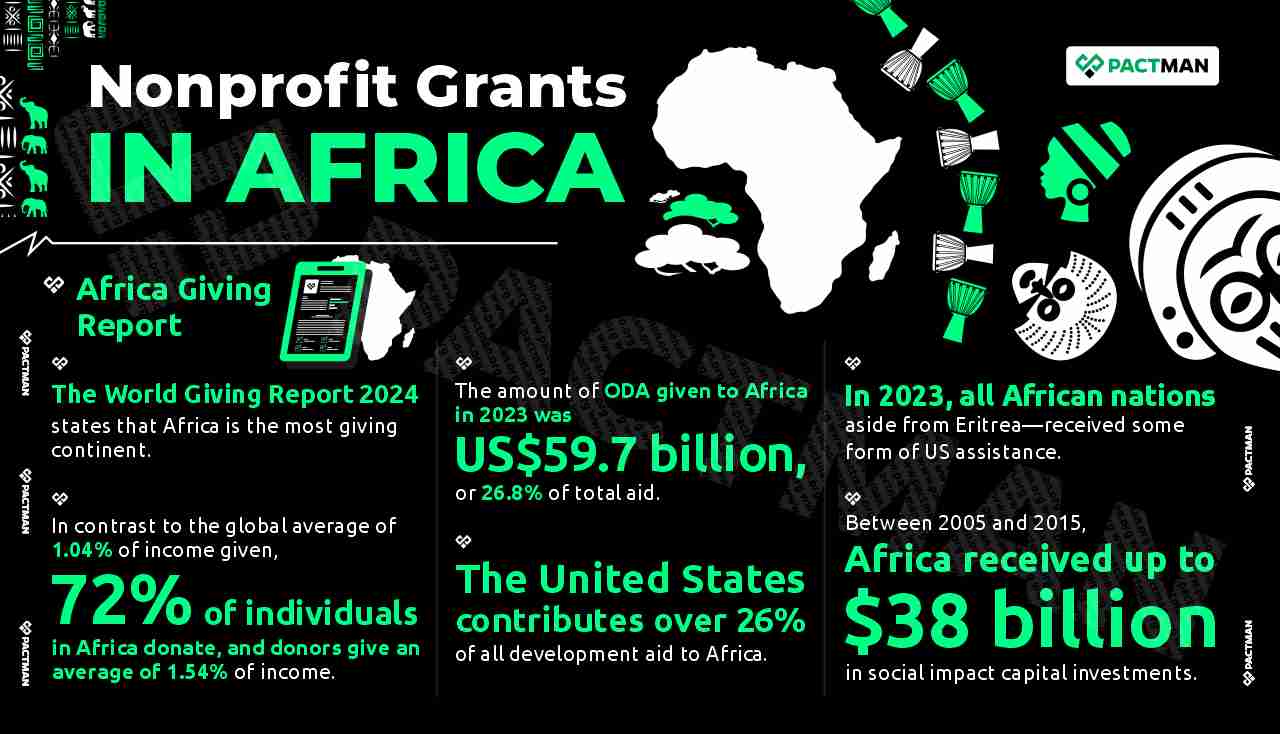
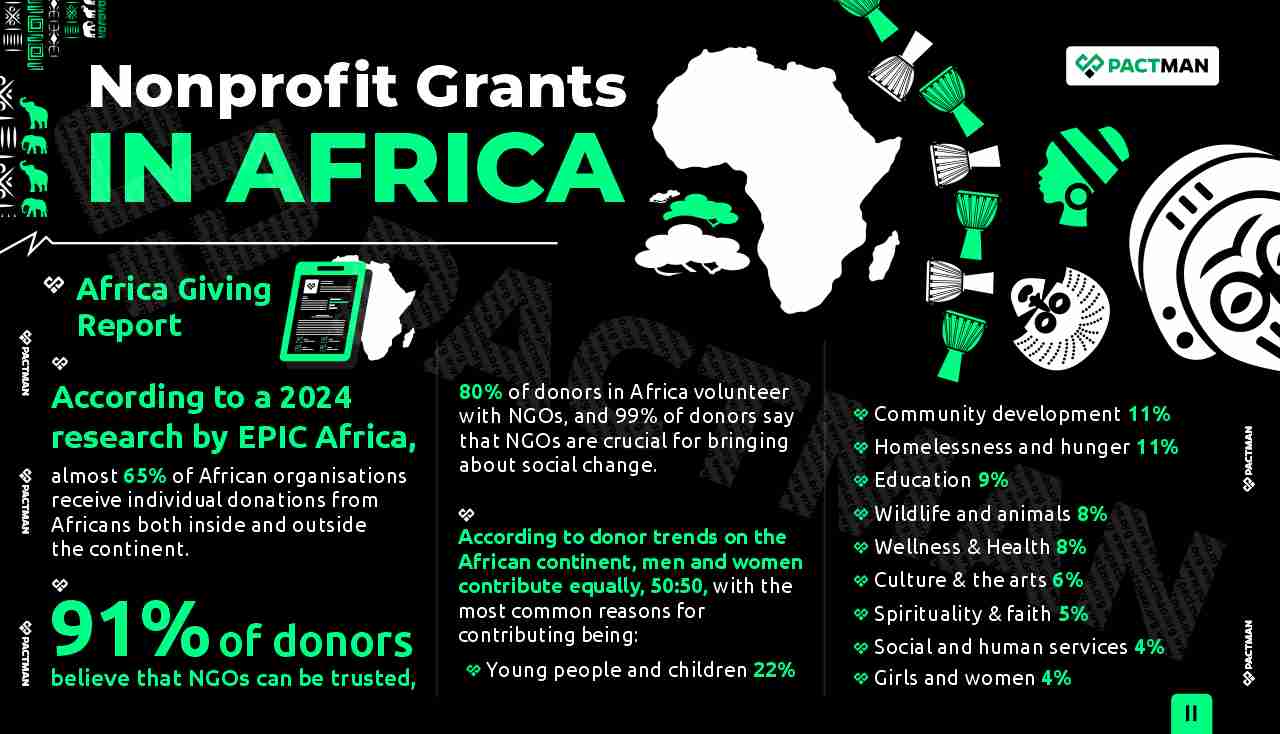


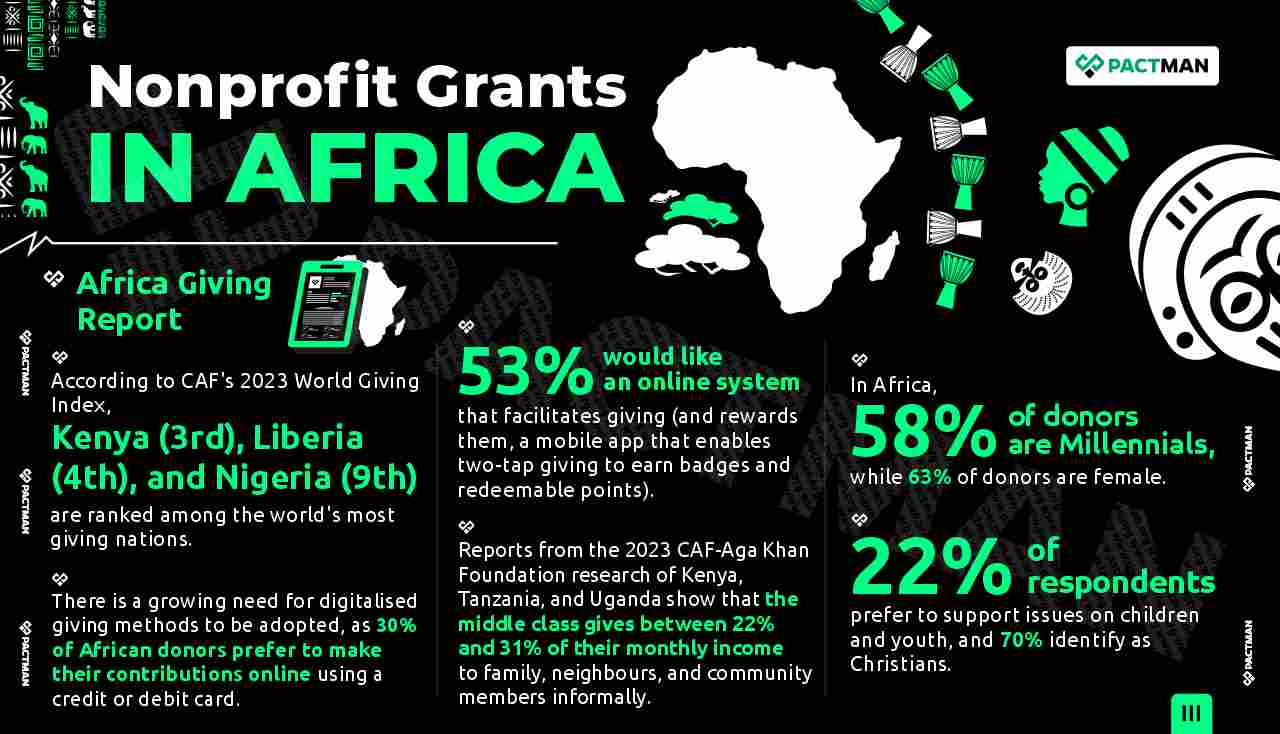
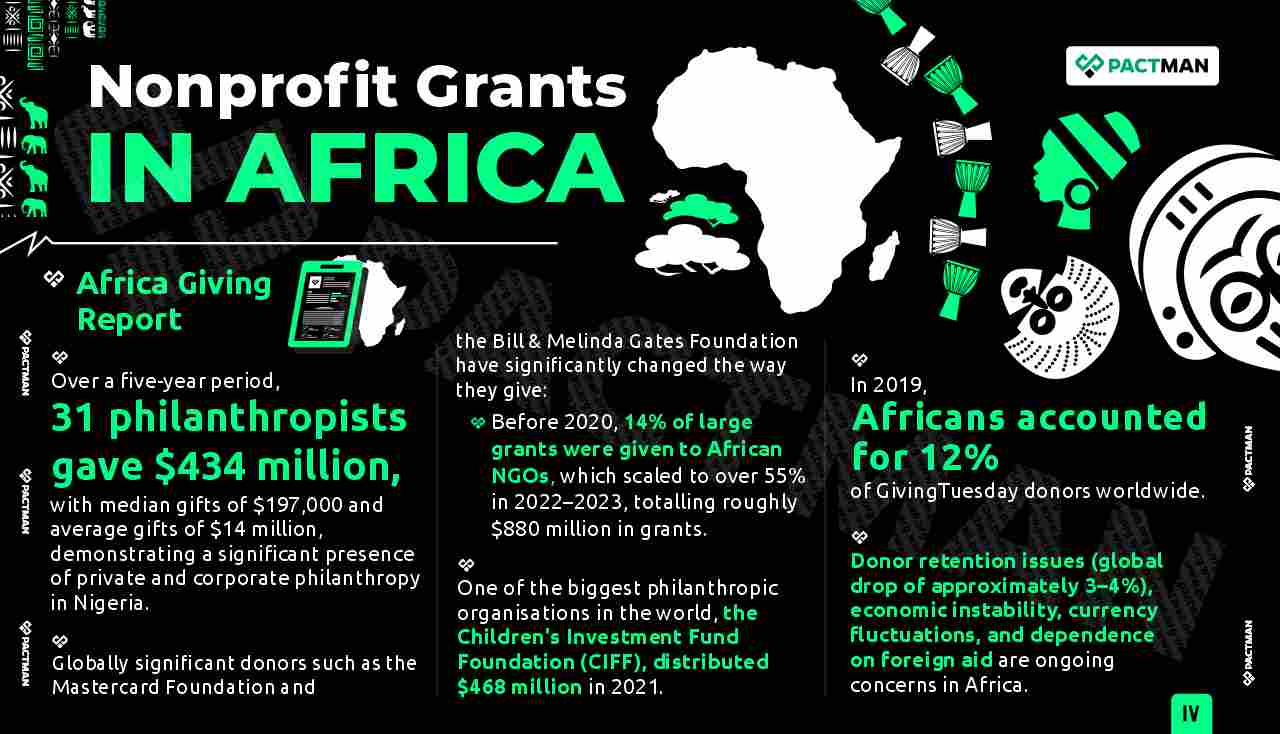





2 responses to “A Comprehensive Guide to Nonprofit Grants in Africa”
Partnership and Sponsorship Request Letter
Charles Dicken Olupot
Director, TESO Parents’ & Obulengook Parents’ Schools
Mukura Town Council, Ngora / Katakwi, Uganda
Contact: +256772851726
RE: REQUEST FOR BIBLE DONATIONS AND CHILD SPONSORSHIP PARTNERSHIP
Dear Brethren,
I am writing to you as a retired teacher dedicated to the future of 450 children in the Teso sub-region. I currently direct two schools: TESO Parents’ Nursery and Primary School in Ngora (100 children) and Obulengook Parents’ Nursery and Primary School in Katakwi (350 children).
Our mission is to provide quality education and spiritual foundation to vulnerable children in these underserved districts. However, we face significant challenges in providing basic resources to our students.
Our Specific Requests:
Bibles for Students: We are seeking a partnership to provide Bibles (in English or Ateso) for our 450 students to support their spiritual growth and Christian discipleship.
Child Sponsorship: We are looking for partners to help sponsor our most vulnerable children at a rate of $10 per month per child. These funds will directly cover scholastic materials, basic health needs, and daily school requirements.
We believe that with your support, we can transform the lives of these children and provide them with a “hope and a future.” We are open to a formal partnership and would be honored to host a visit to our school sites in Mukura and Katakwi to discuss how we can work together.
Thank you for your prayerful consideration of this request. I look forward to your positive response.
Yours faithfully,
Charles Dicken Olupot
Director
TESO Parents’ and Obulengook Parents’ Schools
Good day, Sir, and thanks for reaching out to us. However, we dont give grants. We only provide information on organizations that do. You can choose to reach out to any of the organizations outlined in the article that resonates with your need within your country.
Thank you.