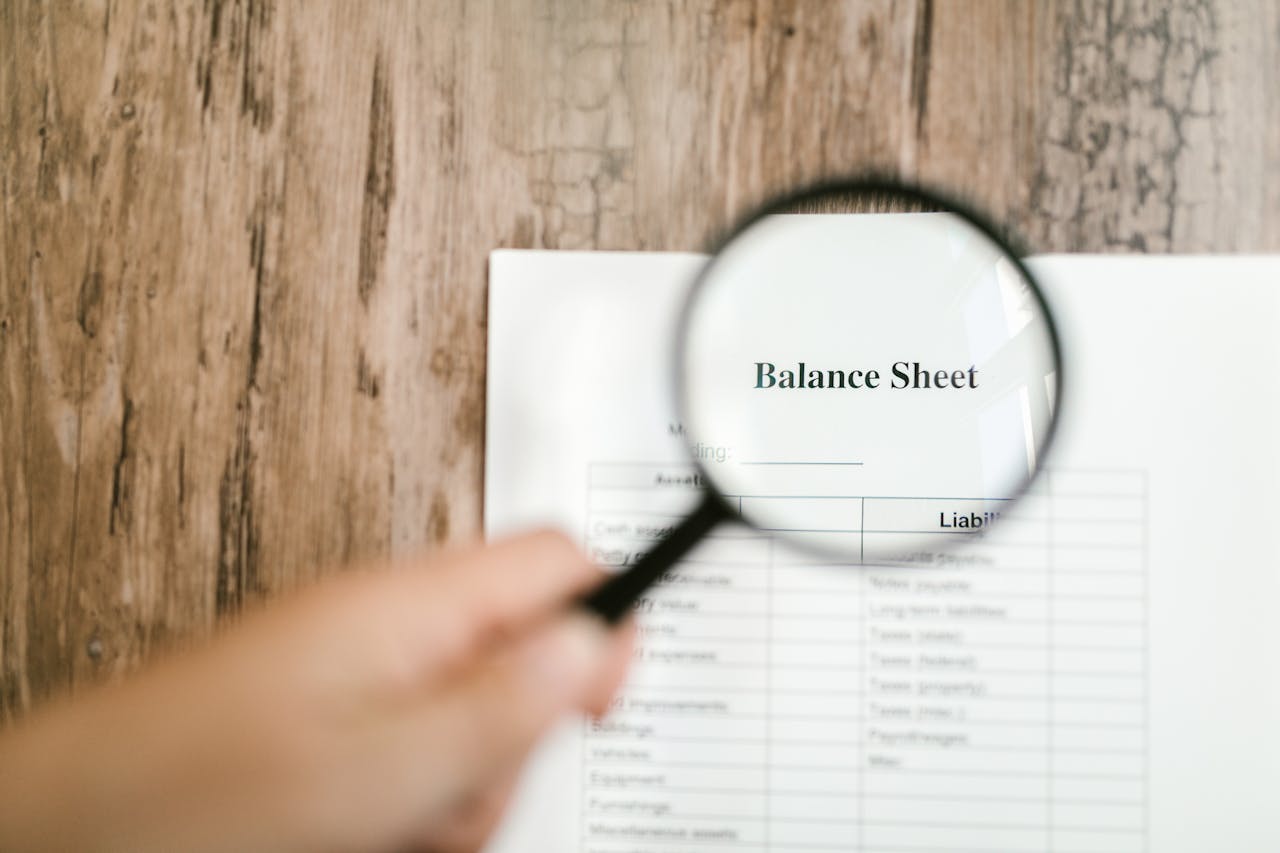
The operational sustainability and financial stability of an organisation can be seen in its balance sheet. Essentially, it is an essential report used by stakeholders to gain insight into an organisation’s financial health. It outlines the organisation’s assets, liabilities, and net assets. By and large, a good understanding of each component is critical for a nonprofit to ensure effective financial management and strategic decision-making.
Balance sheet
Advance payment for rent or insurance is categorised as prepaid expenses.
The balance sheet aids a nonprofit in sound financial management and strategic planning, which demands regular analysis.
Components of a Nonprofit Balance Sheet
We will outline some of the fundamental components of a balance sheet and how it applies to a nonprofit.
1. Assets
To begin with, assets are the resources that a nonprofit owns or manages. Essentially, these resources are anticipated to generate future financial gains. Generally speaking, they are divided into current and noncurrent (or fixed) assets.
Current Assets: Within a year, these assets are probably going to be used or turned into cash. They comprise accounts receivable, cash and cash equivalents, short-term investments, and prepaid expenses. By and large, this includes money in short-term investment accounts, bank balances, and cash on hand. Furthermore, pledges and grants receivable are included in accounts receivable since they are promises made by grantors or donors. For example, advance payment for rent or insurance is categorised as prepaid expenses.
Non-Current (Fixed) Assets: These assets are not easily liquidated and tend to have a more sustained life that exceeds a year. For the most part, this can include land, office supplies, buildings and automobiles. They all comprise property, plant, and equipment (PP&E). These assets may lose value over time, and the cumulative depreciation is recorded to show the decline in worth.
2. Liabilities
Secondly, liabilities are debts the nonprofit owes to external parties that constitute claims against its resources. They are separated into:
Current liabilities: Payments that are due within a year include accounts payable, deferred revenue, accrued expenses, and short-term loans. Accounts payable cover amounts owed to vendors or suppliers for the delivery of products and services. Accrued expenses include salaries due, taxes due, and loan interest. Lastly, deferred revenues are funds received in advance for services or programs yet to be provided.
Long-term liabilities: These are debts that are due more than a year from now. Essentially, they include bonds payable, mortgages, and long-term loans. Altogether, these liabilities serve as a means for evaluating the organisation’s long-term financial viability, and they reveal long-term financial commitments.
3. Net Assets
Similar to equity in for-profit companies, net assets are the remaining stake in the nonprofit’s assets after subtracting liabilities. They are categorised according to limitations imposed by donors:
Unrestricted Net Assets: These are funds accessible for the organisation’s regular operations and personal usage that aren’t restricted by donors. Hence, nonprofits can distribute resources where they are most needed thanks to the flexibility these assets offer.
Temporarily Restricted Net Assets: These are funds that are subject to limitations set by donors that may be lifted over time or as a result of the organisation’s actions. These funds might be categorised as unrestricted after the requirements are fulfilled.
Permanently Restricted Net Assets: These are funds whose principal must be preserved in perpetuity due to restrictions imposed by donors. Generally speaking, these funds can only be used for the money they create, frequently for predetermined reasons.
Conclusion
In summary, the balance sheet provides a summary of the organisation’s financial situation at a given time. Also, it’s a key component of financial reporting for a nonprofit. A thorough grasp of its constituents—assets, liabilities, and net assets—as well as ther interaction is a necessity. The balance sheet aids a nonprofit in sound financial management and strategic planning, which demands regular analysis.
Share your comments, questions and suggestions at the bottom of this post.
In the current nonprofit environment, organizations are increasingly relying on technology to enhance donor interaction, ensure compliance, and streamline operations. The Pactman Nonprofit CheckPlus API […]
TABLE OF CONTENTS Introduction Overview of Nonprofit Grant Options Critical Statistics on Nonprofit Grants in the U.S. Nonprofit Grants in Washington Nonprofit Grants in Alabama […]
TABLE OF CONTENTS Introduction Nonprofit Funding Gaps in Africa Critical Statistics on Nonprofit Grants Local vs International Nonprofit Grants in Africa: A Comparative Analysis Overview […]
Most organisations prefer Asana as their management tool. It is especially useful for planning a client’s work, such as developing and updating a content calendar […]